Once again, hobby hunter in final stage kills 4 people
In Reutlingen, Pfullingen and St. Johann (Baden-Württemberg), five members of a family were found dead on 25 November 2025. A 63-year-old hobby hunter is alleged to have killed his sister, his wife, his two adult sons and finally himself.


The investigating authorities are describing it as an intra-familial homicide; there are no indications of an outside perpetrator.
The trigger and motive remain unclear. What is known so far:
- In Reutlingen, a carer discovers the man's 60-year-old sister dead in her apartment on Tuesday morning and alerts the police.
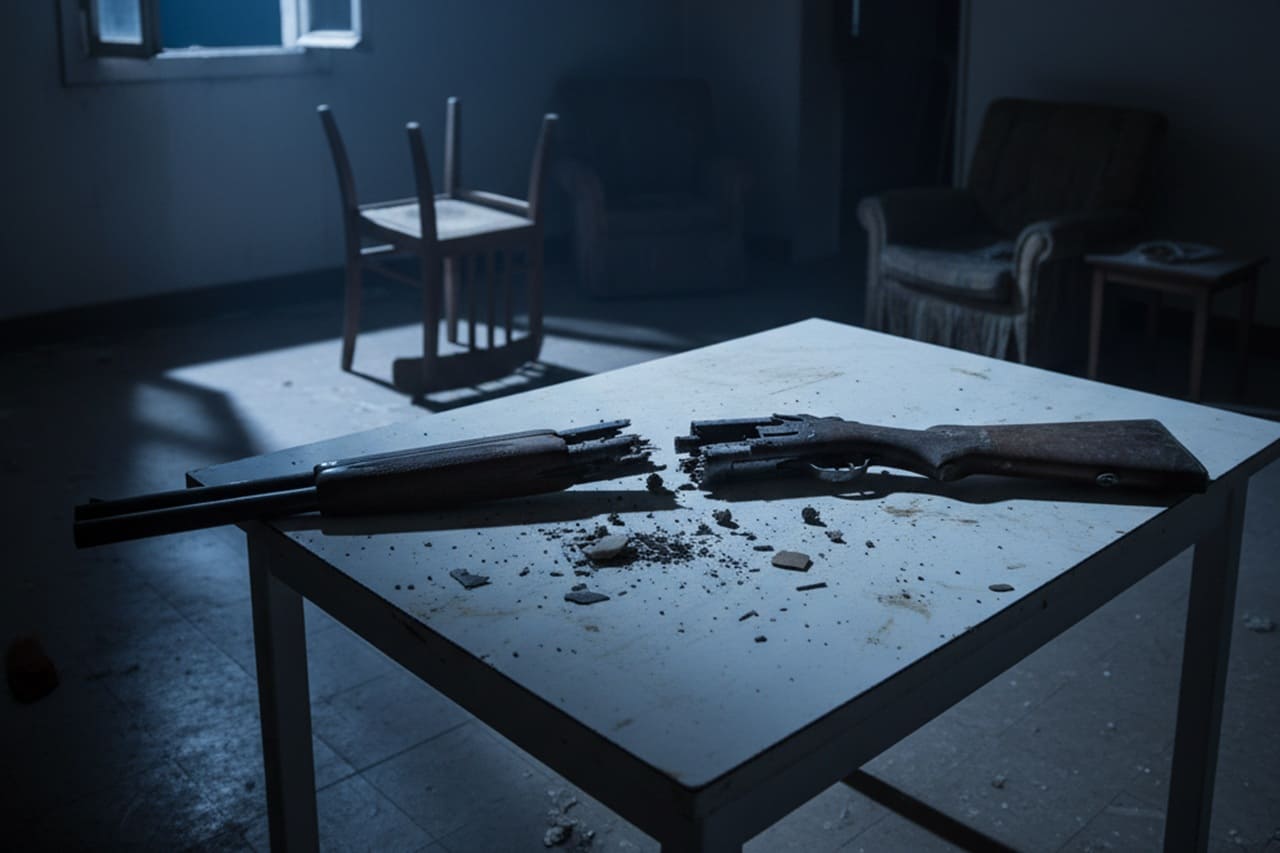
- In the evening, special operations units discover the bodies of the man and his 57-year-old wife in the residential property of the 63-year-old in Pfullingen, both with gunshot wounds. A firearm lies beside them.
- In the man's business premises in St. Johann, his two sons, aged 27 and 29, are later found dead, also with gunshot wounds.
Investigators are working on the assumption that the acts were committed in quick succession. In their assessment, this constitutes an intra-familial escalation that culminated in four killings and one suicide.
Much remains unclear: how long had there been conflicts within the family, what role did financial or psychological pressures play, were there warning signs that authorities or those in the man's circle could have acted upon? Yet one question already presses itself to the fore: what happens when individuals holding a hunting licence and a weapons arsenal find themselves in a personal crisis.
The hobby hunter as the ideal gun owner – a dangerous myth
Hobby hunters are frequently portrayed in political and media circles as the prime example of the responsible gun owner. Anyone wishing to obtain a hunting licence must pass examinations and undergo a reliability check. This very image is invoked time and again by hunting associations in every debate on firearms legislation.
The reality is more complex. Although Germany officially belongs to the countries with very strict gun laws, according to Bundestag printed papers, at the same time a vast stock of firearms exists in private ownership among approximately 450’000 hobby hunters in Germany.
The more weapons are in circulation, the greater the probability that they will be misused in crisis situations. This applies particularly where weapons are within reach at any time, such as in the gun cabinet of a hobby hunter who is also a family man and entrepreneur. The distinction between the supposedly rational “huntsman” and the emotional private individual is a fiction.
In the Reutlingen case, the alleged perpetrator was registered as a hobby hunter; investigators are examining whether he legally possessed the murder weapons as hunting firearms. Should this be confirmed, this family tragedy would not be an isolated incident, but part of a familiar pattern: firearms from legal private ownership used within a domestic setting.
Hunting weapons as a risk in the domestic sphere
In the debate on firearms legislation, a distinction is frequently drawn between “illegal criminal weapons” and “legal sporting and hunting weapons.” The lobby’s message is: those who legally own weapons are particularly reliable. Yet acts such as the one in the Reutlingen district call precisely this narrative into question.
Forensic and criminological analyzes of homicides have shown for years that, particularly in cases involving personal relationships, it is rarely a matter of the classic “unknown perpetrator,” but rather perpetrators from the immediate circle. These acts often occur within 48 hours of an acute escalation of relational conflicts. When a loaded weapon is available in such moments, the threshold for lethal violence drops dramatically.
Hunting weapons are technically optimised to kill living beings with a single shot. They are defended on the grounds of wildlife regulation. Yet every rifle standing in the cabinet of a hobby hunter also stands in the home of a family, within a social fabric of pressures, conflicts, and crises.
The hunting lobby likes to point out that hunting accidents are statistically rare. At the same time, it conceals the fact that the very same weapons can appear in statistics on suicides, intra-family killings, and threats involving firearms, without these being recorded as “hunting accidents.”
A political problem, not an isolated case
After every fatal shooting, the same sentences are reflexively heard: a tragic isolated incident, the investigation is ongoing, one must wait for the motive. For survivors and relatives, this changes nothing. For political debate, this formula of reassurance is dangerously inflammatory.
The key structural questions are:
- Why are private individuals permitted to own weapons that can kill several people within seconds.
- Why do occasional reliability checks and a one-time hunting licence suffice to legitimise access to live firearms over many years.
- Why is there no consistent system that, upon indications of domestic violence, mental health crises or threats, immediately leads to provisional disarmament.
The official line often states that German gun laws are already strict and that further tightening would affect “law-abiding hunters and sport shooters.” Yet this is precisely where the Reutlingen case reveals what is truly at stake: not a hobby, not “tradition,” but the right of people not to be killed by firearms within their own families.
Hunting criticism also means: protecting people from legal weapons
IG Wild beim Wild has been pointing out for years that recreational hunting not only causes suffering for wild animals, but also poses an underestimated security risk to society.
Anyone who regularly shoots living beings trains in the handling of weapons and becomes accustomed to deciding over life and death. In healthy circumstances, this potential for violence may remain channelled. In crisis situations — financial difficulties, relationship conflicts or mental illness — the same weapon can suddenly be turned against people: against partners, children, siblings, or against the shooter themselves.
A consistently hunting-critical approach therefore also means:
- Private ownership of live firearms must be fundamentally questioned and drastically reduced.
- Recreational hunting interests cannot serve as an argument for storing lethal weapons in private households.
- Where weapons are nonetheless temporarily necessary, we need stricter, more rigorous controls, psychological aptitude assessments and a very low threshold for provisional disarmament.
The tragedy in the Reutlingen district is a human catastrophe. But it is also a political signal. As long as recreational hunting is sold as a harmless hobby and legal firearms remain in private homes, such acts are not a matter of chance but a calculated risk.
Talking saves lives. Weapons, however, do not.
More on this in the dossier: Psychology of Hunting
In the view of IG Wild beim Wild, hobby hunters require annual medical-psychological fitness assessments modelled on the Dutch system, as well as a binding upper age limit. The largest age group among hobby hunters today is 65+. Within this group, age-related impairments such as declining eyesight, slowed reaction times, lapses in concentration and cognitive deficits increase statistically and significantly. At the same time, accident analyses show that the number of serious hunting accidents involving injuries and fatalities rises markedly from middle age onwards.
The regular reports of hunting accidents, fatal errors and the misuse of hunting weapons highlight a structural problem. The private ownership and use of lethal firearms for recreational purposes largely evades continuous oversight. From the perspective of IG Wild beim Wild, this is no longer justifiable. A practice based on voluntary killing that simultaneously generates considerable risks for people and animals forfeits its social legitimacy.
Recreational hunting is furthermore rooted in speciesism. Speciesism describes the systematic devaluation of non-human animals solely on the basis of their species membership. It is comparable to racism or sexism and cannot be justified on either cultural or ethical grounds. Tradition is no substitute for moral scrutiny.
Critical scrutiny is particularly indispensable in the field of recreational hunting. Few other areas are so thoroughly shaped by euphemistic narratives, half-truths and deliberate disinformation. Where violence is normalised, narratives frequently serve as justification. Transparency, verifiable facts and open public debate are therefore essential.