
World Day for the End of Speciesism
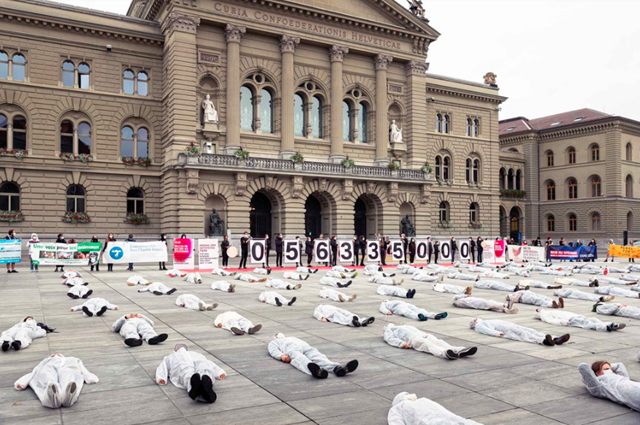
Every year in summer, a World Day for the End of Speciesism takes place.
The species boundary is not and must not be a moral boundary: Therefore, our society must develop in such a way that animals are included in moral considerations.
Behavioral research shows that animals experience emotions and are complete individuals. However, due to their status as property, they can be bought and sold as if they were mere commodities. Under these circumstances, there is a tendency for the trivial interests of the owner to be considered more important than the fundamental interests of the animal. This situation is unjust; animals are not objects and therefore should not be regarded as the property of others.
Even abstract and artificial entities, such as companies, are recognized as legal persons. Animals, however—sentient, real beings who have their own preferences, desires and personalities—do not enjoy this status. A change in thinking is necessary.
Furthermore, the interests of wild animals must be able to be represented in court by animal protection organizations. This should be done by specialized prosecutors, not by recreational hunters.
We demand that Parliament and judicial institutions formulate and specify a new legal status for wild animals. This status should move away from the status as a resource and allow animals to be considered as sentient beings whose interests can be protected by law.
Love for Animals Through Education – Speciesism Prevention
Many countries practice prevention against sexism and racism. It is necessary to do the same with speciesism. In times of ecological crisis, it is all the more important to educate the public that humans share this planet with other inhabitants who also have feelings that must be respected. For example, children in school can be taught respect for animal life. In this way, a common morality would take shape in civilized society: it cannot be that violence may be inflicted on some beings simply because they are different.
IG Wild beim Wild demands worldwide information campaigns for the prevention of speciesism to sensitize all fellow human beings to respect for animal life. In this context, we call upon educational institutions and responsible organizations to implement a module on the theme of respect for animals and prevention of speciesism.
For the Respect of Individuals – Animals Are Not Resources
Wild animals are neither mere components in an ecosystem nor are they "natural resources" for hobby hunters. They have, just like humans, the personal interest not to suffer and to have an environment that allows them to enjoy their existence. Wild animals are individuals whose concrete interests must be respected, even if they do not belong to an endangered species.
Humans are not the only sentient beings on this Earth, and it is time to stop disregarding the interests of wildlife during hunting. We must evolve into a society that cares about good stewardship of our planet, in the interest of all its sentient inhabitants.
Today's recreational hunting destroys the normal social coexistence of wildlife, the ecological balance, natural behaviors, family structures and social groups, use of dens and hiding places, shift from day to night activity, increased reproduction of certain animal species, intensified migration to unhunted residential areas, unnatural animal concentrations in hotspots, ecological imbalance, lifelong health-damaging psychological and physical stress of wildlife, unhealthy wild meat and much more negative.
Wildlife is denied their right to life based on the ecological balance prescribed by humans through vague and unscientific hunting laws. This is lived speciesism, which means: Humans show with their attitude toward wildlife once again that they are convinced that they, by virtue of their species, are superior to all other species and can therefore treat them however they want. This attitude is more than reprehensible and must no longer be accepted. Wildlife also has a right to live.
The backward hunting policy damages the ecological balance, harms the forest, the protective forest and Switzerland's international reputation. The reputation of a country that likes to boast of having the best animal protection law in the world.
Women, children, youth and adults are radicalized by recreational hunters and inducted into a network of violence and contempt for life. The victims are sometimes gradually formed into members already in childhood. Through perverted ideologies of hunting jargon, these seekers of meaning undergo training to carry out violent actions in the animal kingdom. Foxes, martens, marmots etc. are merely incidental game in their activities. Recreational hunters proudly publish the faces of the severed heads of dead wildlife through images, videos and statistics.
The militant propaganda material of recreational hunters for this purpose is widely distributed in the media and visible to ordinary citizens. Recreational hunting gives animal cruelty a name.
What hundreds of recreational hunters in the canton of Geneva in Switzerland used to do inadequately, is now handled more exemplarily by 11 game wardens who share 3 full-time positions, alongside many other duties.
We demand that in all environmental decisions, the interests of wildlife be included, particularly their interest in an intact life in a livable environment.