
World Cat Day: A commitment to the fascinating forest cats
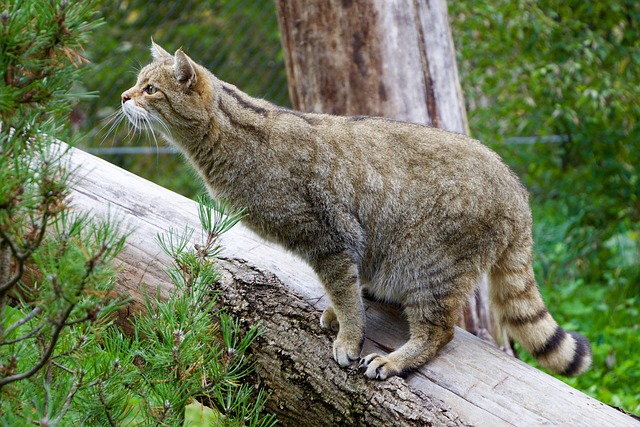
World Cat Day, celebrated every year on August 8th, is a wonderful opportunity to honor our feline companions and promote their wellbeing.
World Cat Day is not only a celebration of our beloved cats, but also a call to action. Every small gesture can help improve the lives of cats in need. Use this day to learn more about these fantastic animals and do something positive for them!
In Switzerland the wildcat was severely decimated in the 18th and 19th centuries or, as in the Mittelland, completely exterminated. It has been a protected species since 1962. It is present again particularly in the Swiss Jura. It is also present again in the Schaffhausen region.
Recently, populations have been able to recover somewhat, mainly because the species is no longer allowed to be hunted in many countries.
However, the degree of hybridization is significant for assessing the threat status of the wildcat. Because if the expanding wildcat population in Switzerland intermixes too much with domestic cats (as is the case in Hungary and Scotland, for example), there is a risk that wildcats will gradually disappear genetically.
Our domestic cats do not descend from the wildcat, but from the African wildcat. Domestic cats were brought to Central Europe by the Romans. Hybrids of domestic and wildcats exhibit altered genetic characteristics. The originally excellent adaptations to their habitat can be lost in wildcat-domestic cat hybrids.
The Latin name of the wildcat means 'forest cat'. Quiet forests with diverse structures are the original habitat of the wildcat. In the forest and adjacent meadows, it hunts mice, sleeps for hours in safe hiding places, and gives birth to its young in a dry shelter.
Wildcats require large, undisturbed habitats to survive. Advocate for the protection of forests, meadows, and other natural habitats. Support local and national initiatives that promote nature conservation projects.
Wildcats are fascinating and important components of our ecosystems. However, many species are endangered or threatened with extinction. The protection of wildcats is important not only for their own way of life, but also for the balance of nature. Here are some ways you can support wildcats:
- Cat owners should consistently have their free-roaming cats neutered. This represents an important contribution to avoiding mating with wildcats and reducing the suffering of stray cats.
- Educate yourself and others about the threats wildcats face, such as habitat loss, climate change, and poaching. Use social media to raise awareness of these issues and spread information about wildcat species and their way of life.
- Participate in reforestation projects or planting activities in your area. Trees provide habitat not only for wildcats, but also for many other animal species. An enriched flora is crucial for a healthy ecosystem.
- Get involved with local or international animal protection organizations that work to protect wildcats. Your support through donations or volunteer work can make a big difference.
- Support projects that deal with monitoring wildcat populations. By collecting data on distribution, behavior, and population, effective protection measures can be developed and implemented.
- When engaging in ecological tourism or traveling, choose responsible travel providers that respect wildlife and their habitats. Avoid tourist attractions that exploit wildlife or damage their habitats.