Austria's recreational hunting lobby reorganizes
As of January 1, 2026, Tyrolean state hunting master Anton Larcher has assumed the presidency of 'Jagd Österreich' and thus leads the umbrella organization of around 132,000 recreational hunters. He succeeds Franz Mayr‑Melnhof‑Saurau, who remains as vice president in the executive committee, while Vienna's state hunting master Norbert Walter moves up to first deputy.

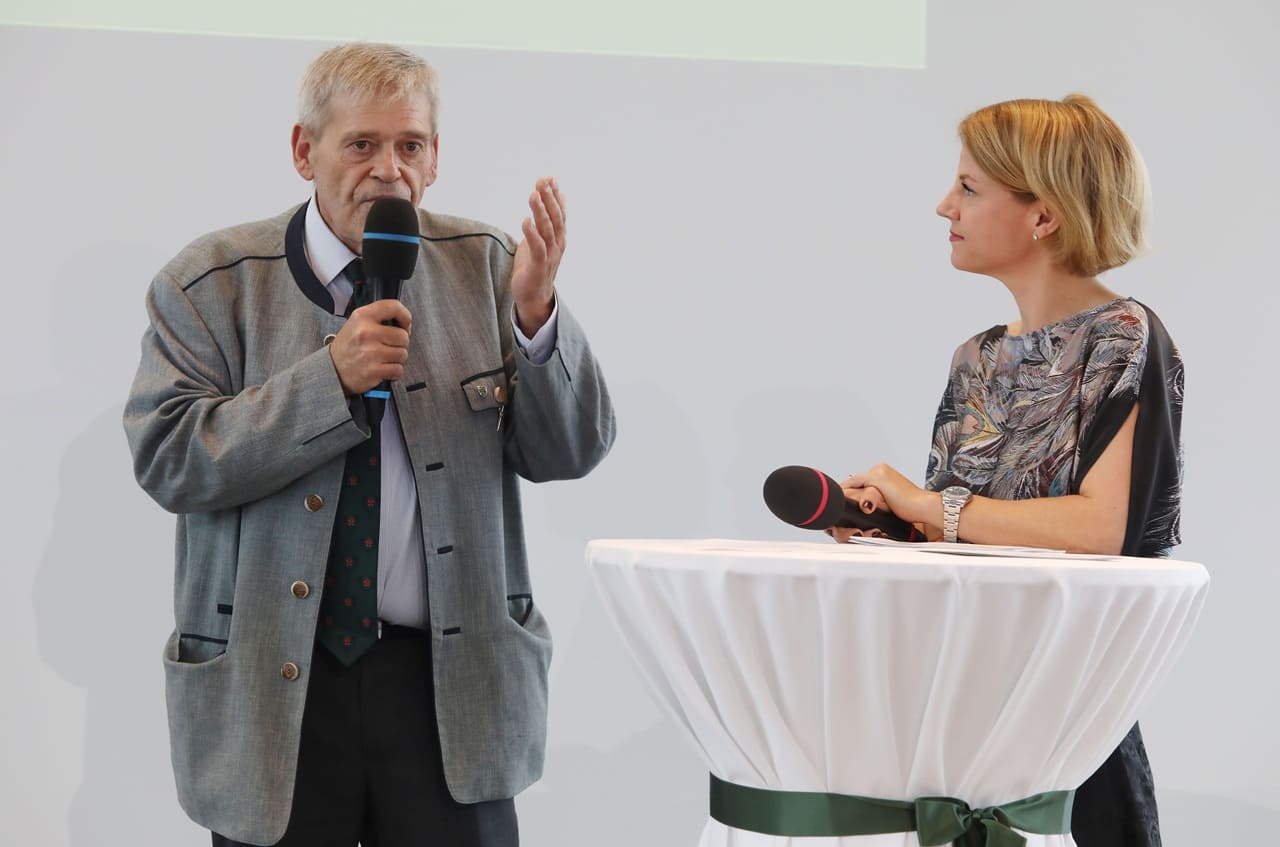
Larcher announces his term of office as a 'data power' project: A uniform wildlife monitoring system across Austria, a new wildlife database and an international hunting conference under his leadership are intended to shape the course of the recreational hunting lobby.
Externally, the new leadership presents itself as a modern service partner of politics and administration, internally it's about securing the power to define what counts as 'reasonable' treatment of wildlife.
In line with this, Larcher promises a 'cooperation of all nature users based on respect, knowledge and responsibility', a formula intended to both reassure and legitimize that hunting associations continue to have central influence over wildlife policy.
Science as rhetoric: 'Fact-check' against predators
Media reports paint the picture of a president who elevates 'science instead of emotion' as a guiding principle, particularly regarding the 'contentious issue of predators'. According to Larcher, Austria-wide uniform monitoring of wolves and bears is at the top of the agenda; a modern wildlife database is to provide comprehensive data with which recreational hunters can intervene in political decisions. Already today, monitoring data for large predators flows to the Austrian Centre for Bear, Wolf, Lynx, which consolidates reports from federal states and creates distribution maps and status reports from them.
This is precisely where the power question shifts: Who defines what this data means, when a wolf is classified as a 'problem wolf' or 'risk wolf', and which measures appear politically 'without alternative'? Conservation organizations criticize that in Austria there is already a tendency toward facilitated shooting regulations, while monitoring, livestock protection and public outreach remain understaffed. Under the slogan 'science instead of emotion', this strengthens precisely the side that has a direct interest in shooting permits and hunting interventions.
Science instead of emotion? In recreational hunting, this is an empty formula
In practice, it becomes clear: Where 'Jagd Österreich' and other associations speak of 'science instead of emotion', it is rarely about independent ecology, but about securing existing shooting interests. Hunting-critical experts and ecologists have pointed out for years that wildlife populations in stable habitats largely self-regulate. In hunting-free areas such as the Swiss National Park, Italian national parks, the island of Tilos or Canton Geneva, no 'wildlife explosion' occurred. Simultaneously, international reports like the WWF Living Planet Report document a dramatic decline in many vertebrate populations. The problems are habitat loss, agriculture, recreational hunting and climate crisis, not an alleged shortage of recreational hunters.
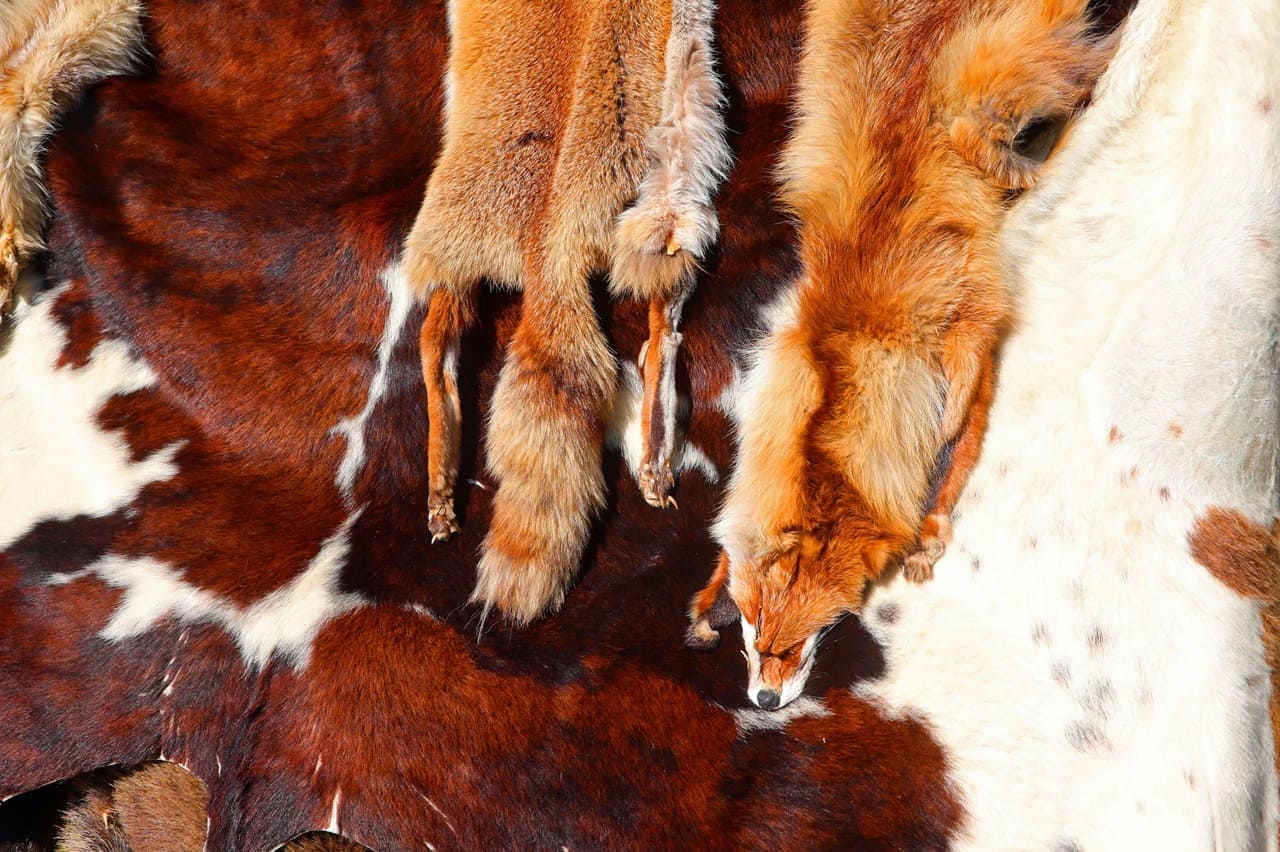
In Luxembourg, fox hunting has been banned since 2015, without any of the horror scenarios materializing that recreational hunters had previously threatened. Environment Minister Carole Dieschbourg stated clearly in parliament that there are no indications of an increase in fox population; monitoring and wildlife cameras show rather stable populations. Neither did 'fox explosions' occur nor more damage in agriculture or settlements; nature and forestry administration report no problems from the fox hunting ban. Regarding fox tapeworm, there is even a positive effect: The proportion of infected foxes decreased according to responsible authorities from about 40 percent to under 10 percent, while studies from heavily hunted areas sometimes find higher infection rates.
The biologically central argument is: Where habitats are intact, populations regulate themselves through birth rates, territory sizes, social structures and natural mortality, without humans needing to 'help'; overexploitation, fragmentation and human feeding create the conflicts that recreational hunters later sell as evidence of their indispensability. When Larcher in this context presents 'data' and 'monitoring' as new recreational hunting-science is presented, it's often selective: The focus is on a few symbolically charged species like wolves, bears or wild boar, while the decline of countless other species, from hares to partridges, continues despite decades of recreational hunting or is actually intensified by hunting. From a scientific perspective, much therefore suggests that the vast majority of wildlife in Central Europe does not need hunting regulation, but rather peace, habitats and an end to the artificially created problems that recreational hunting then claims to 'solve'.
Monitoring as Security and Order Policy
Larcher's goal is a unified monitoring system that integrates all federal states and serves as a common platform for wolf and bear data. Officially, this information is meant to enable 'fact-based' decisions while fulfilling EU reporting obligations. In practice, this creates a permanent surveillance regime over selected predators, while other stress factors on ecosystems, from tourism pressure to forestry practices, remain in the shadows.
The risk lies in monitoring primarily serving as an early warning system for interventions: The denser the network of data, the easier it becomes to construct arguments for 'preventive' culls, protective hunts or zoning measures. Already now, nature conservation organizations show how quickly wolves can be declared 'problem wolves' when political and economic interests are placed before species protection. Under a hunting lobby that presents itself as a security and order authority, wolves and bears are not managed as returnees to an ecosystem, but as security problems.
Here the Austrian discourse directly connects to Swiss debates, in which predators are likewise transformed into regulatory objects through hunting administrations and permits, a topic that wildbeimwild.com has been covering in dossiers on wolves, lynx and bears for years.
Tightened Weapons Law: Placebo or Real Control?
Parallel to the hunting lobby's reorganization, weapons laws in Austria are being tightened in two stages. Initial changes already took effect in November 2025, concerning improved information exchange between authorities and extended 'cooling-off periods' for weapons purchases. A second wave follows in mid-2026: The minimum age for acquiring firearms will be raised, police will receive expanded control powers, private weapons sales will be more strictly regulated, and for Category B weapons the standard age rises to 25 years, with special rules for recreational hunters.
From the hunting associations' perspective, these tightening measures are sold as 'no problem for well-trained recreational hunters', essentially meant to primarily target problematic private gun owners. This creates the impression of safer weapons legislation, while the central question remains untouched of how many people should be roaming fields, forests and villages with hunting weapons at all, and how rigorously alcohol use, psychological fitness and violations are controlled. Recreational hunting remains a reliable exception zone in this logic: strictly tested, well organized, state-recognized, and precisely thereby politically difficult to attack.
Hunting Weapons, Family Tragedies and the Tightened Weapons Law
The portrayal of recreational hunters as particularly «reliable» and «responsible» weapon carriers develops cracks as soon as one examines the violence statistics with legal hunting weapons. Police and media reports repeatedly feature cases where hobby hunters in crisis situations threaten their families, injure partners, or wipe out entire families with hunting weapons. Often in situations where psychological crises or alcohol problems were long known. Hunting-critical platforms like «Abolition of Hunting», animal protection organizations, and portals like wildbeimwild.com have been documenting for years a chronicle of accidents, threats, and homicides with hunting weapons that contradicts the narrative of harmless «hobby».
The recent reform of Austrian weapons law is officially justified with «trigger incidents»: a rampage with legally owned weapons, several fatal escalations in private settings, and the recognition that existing warning signals remained without consequences under weapons law. Accordingly, the amendment provides for stricter psychological assessments, longer waiting periods, and enhanced scrutiny of «reliability» — on paper, a step toward greater caution. Simultaneously, exceptions and facilitations for hobby hunters, sport shooters, and shooting clubs were secured during the parliamentary process; interior politicians emphasize that well-trained hobby hunters are hardly affected by many restrictions.
This creates a double contradiction: On one hand, homicides and rampages with legal weapons serve as justification for stricter laws; on the other hand, precisely that group remains privileged which has access to particularly powerful weapons in the field and whose potential for violence in family settings is well documented. In practice, this means: more bureaucracy for individual problem cases, but continued broad political protection for organized recreational hunting. For a critical platform like wildbeimwild.com, this is precisely the point where hunting policy becomes visible not only as nature policy, but as security and violence policy, and where it becomes clear that the question of wolf and bear is inseparably connected to the question of whom the state puts weapons into the hands of and under what conditions it looks away.
In Austria, several animal protection organizations demand that hobby hunters must undergo a mandatory psychological aptitude test in the future, as they have been largely exempt from such examinations so far.
International Hunting Conference: Export of a Model
An international hunting conference under Larcher's chairmanship is planned for 2026, aimed at «sharing experiences» and developing «common European solutions». Officially, it concerns the exchange on wildlife management, habitats, and nature users; implicitly, Austria thereby exports its model of recreational hunting closely interlinked with state and agriculture, which legitimizes itself through data, monitoring, and security rhetoric.
For a critical wildlife platform, the question arises whether a European standard is being prepared here, where hunting associations assume the role of quasi-governmental actors, with access to databases, co-determination rights in management plans, and direct channels to legislation. The experience from Switzerland shows how quickly such a position of power can turn against predators, against scientific minority voices, and against consistent wildlife protection.
Support our work
With your donation you help protect animals and give voice to their concerns.
Donate now →