
Hunting-free zones and pilot area following the Geneva model
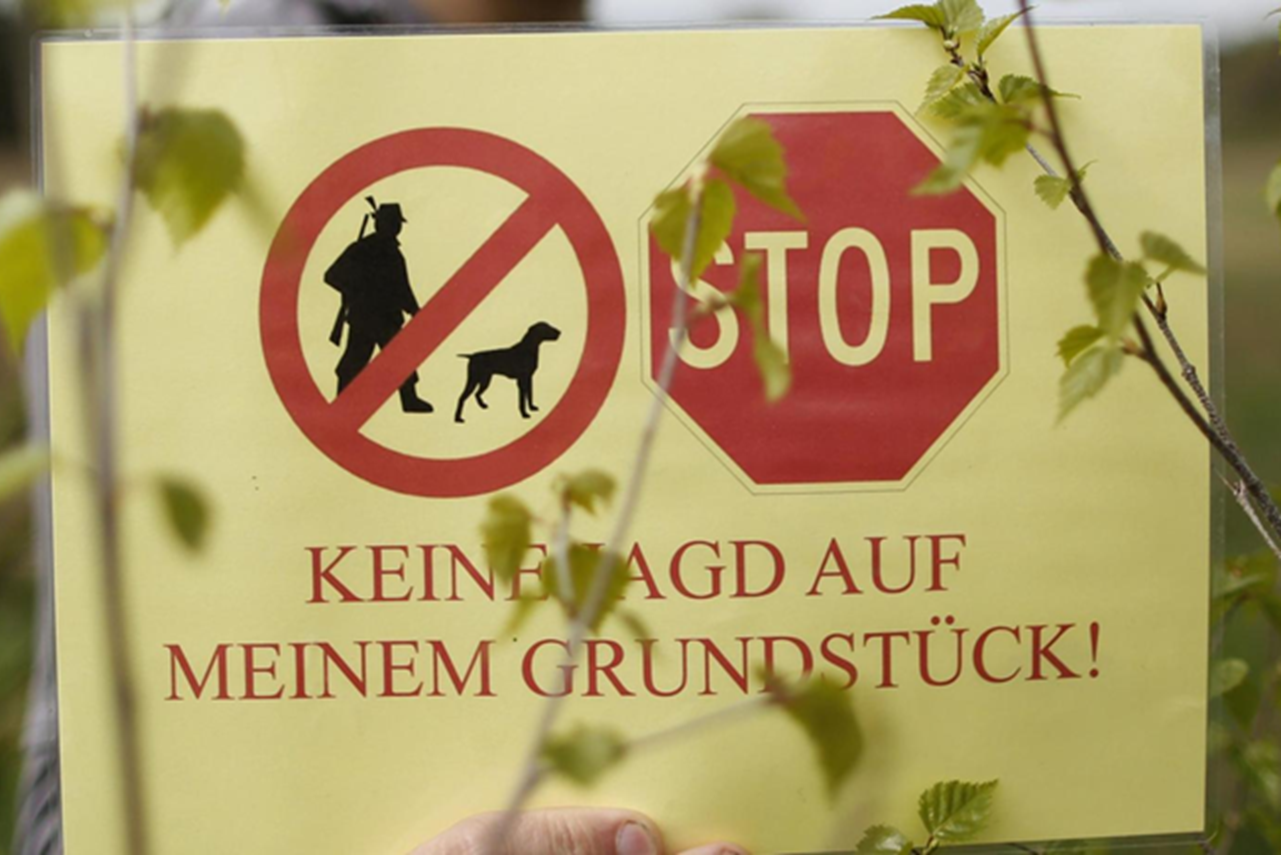
Switzerland has had a successful model without recreational hunting in the canton of Geneva for decades. The canton (...) should establish at least one larger hunting-free pilot area following this model, in order to test and scientifically monitor wildlife management without recreational hunting.
1. Motion
The government council is instructed to submit to the Grand Council a proposal for amending the Law on Hunting and Wildlife Protection (...) as well as the Hunting Ordinance (...) and, if necessary, other relevant cantonal regulations. The goal is to create hunting-free zones and a large-scale pilot area following the model of the canton of Geneva.
The revision of laws and ordinances must ensure in particular that:
- at least one contiguous, sufficiently large hunting-free pilot area is designated in the canton (...), in which recreational hunting is completely prohibited. This area must be chosen such that:
- various habitat types (for example forest, open land, transition zones) are represented
- a comparison with neighboring hunting areas is possible
- existing protected areas, quiet zones or nature reserves are included or expanded wherever possible.
- wildlife management in this pilot area is carried out exclusively by state agencies, in particular:
- by game wardens, competent specialist offices and, if necessary, specially trained professionals
- according to clearly defined professional criteria, for example in the areas of animal diseases, traffic safety or individual cases involving significant danger.
- the possibility is created to designate additional hunting-free zones in the rest of the cantonal territory, for example:
- in densely populated recreational areas
- in particularly sensitive habitats for disturbance-sensitive species
- in areas with high recreational use by the population.
- that a binding monitoring concept is developed and implemented for the hunting-free pilot area, which encompasses at least the following aspects:
- Development of wildlife populations and biodiversity
- Condition of vegetation, forest regeneration and agricultural crops
- Frequency of wildlife accidents in road traffic
- Occurrence of conflicts between humans and wildlife.
- that the monitoring is accompanied by independent expert institutions (for example universities, research institutes) and the results are regularly published in the form of reports to enable comparison with hunted areas.
- that in the hunting-free pilot area and in additional hunting-free zones:
- information boards about hunting-free management and its objectives are installed
- the population is informed about rules of considerate behavior (for example leash requirements for dogs at certain times, path regulations in sensitive areas).
- that the government systematically evaluates the experiences of the Canton of Geneva and other regions without hobby hunting and incorporates them into the design of the pilot project, particularly:
- Organizational structure of wildlife management without recreational hunting
- Financing and staffing
- Communication with population, agriculture and municipalities.
- that the government submits a comprehensive evaluation report to the cantonal parliament after an appropriate duration of the pilot project (for example after ten years), which:
- documents the impacts of the hunting-free area on wildlife, biodiversity, forests, agriculture and traffic
- assesses the conflict potential compared to hunted areas
- on this basis makes proposals on whether and how the model of hunting-free zones should be expanded in the canton.
The government presents in its message:
- what legal possibilities the canton has for creating hunting-free zones
- how the Geneva model functions in overview and which elements are transferable to the canton (………)
- which areas qualify for a pilot area and according to which criteria the selection should be made
- what organizational and financial impacts can be expected for the canton, municipalities and affected circles.
2. Brief justification
The hunting lobby's claim that proper wildlife management in Switzerland is impossible without hobby hunting is contradicted by practice. The Canton of Geneva has foregone traditional hobby hunting for decades and organizes wildlife management through state agencies. Wildlife does not disappear there, they do not escalate en masse, but are regulated according to clear criteria and transparent procedures.
A hunting-free area shows what really happens without hobby hunting. Anyone who claims hunting is indispensable should not fear such a reality check.
Particularly in a densely populated country with intensively used recreational areas nearby, it makes sense to examine models where:
- no armed hobby hunters are active in immediate proximity to walkers, children and recreational visitors
- no recreational hunting with hunting parties, driven hunts and shooting operations takes place in the landscape
- conflicts with wildlife are resolved through prevention, habitat planning and targeted, state-managed interventions.
The hunting associations like to argue with supposedly indispensable "management" and "care" by hunters. However, reality shows:
- Wildlife populations are primarily influenced by habitat, food supply, weather and diseases, not by individual hunting quotas.
- Hunting itself causes considerable problems: disturbance, injuries, missed shots, tracking wounded animals, disruption of social structures, stress and suffering in animals.
- The claim that everything would be out of control without hobby hunting is politically useful, but professionally unproven, as long as systematic comparisons with hunting-free areas are lacking.
A cantonal pilot area based on the Geneva model offers the opportunity to finally place these questions on a factual, data-based foundation:
- How do wildlife populations develop when recreational hunters do not intervene in the populations every year.
- How do forest regeneration, vegetation and agricultural damage change in a hunting-free context.
- How does foregoing hunting operations affect recreation, safety and public perception.
For the canton (………) there is also the opportunity to take its responsibility toward animal welfare and biodiversity seriously. Hunting-free zones can:
- create refuges for wildlife that are not constantly under hunting pressure
- better protect sensitive species and life phases (breeding, rearing, winter rest)
- show the population what an alternative approach to wildlife can look like.
That such a model works is proven by the Canton of Geneva. It is politically and organizationally demanding, but legally possible and practically tested. Instead of theoretically debating "indispensable hunting," the canton (………) should use its own possibilities and establish a pilot area that is scientifically monitored.
The motion therefore pursues three central objectives:
- First, the creation of at least one large, contiguous hunting-free pilot area.
- Second, the possibility of designating additional hunting-free zones in sensitive or heavily used areas.
- Third, transparent, independent monitoring that allows comparisons with hunted areas and bases political discussions on facts rather than hunting propaganda.