Mirabelles: A Brief Season for the Beautiful One
Mirabelles are a subspecies of the plum and already exude a delicate honey fragrance on the tree. In Switzerland, the short season of the yellow fruit begins in August.

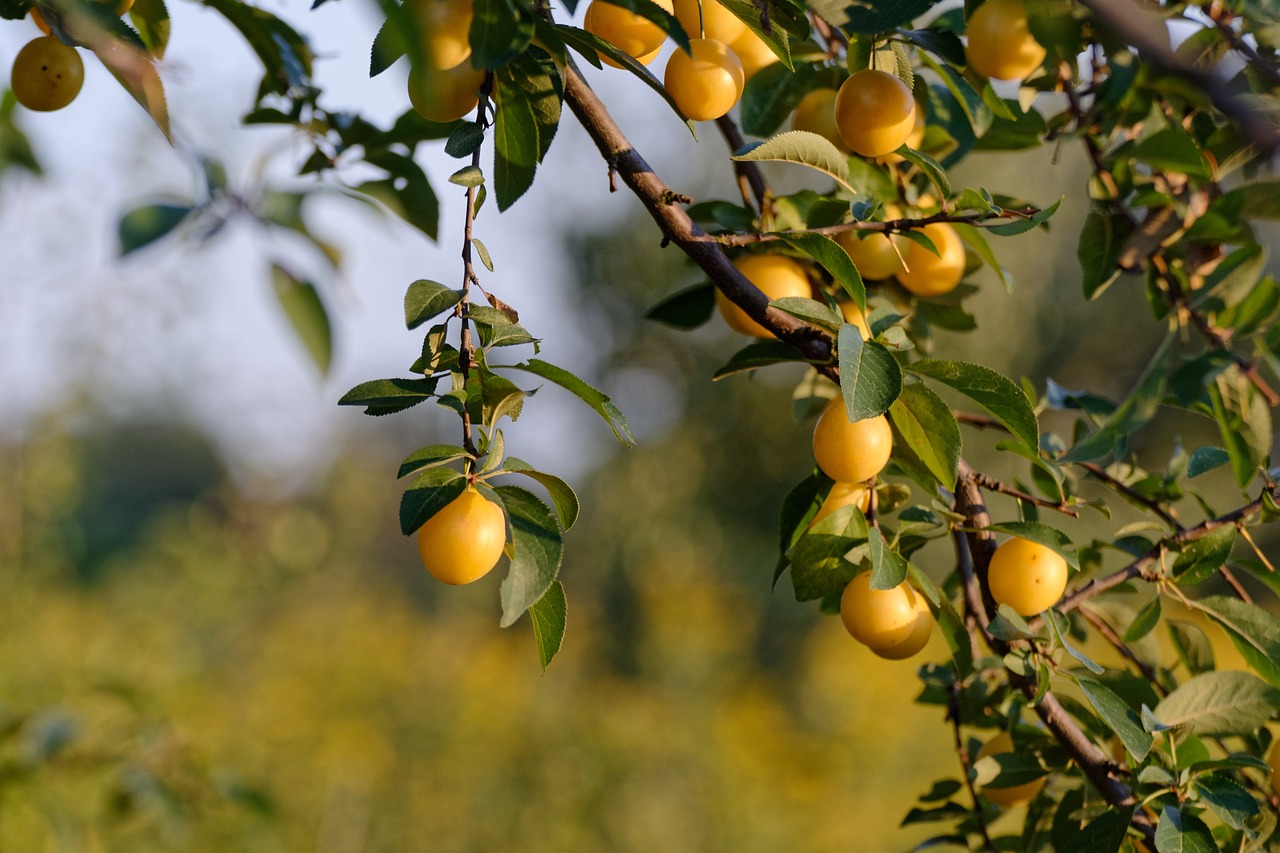
To this day, the exact origin of the mirabelle is not known with certainty.
Experts assume that it may have arisen through a cross between the plum and the cherry plum, or between the plum and the blackthorn. However, it is certain that the mirabelle, as a subspecies of the plum, belongs to the rose family.
The Beautiful One
The mirabelle originally comes from the Near East region and has been cultivated in our latitudes since the beginning of the 20th century. Its classification as a subspecies of the plum, however, only occurred in the mid-20th century under the scientific name «Prunus domestica subspecies syriaca». In everyday language, the yellow variety of plum is referred to as the mirabelle, a term derived from the Italian word «Mirabella», meaning “the beautiful one.”
The mirabelle stronghold in Central Europe is located in the French region of Lorraine, where around 250,000 mirabelle trees grow and approximately 15,000 tonnes of fruit are harvested annually, accounting for over 70 percent of global production. In Switzerland, the mirabelle occupies a niche: according to the fruit growers’ association, 9.4 tonnes of the stone fruit were harvested in 2023.
Its Fragrance Gives It Away
The mirabelle can easily be distinguished from other similar fruits such as the wild cherry plum or the damson, as it is the only one that exudes a honey fragrance when ripe.
In August, the yellow fruits ripen in Switzerland and can be harvested over the course of several weeks. Mirabelles are ripe when they yield to gentle finger pressure.