
Criticism of Uri Trophy Show in Altdorf
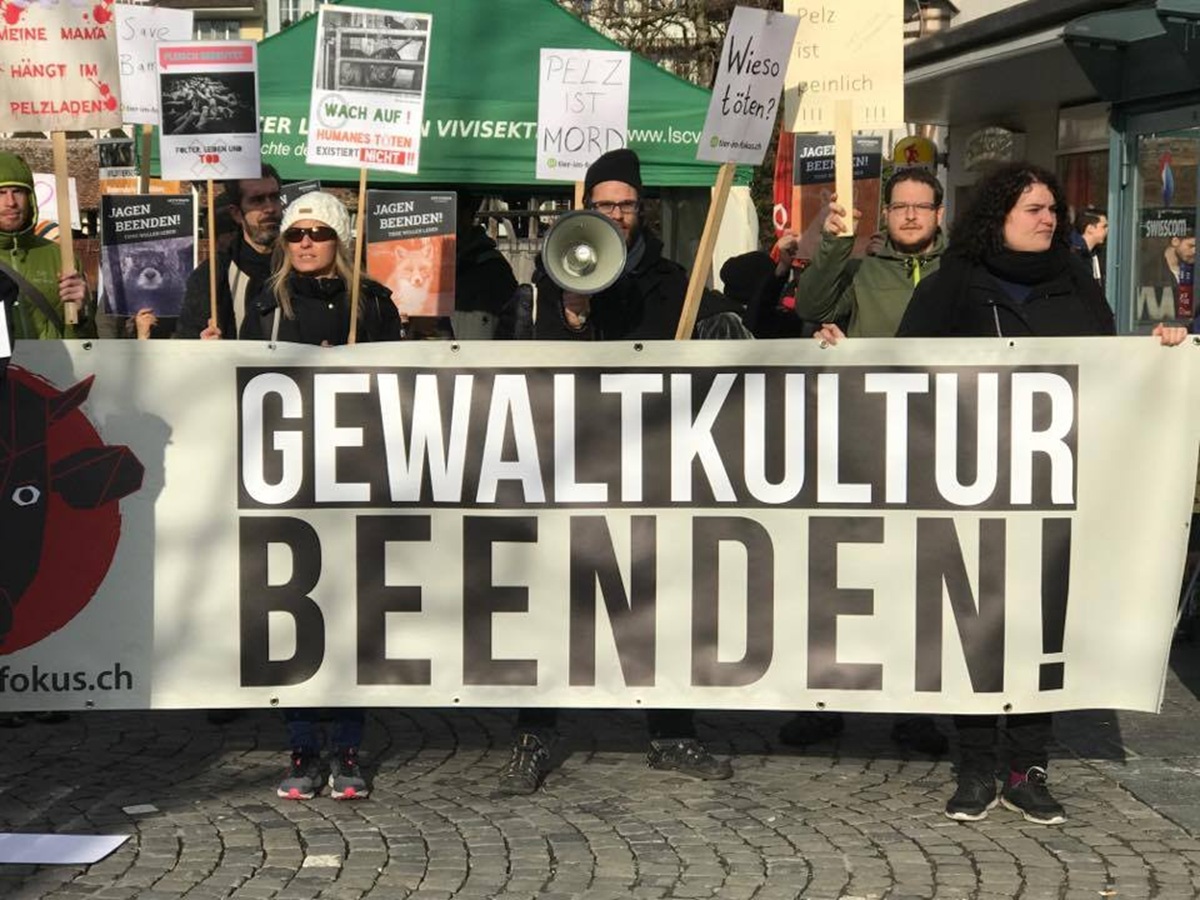
How such events connect tradition, commerce and animal suffering.
Criticism of fur, pelt and trophy events in Switzerland, exemplified by the traditional Uri trophy show in Altdorf (UR) on March 20, 2026.
Wildlife are not commodities for entertainment, prestige and commerce.
IG Wild beim Wild vehemently criticizes fur, pelt and trophy events in Switzerland. Such events present year after year killed wildlife as trophies, decorative objects and trading goods. This normalizes a treatment of wildlife that is no longer appropriate and clearly contradicts societal expectations regarding animal ethics and respect for fellow creatures.
Organizers market these events as tradition conservation and as a contribution to so-called wildlife stewardship. In reality, killed wildlife stand at the center, their body parts measured, rated, awarded or traded as commodities. This practice promotes an outdated trophy culture in which the animal as a sentient individual does not matter, but rather hunting performance and the size of antlers, horns or other "success markers."
Particularly striking is the fact that such events additionally serve as a marketplace for the fur trade. Fox pelts and other hides are purchased, evaluated, sometimes awarded or raffled. This trade obscures the suffering behind every single pelt and contributes to viewing wildlife as raw material. While politics and society take steps toward restricting the fur trade, Switzerland continues to celebrate a commercialized form of recreational hunting that is ethically barely defensible.
Such markets are not folklore, but part of a system that puts value on animal bodies. When pelts are traded at unit prices, animal suffering becomes a calculation. This logic is fundamentally incompatible with a modern understanding of wildlife protection.
IG Wild beim Wild furthermore points out that the hunting practice presented often conveys a sanitized image. In reality, missed shots, injured animals and long paths of suffering are part of everyday recreational hunting. These aspects are neither addressed at such events nor openly communicated by those responsible. The claim that trophy shows serve to analyze the condition of wildlife populations is scarcely tenable. Scientifically grounded monitoring instruments do not require displayed skulls and antlers, which primarily serve self-promotion. Trophies are a material expression of killed wildlife, whose shooting quality, search efforts and suffering barely feature in the official narrative.
From an animal welfare perspective, it is also concerning that children and young people are introduced to such events without being taught a respectful and contemporary approach to wildlife. Instead of knowledge impartation, a spectacle takes center stage that trivializes violence and promotes a romanticized hunting world.
Weapons dealers, optics manufacturers, hunting supplies, hunting trips, raffles of hunting kills abroad: a hunting industrial complex emerges in which killings and animal bodies are part of a marketing system.
Those who kill pointlessly do not protect, and civilized society gains nothing from it. Recreational hunters thus do not ensure healthy or natural wildlife populations, particularly not with their abominable fox hunting. Such events regularly raise questions about ethical aspects, approval practices and public impact, and they must finally be fundamentally reviewed politically and socially.
IG Wild beim Wild calls on those responsible in municipalities, cities and cantons to fundamentally reconsider such events. A civilized society does not need competitions in which dead wildlife are presented as successes, nor does it need a market where pelts are traded like ordinary commodities. What is needed instead is a respectful understanding of wildlife, scientifically grounded wildlife ecology and a departure from recreational hunting.