World's Largest Dolphin Graveyard Celebrates
Anniversary overshadowed by high mortality rates and failed breeding.

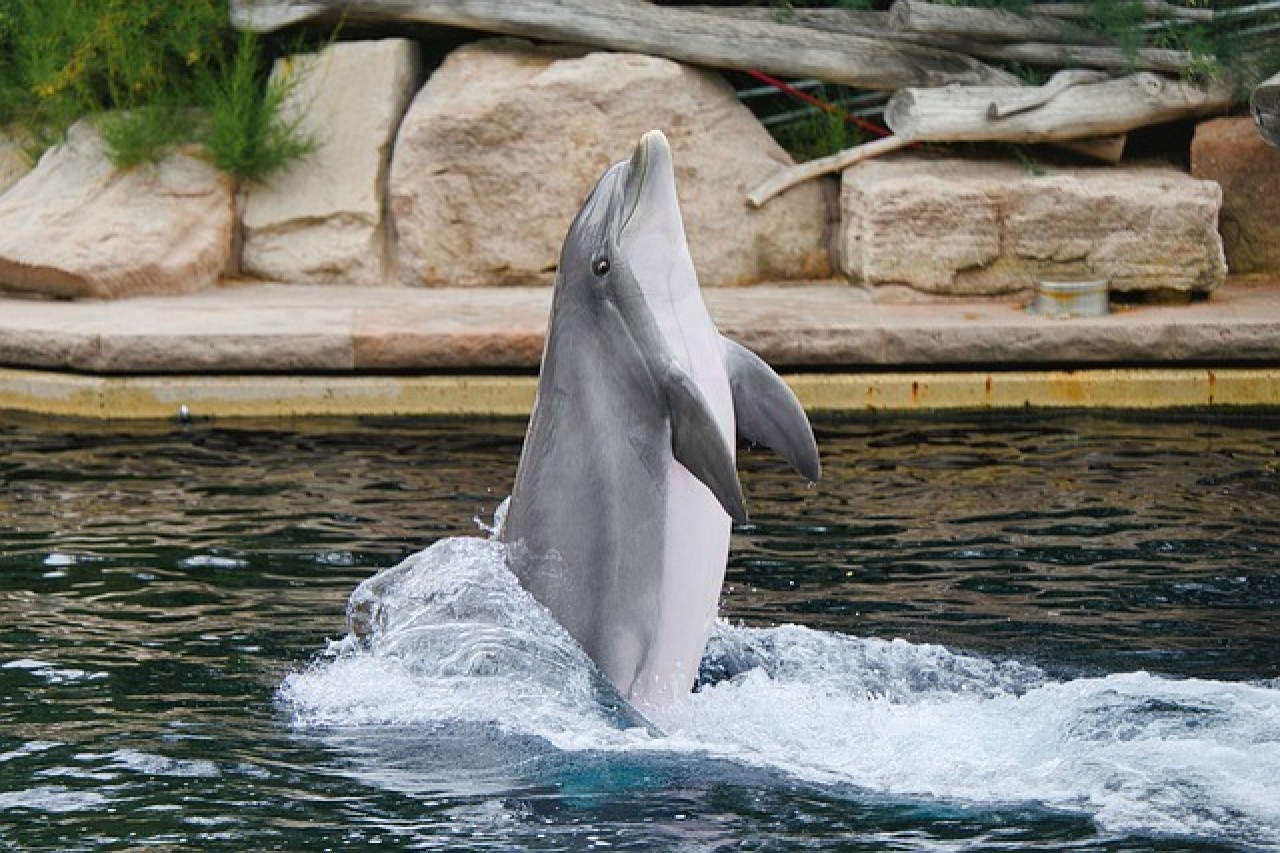
Duisburg Zoo is celebrating 60 years of its dolphinarium – while ignoring an alarming track record.
Since its opening in 1965, 68 dolphins have died there, more than in any other dolphinarium in Germany.
The 60th anniversary is no cause for celebration, but rather an occasion for grief and criticism, emphasises Dr. Sandra Altherr of the species conservation organisation Pro Wildlife.
High mortality rate among young animals
The situation is particularly dramatic when it comes to captive-bred offspring: two thirds of dolphin calves born in Duisburg die before or shortly after birth. Since the dolphinarium opened 60 years ago, only around ten offspring have survived to adulthood. A recent example is the dolphin calf «Domingo», which died in 2023 at just eight months of age from a skull fracture.
“These figures speak a clear language,” explains Dr. Altherr. “While Duisburg Zoo celebrates itself, we should not forget that this facility has rightly been described as the ‘world’s largest dolphin graveyard.’”
Inbreeding through one-sided breeding programmes
The seven dolphins currently living in Duisburg – including two wild-caught individuals from the 1980s – also highlight the problems with breeding programmes. Six of the ten captive-bred offspring across both German dolphinariums were sired by the same bull «Ivo», which can lead to inbreeding problems. “A sustainable breeding programme looks very different,” says Pro Wildlife.
Criticism of the species conservation argument: concrete tanks instead of conservation
Duisburg Zoo presents itself on its anniversary as a modern educational and species conservation facility. Yet Pro Wildlife questions whether keeping dolphins in concrete tanks lives up to this claim. In the wild, common bottlenose dolphins live in complex family groups and travel distances of up to 100 kilometres per day – behaviours that are barely possible in captivity.
"True dolphin protection takes place in the ocean, not in concrete tanks," emphasizes Altherr. "Instead of investing millions in bleak and cramped tanks, this money would be better spent on marine conservation."
The international trend is clearly against dolphinariums
While Germany still operates two of its formerly 14 dolphinariums, other countries have already drawn consequences: France banned the breeding of dolphins in captivity in 2021 (thereby making dolphinariums a phase-out model), Canada prohibits keeping them altogether. Other European countries such as Great Britain, Croatia, and Cyprus have long since closed their dolphinariums or ended the keeping of dolphins.
"Instead of celebrating itself, Zoo Duisburg should finally draw the consequences and end dolphin keeping," demands Dr. Sandra Altherr, biologist at Pro Wildlife. "Modern research and species conservation have long since functioned without putting suffering animals on display. Protecting dolphins in the wild must be the premise."
Further articles
- Zoos cause more harm to animals than you may realize
- Justice for zoo animals
- Is it time to ban zoos?
- Finland: Zoo wants to send giant pandas back to China due to maintenance costs
- The keeping of elephants in zoos must finally come to an end!
- Killing of surplus animals – zoos fail at species conservation