Klöckner announces half-hearted circus wild animal ban
PETA: The list must include at least tigers, lions, and elephants.

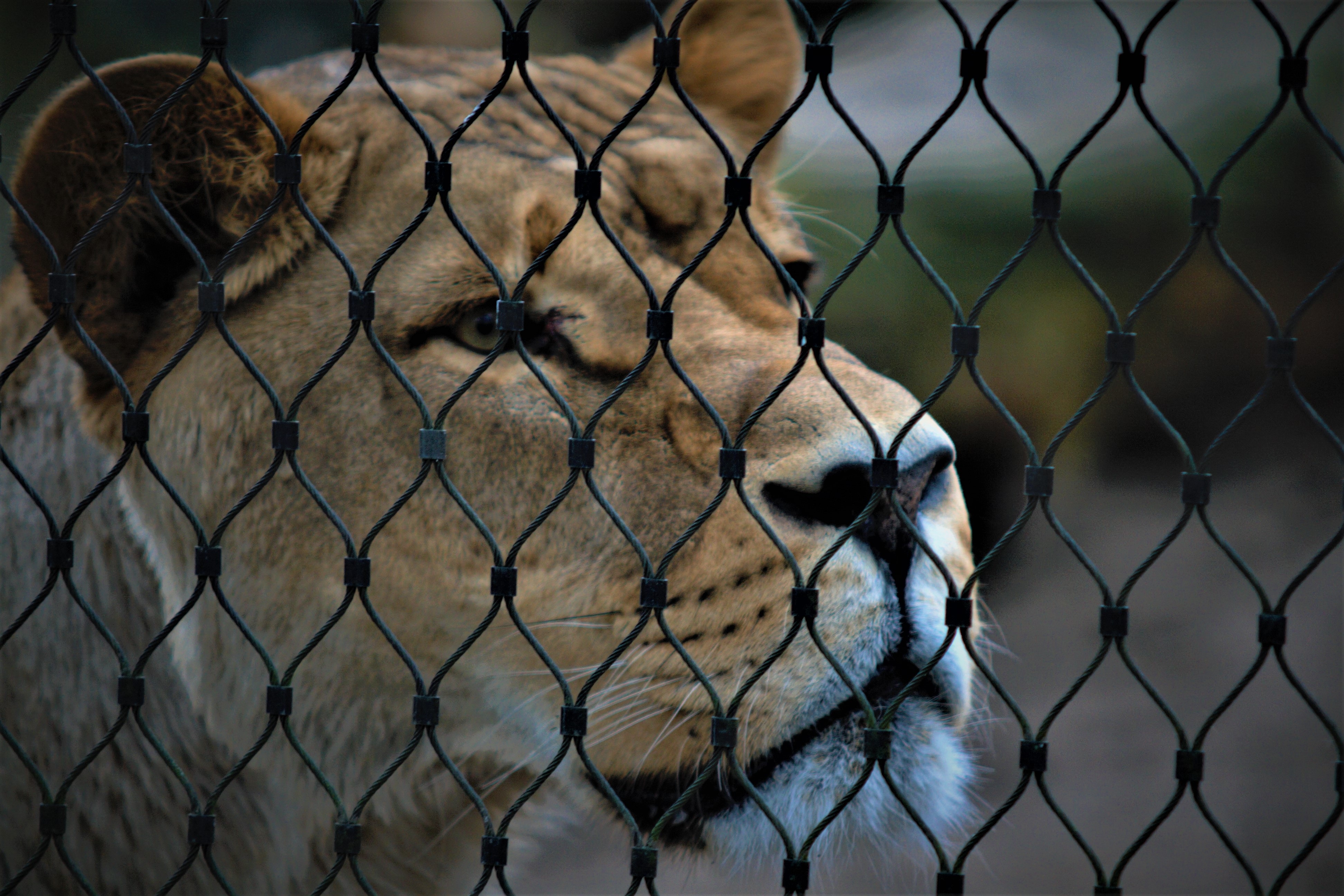
According to media reports, the Federal Ministry of Food and Agriculture, under Julia Klöckner, is working on a draft law that would ban certain wild animals such as giraffes, hippos, and rhinoceroses from circuses.
PETA welcomes the long-overdue announcement but criticises the fact that species such as lions, tigers, and elephants would apparently still be permitted to be kept in circuses. One criterion, according to the announcement, is whether the animals can be “trained.” However, the Federal Council already emphasised in its resolution calling for a wild animal ban in 2016 (printed paper 78/16) that externally imposed “training” is not suitable for compensating for small enclosures, describing the assumption as an “outdated hypothesis“.
«There are just two giraffes and one hippo currently kept in circuses in Germany. If the proposed draft were to apply only to these species, it would be a poor joke«, comments Thomas Schröder, President of the German Animal Welfare Federation.
More than 20 European countries already ban the keeping of wild animals in circuses, either fully or partially. The Federal Council called for a ban as early as 2003, 2011, and 2016. A majority of agriculture ministers also advocated for a wild animal ban at an agricultural ministers’ conference last year. Yet the federal government remained inactive.
PETA also emphasises that the training of wild animals in circuses always involves force and coercion. Whips, sharp elephant hooks, sticks, and crops are the common instruments used to compel the animals into obedience. If only because of repeated escapes, injuries, and deaths involving big cats and elephants, these animals must be banned without delay. The animal rights organisation calls on Federal Minister of Food and Agriculture Julia Klöckner to introduce a ban on all animals in circuses.
"It is associated with suffering for all animals to be transported from place to place in dark trucks up to 50 times a year and to be kept mostly on asphalt lots. The notion that forced training with a whip can replace a species-appropriate enclosure is a fairy tale that the circus industry invented decades ago. Year after year we receive numerous videos of severely behaviorally disturbed elephants, lions, and even horses. Only a general ban on animals would be an appropriate measure," said Peter Höffken, specialist adviser at PETA. "With the support of rescue centers and zoos, all animals could be rescued from circus operations within a year."
Broad support for a ban on wild animals in circuses
Part of PETA's motto is that animals are not here to entertain us. The animal welfare organization calls for a fundamental ban on animals in circuses, as housing in small enclosures, constant transport, and training characterized by violence and coercion lead to behavioral disorders, illness, and often premature death. According to a representative forsa survey from 2014, 82 percent of Germans believe that wild animals cannot be kept in a species-appropriate manner in circuses. The Bundesrat called in its already thirdresolution for a circus ban on wild animals, which the federal government has so far failed to implement. Regarding exotic wild animal species, theGerman Veterinary Association and all state agriculture ministers also support a ban. Nationwide, more than 100 cities and municipal councils have already passed a local ban on wild animals in circuses.