Is animal breeding still relevant today?
Animal breeding is a relatively recent luxury, for people who have everything and love the extraordinary.

There are differing opinions on animal breeding and its significance in today’s world.
Animals have rights. They are not merely objects of human use, but sentient beings with their own needs and interests. Many countries have recognised in recent years that it is important to adequately protect and respect animals.
Furthermore, it is important to acknowledge that animals are independent living beings with their own needs and interests. Every animal has individual abilities, preferences and behaviours that ought to be respected. Animals have a right to freedom, autonomy and integrity.
While some argue that the breeding of livestock is necessary to meet the demand for food, others advocate a plant-based diet and consider animal breeding ethically questionable.
The cow
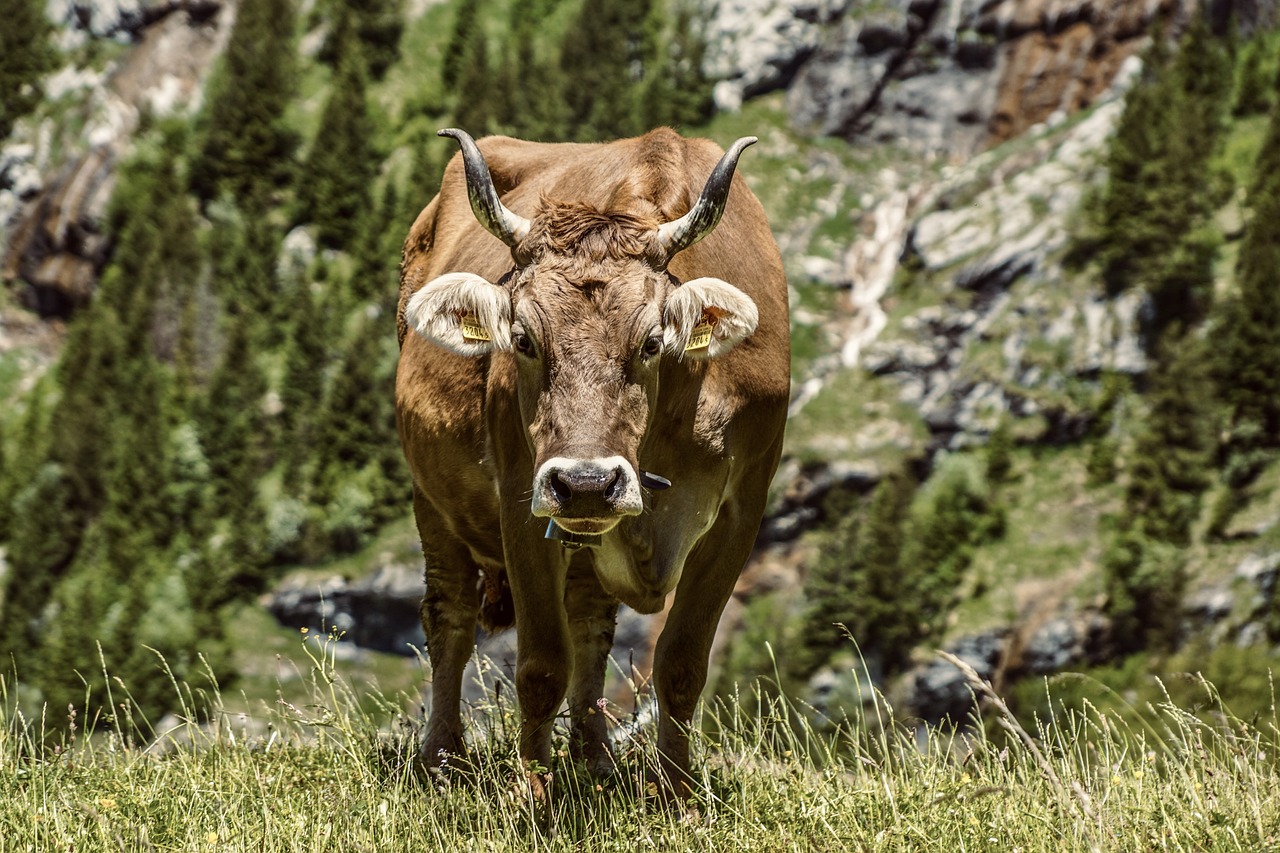
The cow, as a horned animal, is a ruminant. Ruminants are animals with a special digestive system adapted to their plant-based diet: in addition to the normal stomach, they possess several fore-stomachs. Cattle, sheep and goats are also ruminants.
There is no horned animal that is not a ruminant, and almost all ruminants bear horns. That a relationship exists between the two is readily apparent.
The cow, as a ruminant, has four stomachs; it is a highly specialised digestive animal. It must be, for it consumes approximately 100 kg of grass daily in summer, and the same quantity of hay in winter. The entire organism of the cow is shaped by this specialisation. Thus the skull of a fully grown cow is primarily an enormous jaw apparatus, designed to consume and rechew the large quantities of plant matter.
The horn
The horn grows from the age at which the young animal begins to eat hay and grass. It is formed from the horn sheath as a condensed skin organ and the bone core, which anatomically speaking is an outgrowth of the frontal bone. The seemingly dead organ is extremely well supplied with blood, which circulates between the horn sheath and the bone core. The latter is hollow, connected to the frontal and nasal cavities, and thus linked to the circulation of digestive gases. These gases and digestive forces are sent back from the horn into the organism of the cow, where they invigorate the digestive mass in the gastrointestinal tract.
The horn is therefore more than mere decoration. Cows also use it to scratch areas they cannot otherwise reach. Cows communicate with their horns — from a gentle nudge to a forceful push, to a movement of the head without any contact.
Cows communicate with their horns — from bumping to contactless head movements to gentle nudging. A flick of the horn is sufficient to drive away lower-ranking animals.
Horns indicate how many times a cow has calved. Much like the annual rings of a tree, each birth leaves a kind of ring on the horn. The horn also helps the cow keep a cool head: it dissipates excess heat through the horns, thereby protecting the brain. The warmer the climate, the larger the horns. InSwitzerland a cow feels most comfortable at temperatures between 0 and approximately 25 degrees Celsius.
There are no scientific studies demonstrating that cattle with horns are more dangerous than cattle without horns. There are, however, a number of studies confirming that the better the relationship between humans and animals, and the more appropriate the husbandry and management, the fewer conflicts and injuries occur.
Ethical Aspects
In addition to the ethical aspects, there are also ecological concerns. The production of meat has a significant impact on the environment and contributes to the climate crisis.
It is important to understand that animals, just like humans, have fundamental rights, and that it is our duty to protect them and care for them. Each of us can make a contribution toanimal welfare by ensuring that we interact with animals responsibly and advocate for their dignity and well-being.
Breeding can make sense for rescue dogs, explosive detection dogs, therapy dogs, herding dogs, and livestock guardian dogs. Alternatives are rarely or not at all available in these cases. The argument becomes somewhat more difficult when it comes to breeding animals for their appearance.
One could also call it extremes: instead of higher – faster – further, simply bigger or smaller. The nose short or the legs long, the back too long or too much skin for the body, causing it to wrinkle. The examples are varied, and so is the resulting suffering. Because it is the pets that have to live with it, not their owners.
Can animals suffer?
There is much debate about whether animals can experience suffering. Most people believe that animals are capable of suffering and feeling pain. This is supported by numerous scientific studies. When animals are treated poorly or kept in poor conditions, they can suffer from fear, stress, and pain. For this reason, there are many organizations dedicated to the welfare of animals.
In relation to animal breeding, the question of animal suffering is particularly relevant. Many animals used for breeding are kept in cramped and unhygienic conditions. These conditions can cause both physical and psychological stress, leading to suffering in the animals.
Overall, the question of whether animal breeding is still relevant today remains closely tied to personal convictions and moral values. However, it is important to engage consciously with the topic and consider the impacts on the environment, animals, and society to be taken into account. The decision for or against animal breeding should be based on well-founded information and careful consideration.
| You can help all animals and our planet with compassion. Choose empathy on your plate and in your glass. Go vegan. |