Hobby hunter shoots deer during closed season
The accumulation of legal violations in the context of recreational hunting is no longer a marginal phenomenon, but a structural problem: Whether in Switzerland, Germany, Austria or elsewhere in Europe – cases of poaching, weapons offenses, animal cruelty, coercion, threats, fraud and abuse of office in the hunting environment are mounting everywhere. Where private individuals are equipped in large numbers with firearms, ammunition, silencers and extensive special rights, an ideal breeding ground for criminal activities, brutalization and vigilantism emerges.


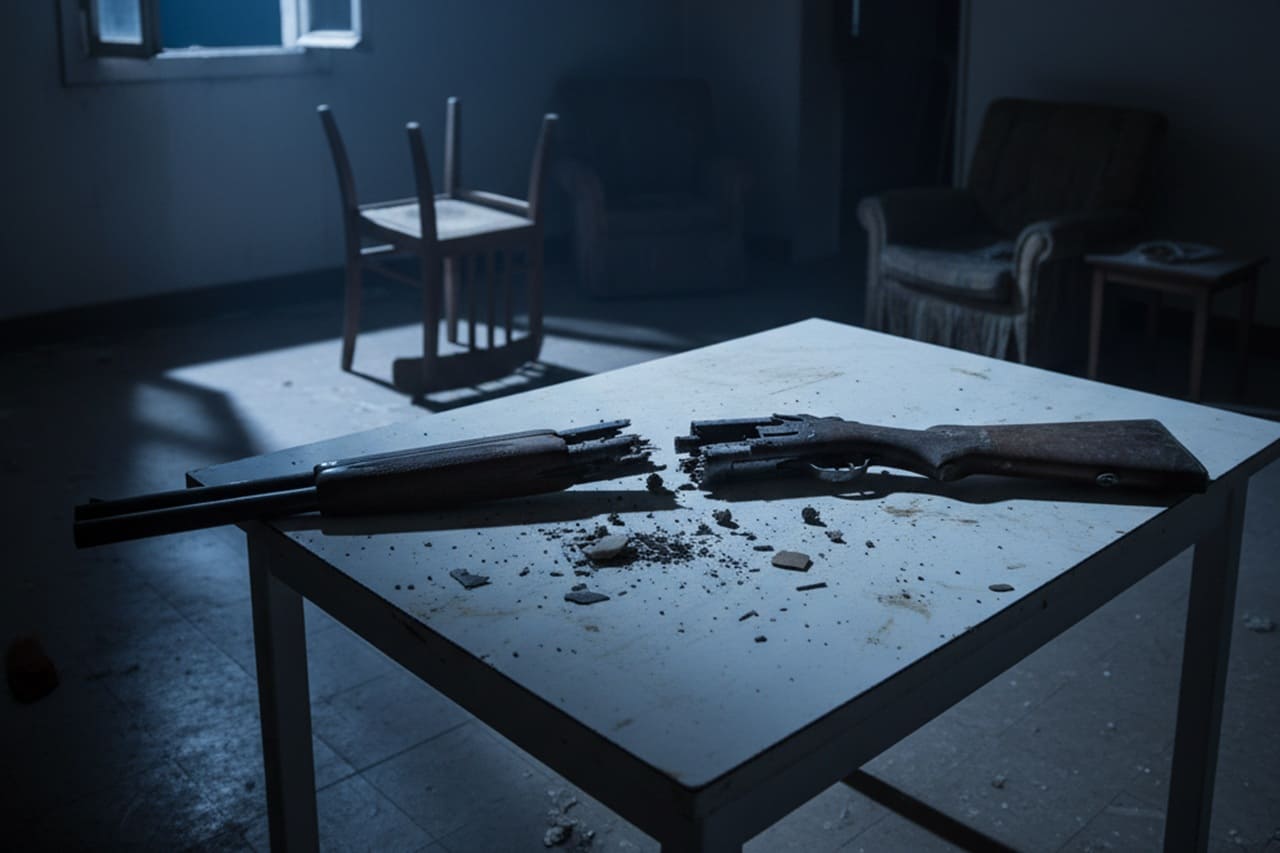
A 59-year-old hobby hunter and farmer from the Gmunden district shot a deer in the middle of closed season on his private property in St. Wolfgang, Austria, with a valid hunting license but outside his designated hunting area, with multiple confiscated weapons and silencers in the house.
The man lay in wait for the animal at night together with a 26-year-old relative, allegedly because silage bales and fences had been damaged, and shot the approximately six-year-old stag shortly after midnight. A neighbor, who is also the hunting leaseholder of the affected territory, heard the shot, found the dead animal as well as the two hobby hunters on the property and alerted the police. The economic damage to the hunting association is stated as more than 4,000 euros; the 59-year-old was charged with serious interference with hunting and fishing rights; temporary weapon bans were issued against both men.
Closed season means that the affected wildlife species may neither be hunted nor captured nor intentionally killed; this is exactly what the hobby hunter consciously disregarded. Hunting law and regulations in Upper Austria clearly define closed seasons. For stags, a strict shooting ban applies from early January to mid-July, which is specifically intended to guarantee animals peace during sensitive life phases. If shooting occurs during this period or in a foreign hunting territory, this is not a trivial matter, but a serious interference with hunting rights, which can be punished as a form of poaching with severe penalties. The legal classification exposes the common trivialization of such acts as 'misunderstanding' or 'negligence'. Here, clear rules were consciously and armedly violated.
The current case shows an armed hobby hunter with an entire arsenal, silencers and nocturnal ambush on private property, a profile that lies closer to the gun enthusiast than to the much-cited 'conservation mandate'. During the house search, authorities seized eight hunting rifles, two silencers, a presumably self-built silencer, a red light module and large amounts of ammunition, partly unlocked and freely accessible. At the same time, territories in Upper Austria report further shots during closed season, for example at deer, which has long made the narrative of an absolute 'isolated case' unbelievable. Nevertheless, the public is expected to encounter such armed recreational actors in recreational areas, at night, with live weapons, legitimized by a hunting license.
Officially, recreational hunting serves wildlife management and the protection of agriculture and forestry; in practice, a mix of economic interests of hunting associations and personal shooting lust dominates. Particularly revealing is that even a long-standing district hunting master speaks of a case of 'vigilante justice' in connection with the shot stag, an involuntary admission of how fragile internal control in the hunting milieu actually is. Instead of establishing professional, officially guided solutions for conflicts between agriculture and wildlife, the narrative of 'problem wildlife' is cultivated, which one 'shoots away' independently if necessary. Those who act this way use recreational hunting as a stage for private exercise of power over life and death and not as responsible management in the interest of the common good.
When hobby hunters attract attention with multiple legal violations, arsenals, silencers and nighttime operations, the question must be permitted whether private recreational hunting in its current form is still socially justifiable at all. What would be needed are significantly stricter aptitude and reliability tests, comprehensive controls, automatic disarmament for violations, and a transfer of responsibilities to professionally trained, state-controlled wildlife management agencies. Cases like the deer shooting in St. Wolfgang are not regrettable lapses, but symptoms of a system that structurally enables armed vigilante justice and only attempts to sanction it laboriously after the fact. As long as politics and authorities cling to the reassuring fiction of particularly responsible hobby hunters, the reality in the hunting grounds remains: wildlife dies illegally, and it is precisely armed recreational citizens with hunting licenses who repeatedly emerge as perpetrators.
Hobby hunters frequently operate in poorly controlled spaces: remote hunting grounds, night and twilight hours, inadequate supervision, plus a strong 'us against them' milieu that reflexively interprets critical questions from residents, walkers or animal rights activists as attacks on a supposed traditional community.
Anyone who combines this environment with alcohol, hunting passion and status thinking gradually shifts the boundaries of what is permissible, up to deliberate legal violations that are then to be reclassified as 'accidents,' 'misunderstandings' or 'regrettable isolated cases.' The documented cases in the category 'Crime & Hunting' of IG Wild beim Wild show how broad the spectrum is: from illegal killings during closed seasons to shootings near residential areas, homicides and weapons misuse in private settings to systematic poaching in protected areas.
Politics nevertheless stubbornly maintains the narrative of fundamentally 'responsible hunters,' even though the same structures that are supposedly meant to provide 'stewardship' and 'safety' repeatedly produce highly criminal perpetrators. Anyone who seriously questions recreational hunting quickly encounters massive lobbying, trivializing association communications and an astonishing willingness of many authorities to 'solve' hunting violations internally rather than consistently prosecute them. On the other side stand unarmed citizens who want to use forests and fields as recreational areas and are confronted there with a milieu in which weapons, claims of dominance over animals and group dynamic pressure create a dangerous mixture.
From the perspective of animal welfare and the common good, a fundamental reassessment therefore suggests itself: A private leisure activity that demonstrably repeatedly serves as a gateway for criminal acts and regularly culminates in senseless violence against defenseless wildlife is not a tradition worthy of protection, but a security and civilization problem. The cases collected in the 'Crime & Hunting' dossier make clear that this is not about individual black sheep, but about a system that favors, conceals and trivializes crimes. As long as nothing changes in this regard, recreational hunting in Europe remains a flashpoint for criminal energy, with wildlife as the first victims and an unsettled public that bears the risk.
Support our work
With your donation you help protect animals and give voice to their concerns.
Donate now →