Graubünden: The release of lynx is stopped
When three strictly protected lynx were "mistaken" and shot by a game warden in Canton Graubünden in November 2024, the case seemed clear: a misshot, a scandal, an admission of guilt. The man reported himself, was fined and excluded from wolf hunting. What was sold as an exception reveals itself today as a symptom of a system that places the interests of recreational hunting above those of species protection.

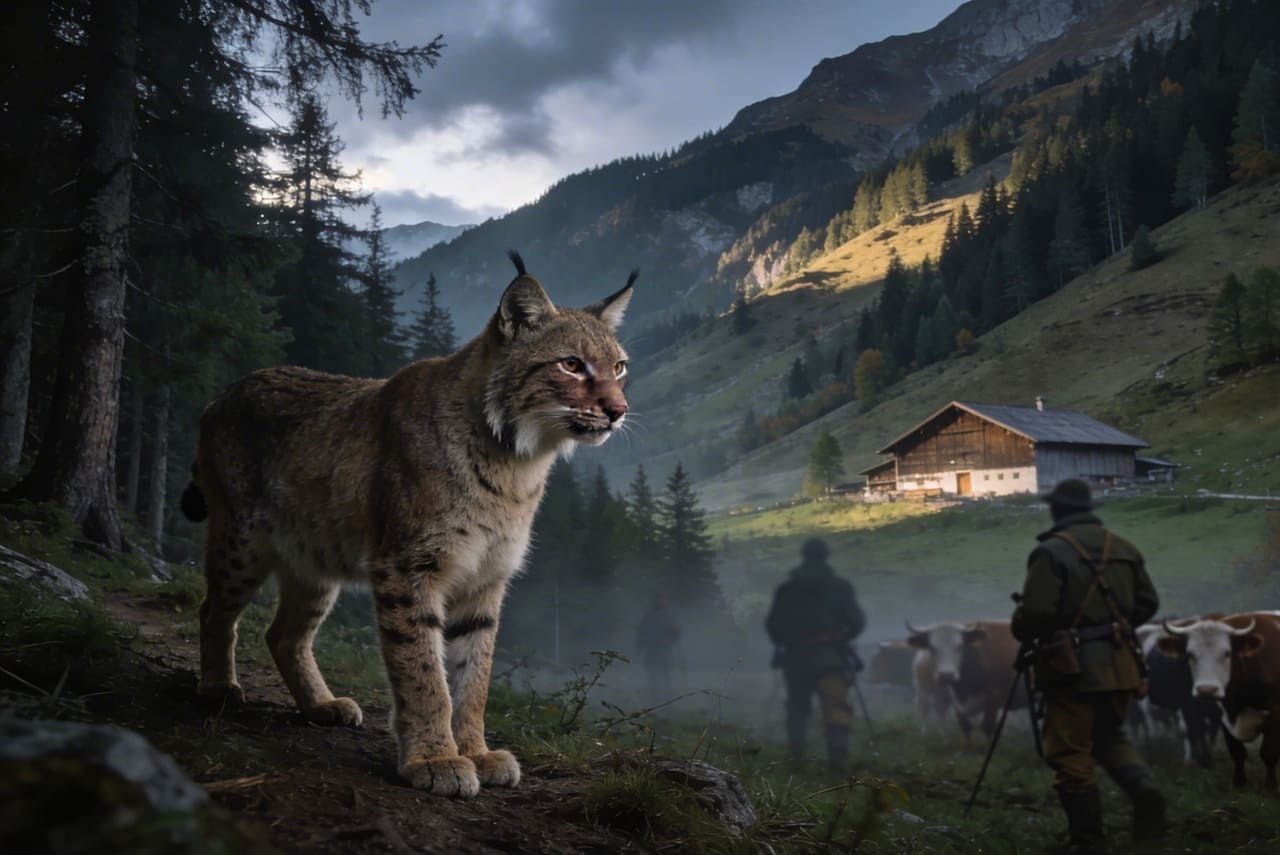
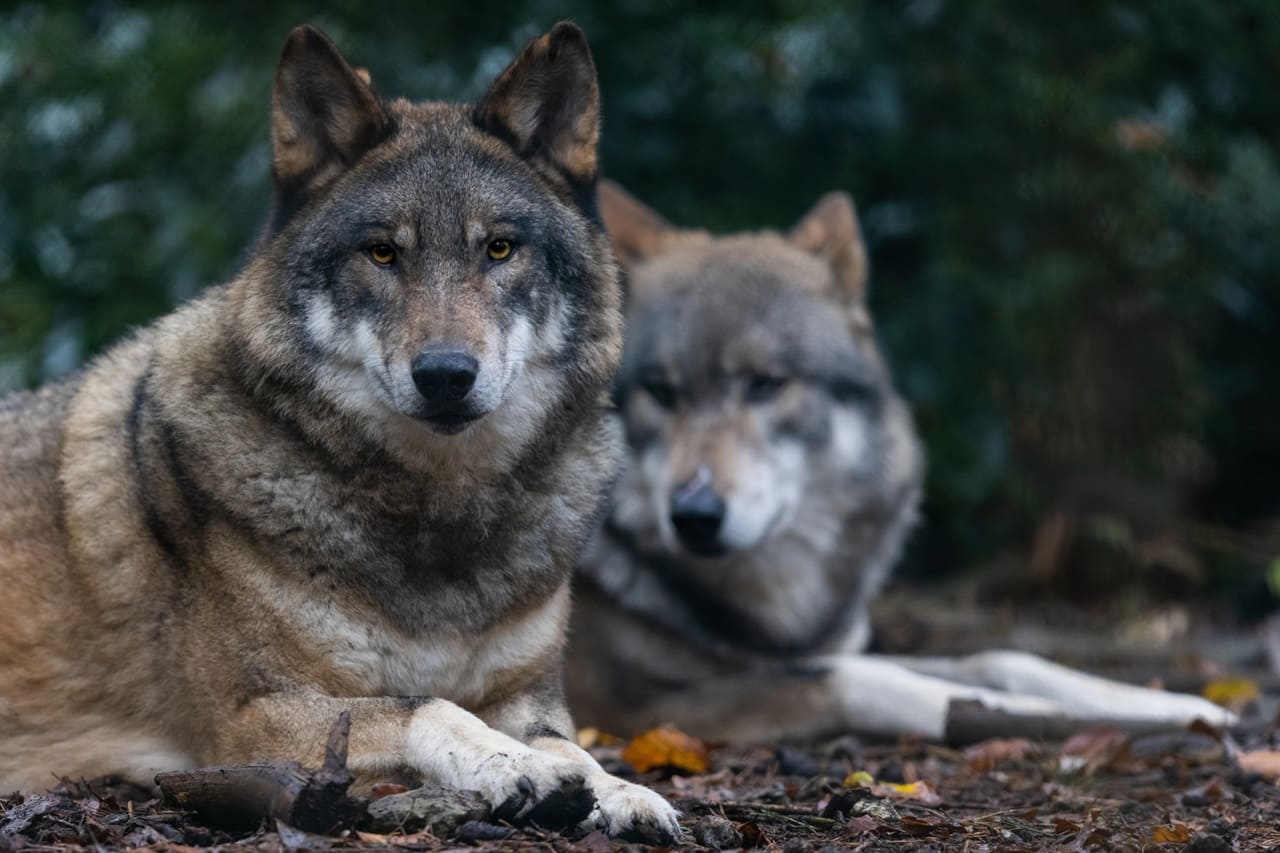
On November 16, 2024, three lynx are killed in Graubünden as part of a wolf regulation, one adult animal and two juveniles.
Officially, it is said that the game warden mistook the animals for wolves in his night vision scope. That a trained professional gets it wrong three times in a row and each time hits a strictly protected species says more about the practice of predator hunting than about an individual error.
The canton and the federal government initially respond with classic internal administrative damage control: The Federal Office for the Environment (FOEN) approves Graubünden in December 2025 to release two lynx to compensate for the loss and support the genetic diversity of the population. One lynx is to be captured in the Jura, a second imported from the Carpathian population. It is a kind of technocratic reparation: domestic lynx are shot and foreign ones are brought in to replace them.
But just a few months later, the wind shifts. In February 2026, Graubünden regional news reports: 'No lynx release in Graubünden for now.' The canton puts the project on hold, although the federal permit remains valid. Not because the fatal shooting suddenly becomes less serious, but because rural-dominated, SVP-aligned circles in parliament, where hunting interests play an important role, mobilize forces.
Political pressure instead of responsibility for a protected species
The reason for the suspension is remarkable: The canton wants to await two pending motions in the Grand Council before releasing the lynx. At least one of these motions comes from the SVP Graubünden around lead signatory Reto Rauch, which demands a reassessment of the lynx release and fundamentally opposes the settlement of additional predators. The other motion is a mandate from Lugnez Centre Grand Councillor Gian Andris Derungs.
In the next elections, voters can correct this error and weaken those forces that systematically block the protection of predators.
In their parliamentary group mandate and associated communication, the SVP paints a familiar picture: predators as a problem, as a threat to agriculture, alpine farming, tourism and 'landscape management.' They invoke a concern barometer showing that a high proportion of the population perceives predators as an urgent problem, and demand that the canton request a new review of the project from FOEN and refrain from additional predators for the time being.
Thus the fatal shooting of three lynx is politically reinterpreted: Not the hunting structures, training or operational practices come into focus, but the animals themselves. Instead of having to ask whether Graubünden's hunting administration and its armed personnel are even capable of dealing responsibly with protected species, the debate is shifted to the old enemy image of 'predators.'
The role reversal: From perpetrator to victim
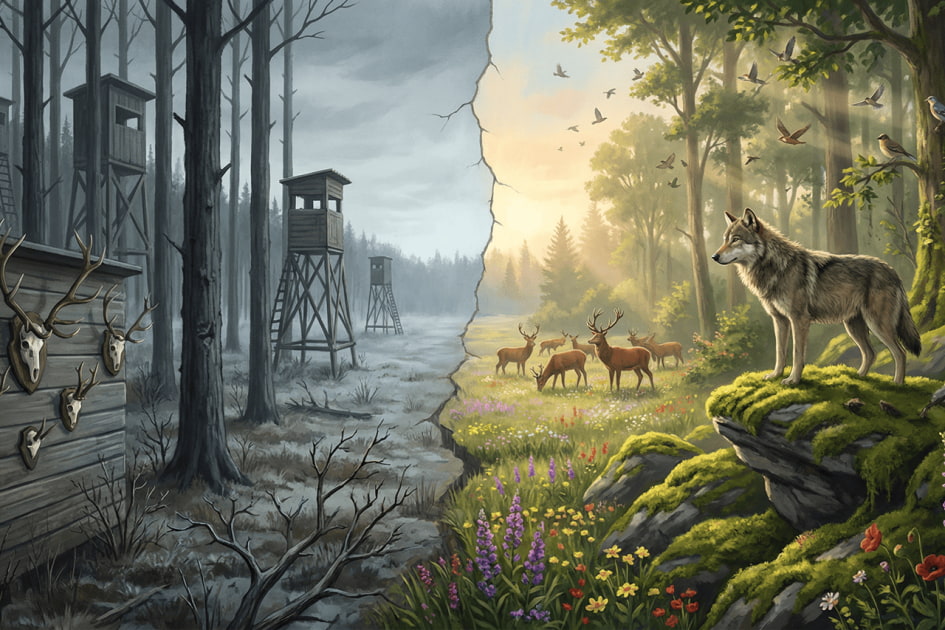
Particularly typical of hunting-political staging is the role reversal: The game warden who shoots three lynx becomes a tragic errant who 'exemplarily' reports himself. The lynx, a strictly protected species, become collateral damage of supposedly necessary wolf regulation. The hunting structures themselves - shooting orders, night vision technology, political pressure for 'regulation' - remain largely untouched.
The legal sanction remains correspondingly mild: a fine for multiple violations of the hunting law and exclusion from wolf hunting. That roughly sends the signal: Three dead lynx are a mistake, but not a systemic error.
At the same time, the corrective project - the release of two lynx - is questioned not for ecological reasons, but for political-hunting ones. The message to the administration is clear: Anyone wanting to compensate for predators lost through fatal shootings must expect headwinds.
Species protection that only exists on paper
On paper, the lynx is strictly protected in Switzerland. In reality, its protection appears to be relativized as far as the hunting-political consensus currently permits. The Graubünden case reveals a series of contradictions: The authorities present themselves as conservation-friendly by planning replacement lynx, but shy away from consistent implementation as soon as the lobby mobilizes. The cantonal decision to stop the reintroduction does not follow from a technical reassessment, but from party-political pressure. The federal permit remains in place, yet implementation at the cantonal level is blocked. Species protection as an optional exercise, not as a mandatory duty.
Meanwhile, the central question remains unanswered: What does it mean for a population when three animals, including juveniles, are wiped out in a single operation by the state hunting organization? The discussion prefers to revolve around 'acceptance problems' and 'public concerns,' rather than responsibility, error culture, and structural consequences in the hunting system.
A lesson about power, not about protection
The halted lynx reintroduction plan in Graubünden is less a story about species protection than one about power relations. A canton that initially wants to make symbolic corrections after a massive shooting error abandons this corrective project as soon as the lobby builds pressure.
The question of whether the SVP motion has already been formally processed or adopted is almost secondary. What is decisive is that its mere existence is enough to prompt the canton to apply the brakes. This is the real signal to all those dealing with protected species: It is not the protection status that decides, but the political enforcement power of those who feel disturbed by lynx and wolf.
Anyone speaking about lynx in Graubünden today should therefore not only talk about populations, genetics, and reintroductions, but about a hunting system that, despite clear protection provisions, leads to three lynx dying and ultimately the corrective for these killings being politically blocked.
Recreational hunting in Graubünden: A security risk for animals and humans
In Graubünden, over 1,000 fines and charges are issued annually against recreational hunters for violating hunting and weapons laws. With around 5,800 licensed hunters in Graubünden, practically every fifth person per year is delinquent, with the unreported cases remaining unknown. This shows: Legal violations are not marginal phenomena, but part of the normal operation of recreational hunting in this canton.
Research on Graubünden's high hunting season also indicates that up to 1,000 animals were classified as shooting errors in five years, although the hunting ordinance is considered 'restrictive.' Studies on grazing shots and tracking document hundreds of wild animals with gunshot wounds found as carrion, and even this is only the visible tip of the iceberg. Analyses by animal welfare and wildlife protection organizations assume that a significant proportion of shot animals are initially only wounded and are found days later or perish somewhere in the terrain. Recreational hunting thus systematically produces animal suffering that is incompatible with the image of supposedly 'fair chase' and 'animal welfare-compliant' recreational hunting.
Added to this is the real danger to humans, livestock, and pets. Documented cases show that recreational hunters repeatedly seriously injure or kill people by shooting at poorly identified targets. Media and police reports record shots fired at agricultural vehicles such as harvesters and tractors, where drivers were narrowly missed. Repeatedly, livestock and pets such as cows, goats, dogs, and cats are shot because hobby hunters fire at 'supposed wildlife' in twilight or poor visibility conditions. Thus not only wild animals, but also agricultural workers and the general population are concretely endangered, while the hunting lobby likes to present itself as a reliable partner of agriculture.
At the same time, recreational hunting runs counter to modern wildlife and habitat protection. In Graubünden and other cantons, predators such as lynx and wolves are repeatedly killed 'by mistake'—the shooting of three lynx by a game warden is just the visible example of this.
Comparisons with cantons without traditional recreational hunting, such as Geneva, show that with professional wildlife management, traffic control, habitat enhancement, and fair compensation models, significantly fewer animals can be killed while still controlling wildlife damage.
The annual kill numbers are enormous: In Switzerland alone, tens of thousands of ungulates—roe deer, red deer, chamois, and wild boar—are shot, plus tens of thousands of foxes and other predators, even though many of these hunting practices are ecologically highly controversial. A system that produces thousands of legal violations, hundreds of misshots, serious accidents, and the repeated killing of protected predators every year is thus not an instrument of modern wildlife policy, but a safety and animal welfare problem.
Support our work
With your donation you help protect animals and give voice to their concerns.
Donate now →