Photographed for the first time: The rusty-spotted cat in West Bengal
The world's smallest wild cat has been captured on camera for the first time — India's rusty-spotted cat.

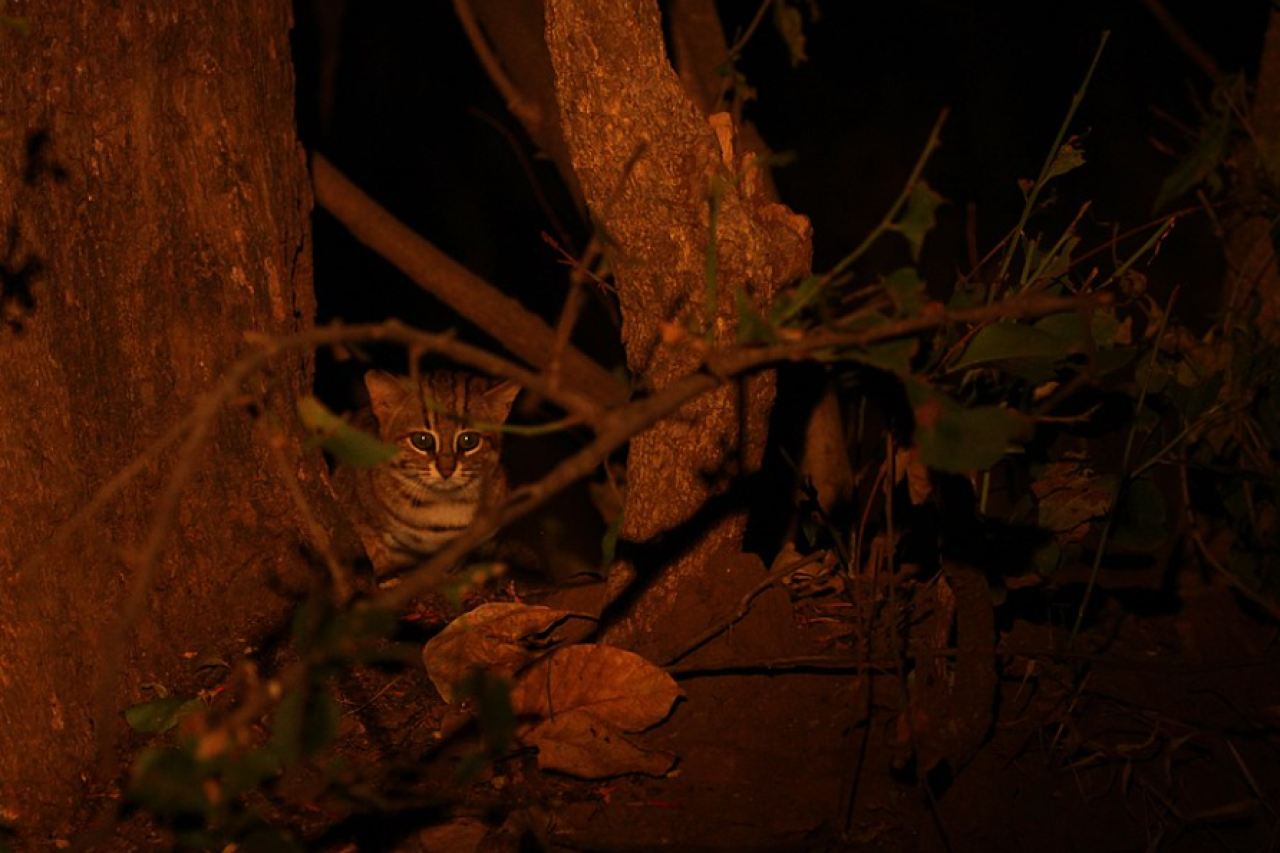
One of the most secretive and tiniest wild cat species in the world was recently photographed for the first time in its home region of West Bengal, India.
Weighing between 1.1 and 1.6 kilograms and measuring 35 to 48 centimetres from whisker to tail tip, it is the smallest wild cat species in Asia. If more were known about it, it could be confirmed as the world's smallest wild cat, but the black-footed cat in Africa may be even smaller.
Camera trap provides first images
An environmental and conservation NGO called HEAL (Human and Environment Alliance League) captured an image of a rusty-spotted cat during a camera trap survey in the wilderness of the eastern Indian state of West Bengal.
Very little is known about the ecology and behaviour of the rusty-spotted cat in the wild. Animals kept in captivity are mostly nocturnal, but are also briefly active during the day.
«Such a rare and delicate dwarf cat can only survive in a forest where it finds a favourable ecosystem,» said Anjan Guha, Divisional Forest Officer of Purulia (a district in West Bengal). «The recent movements of tigers, the presence of leopards, and now this small cat too, show that the wild food chain in the forests here is being maintained.» The biodiversity of these ecosystems is crucial.
As the Times of India first reported, Vasudha Mishra, a researcher at HEAL, said that the presence of the rusty-spotted cat means the number of known wild cat species in the state has risen from 8 to 9. Worldwide, there are 39 wild cat species from the genera Felis and Panthera.
Camera traps as the most important research tool
Camera trap surveys such as those conducted by HEAL are the most important method for estimating animal populations in forest habitats. They can also determine the range of an animal, which in turn feeds into conservation strategies.
This cat, found in Nepal, Sri Lanka and India, is restricted exclusively to the Indian subcontinent, where it was once widespread. Today it has been sighted in Jharkhand and Chhattisgarh and now also in West Bengal, which share a specific ecoregion, the Chhotanagpur Plateau, where leopards have recently been sighted as well.
«Villagers in forest fringe areas are already aware of the presence of the leopard and are being supported through our livestock support projects to promote tolerance,» said Suvrajyoti Chatterjee, Secretary of HEAL.
«Together, such initiatives will continue to support the survival of a rich group of mammals such as sloth bears, pangolins, small Indian civets, golden jackals, jungle cats, hyenas and wolves.» More on Environmental and nature conservation.