Owl parents as a team, not as «vermin»
Barn owls impressively demonstrate how caring and cooperative wildlife raise their offspring and how much a policy shaped by agricultural and hunting lobbies puts these protected mouse hunters under pressure despite hunting bans.

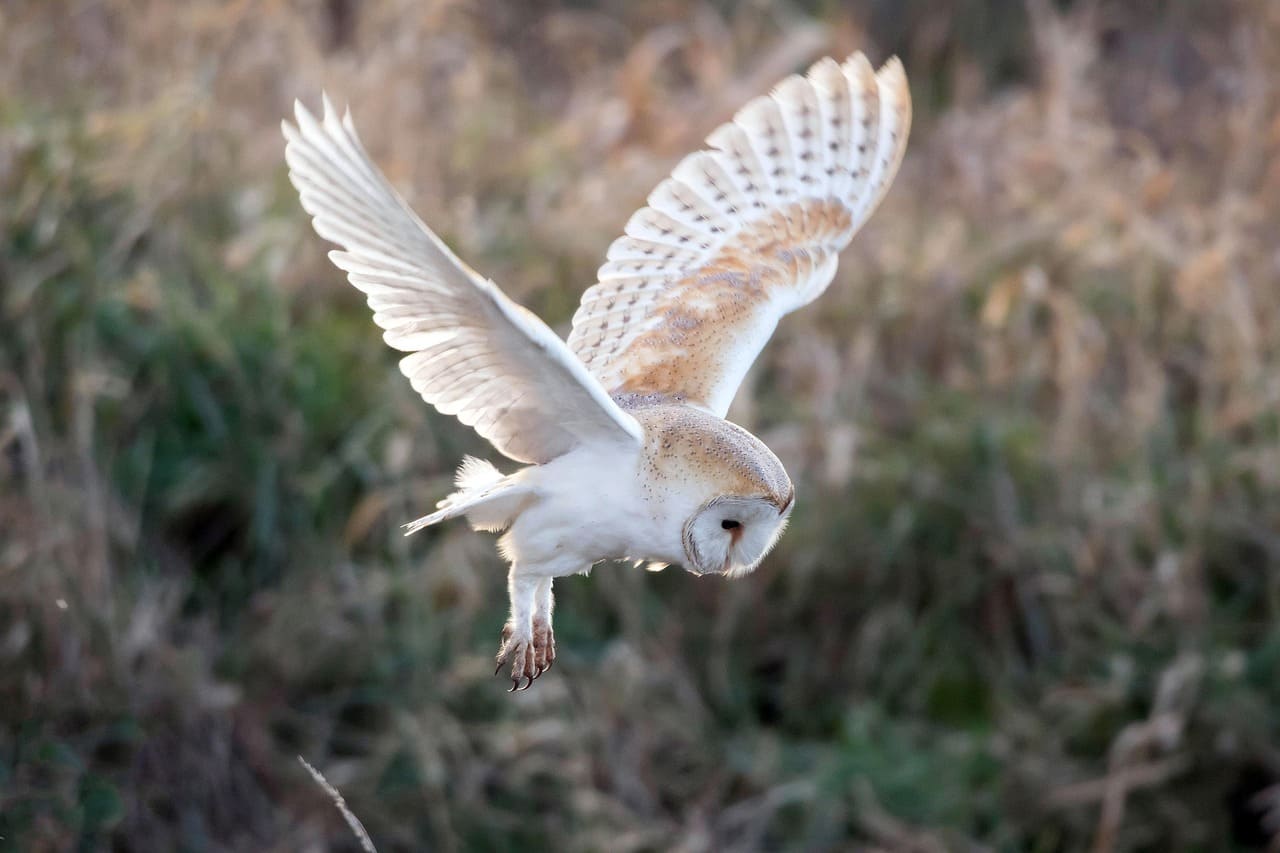
A research team from the University of Lausanne and the Swiss Ornithological Institute monitored 68 barn owl breeding pairs in western Switzerland using GPS and acceleration sensors.
The analysis shows: Fundamentally, the male is the main provider, while the female contributes approximately 27 percent of the prey on average. When the male's hunting performance declines, such as through fewer flights or lower success rates, the female increases her efforts, hunts longer and takes over a larger share of food procurement. Pairs that coordinate their hunting times well meet more frequently at the nest and share the care of their young more evenly; their chicks have significantly better chances of fledging.
Particularly the last hatched, smallest nestlings benefit: Where the mother hunts more and the parents cooperate closely, they gain more weight and develop better wings. This finely balanced family system stands in sharp contrast to the crude categorization of many wild animals as "small game" or "predator game" in hunting debates and makes clear how far the emotional reality of the animals is from the technical language of recreational hunting.
Strictly protected yet victims of our system
Legally, the barn owl is a protected species in Europe: It falls under the EU Birds Directive, is classified as strictly protected in many countries, and is listed on the Swiss Red List as potentially endangered. It is neither game nor "huntable." A shooting would typically constitute a criminal offense and would have nothing to do with regular hunting practice. In Switzerland, estimates suggest only a few hundred to around 1,000 pairs still breed, mainly in the Central Plateau north of the Alps, which underlines the species' sensitivity to habitat changes.
Despite this protected status, barn owls get caught between the fronts of agricultural and hunting politics, which view the open cultural landscape primarily as production and hunting territory. While the hunting sector likes to adorn itself with terms like "stewardship," the real causes of endangerment—intensive agriculture, pesticides, rodenticides, structural poverty in the landscape, and traffic—are often treated more gently politically than the protection of wild animals, as wildbeimwild.com shows in numerous articles about other species.
Mouse poison instead of mouse hunters: The deadly logic of rodenticides
Barn owls, like foxes, live on small mammals, especially voles and other mice, and thus provide an enormous ecological service to agriculture. A breeding pair consumes thousands of mice per season and could serve as natural "pest control" in many places, if allowed to. Instead, agriculture and pest control in Europe continue to use rodenticides—rat poisons—on a large scale, particularly second-generation anticoagulants that accumulate in the food chain.
Documentation from Germany and other countries shows that predators like barn owls, eagle owls, tawny owls, kestrels, buzzards, red kites, or foxes can be secondarily poisoned when they eat poisoned mice. Long-term monitoring of barn owls demonstrates widespread contamination with rodenticides in parts of Europe, while systematic monitoring is lacking in many states. This is precisely where agricultural and hunting lobbies intersect: Instead of promoting natural predators as allies, poison strategies are defended that also affect strictly protected species, thereby making the credible "stewardship" rhetoric of recreational hunting absurd.
Stress, structural poverty, and the role of politics
Research on barn owls makes clear how sensitively the species reacts to changes in the cultural landscape: Mouse cycles, structural diversity, and nesting opportunities determine whether a breeding year succeeds or fails. Studies by the Ornithological Station show that even slightly elevated stress hormone levels in young birds can have significant impacts on parental care, growth, and physiology. Intensive agriculture with large, structurally poor areas, little fallow land, sealed or renovated buildings, and dense traffic infrastructure intensifies this stress while simultaneously reducing food supply.
Hunting politics in this context rarely advocates for predators, but frequently defends a claim to use the same landscape: more hunting operations, more field roads, more hunting stands, more 'management' of fields and forests. While strictly protected species have safety nets on paper, there is a lack of consistent enforcement, binding regulations against toxins, and an agricultural policy that does not treat biodiversity as a marginal issue. Topics that wildbeimwild.com regularly addresses in connection with other wildlife.
Hunting criticism in light of the barn owl families
The new study shows parents who coordinate their hunting times with each other, flexibly adapt their efforts and take greater risks especially for the weakest chicks. This reality of a highly social, sensitive wild animal collides with a hunting worldview that primarily understands wildlife as a resource, regulatory object or backdrop, and in which habitats are optimized for huntable species but simultaneously become more toxic for protected mouse hunters like the barn owl.
A hunting-critical perspective on barn owls therefore does not need to construct the offense of illegal owl hunting, but must identify the structural responsibility of the hunting and agricultural lobby: the defense of rodenticides, the tolerance of landscape impoverishment, the fixation on huntable species and the continued romanticization of 'stewardship' that barely reflects the needs of strictly protected predators. The image of barn owl parents tirelessly hunting mice at night to bring their young through stands symbolically for species protection that deserves more than well-sounding laws: namely agriculture and hunting politics that no longer indirectly poison these families.
Support our work
With your donation you help protect animals and give voice to their cause.
Donate now →