“An end to fox hunting”: the science, the cantons and what you can do
A campaign for an end to fox hunting in Switzerland.
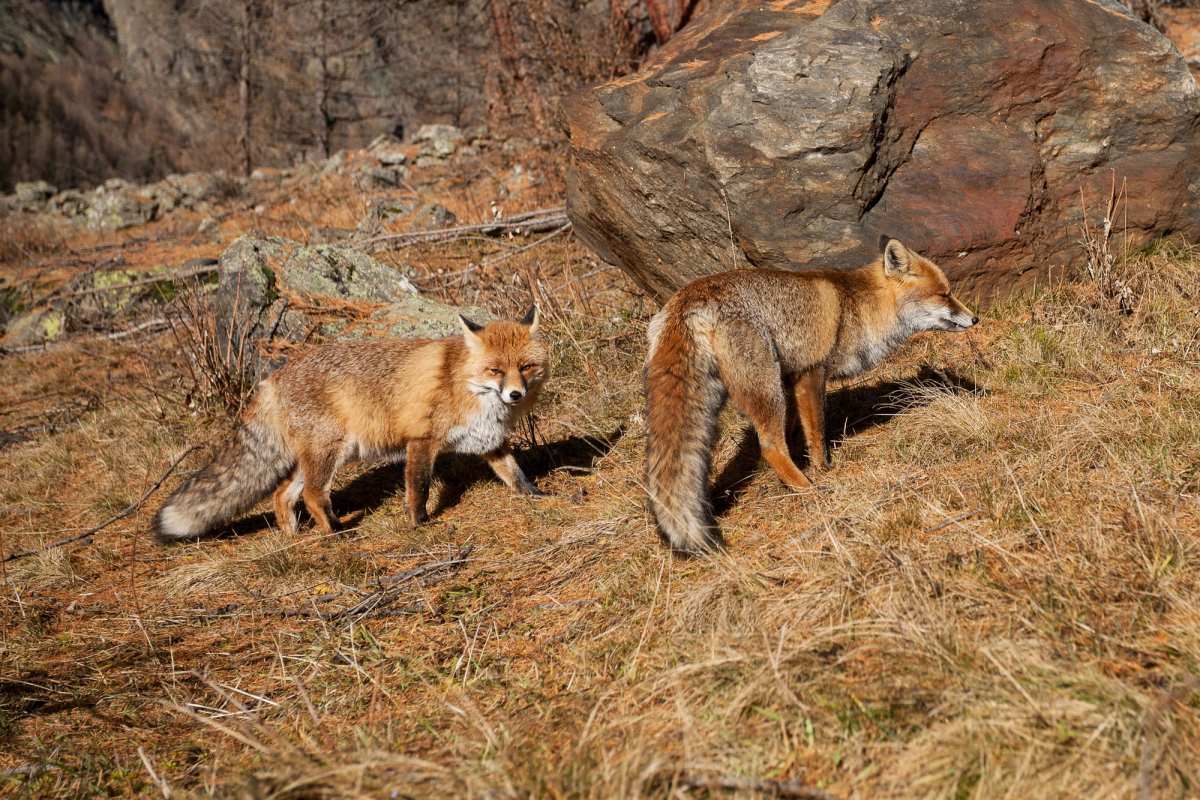
Every year around 19,000 red foxes are shot in Switzerland.
The official justifications: population control, disease control, protection of ground-nesting birds. More than three decades of wildlife biology research consistently refute these arguments. The IG Wild beim Wild has therefore launched the campaign “An end to fox hunting” – with canton-specific contact lists, a scientifically grounded template letter and concrete steps for action for everyone who wants to get involved.
What the figures show
The canton of Lucerne is the only canton that systematically records the health status of foxes that have been killed. Of 2,217 killed animals, only 39 showed any disease findings. Over 98 per cent of the foxes shot in the canton of Lucerne were healthy – no disease outbreak that would have been contained by hunting.
With the fox tapeworm, hunting is even counterproductive: a study by Comte et al. (2017) showed that intensive hunting increased prevalence from 44 to 55 per cent, because young foxes fill the gaps and carry a higher parasite load. In Luxembourg the infection rate fell from around 40 to below 20 per cent after the fox hunting ban of 2015.
A recent study in “Biological Conservation” (Jiguet et al. 2026) examined 383,299 red foxes killed annually in France: no statistical link with damage reduction, and the control costs exceed the damage eightfold. Killed by the million – for nothing.
What the cantons have done so far
The cantons’ responses to petitions on fox hunting are largely uniform: rejection without a single scientific source.
The canton of Glarus replied with three paragraphs and not a single study. Canton of Basel-Landschaft sent four pages of administrative jargon – likewise without any study evidence. Canton of Bern rejected a cross-party motion; in doing so, the cantonal government itself conceded that fox hunting was «effectively an end in itself». Canton of Uri answered the petition on 24 August 2026 with a generic policy statement that addresses none of the six questions raised and cites not a single study.
The only exception: the Canton of Zug commissioned an independent study from SWILD in 2025. The result (May 2026): fox hunting shows no demonstrable regulatory effect, does not improve disease control and is inferior to non-lethal methods. The hunting commission thereupon decided to stop actively promoting fox hunting.
Models that have worked for decades
The Swiss National Park has been hunting-free since 1914 – over a hundred years, without any population explosion or disease problems. The Canton of Geneva has managed without recreational hunting since 1974. Luxembourg banned fox hunting nationwide in 2015, with a measurable decline in the fox tapeworm. No federal law obliges the cantons to hunt foxes.
What you can do now
For the cantons of Lucerne, Glarus, Basel-Landschaft, Zug, Bern, Uri and Basel-Stadt, the campaign provides complete contact lists of cantonal councillors as well as canton-specific background information. For all other cantons there is a universal template letter that can be copied directly into your own email programme. Please send it only as a personal email – this is politically more effective than any mass mailing.
LET'S STAY IN TOUCH!
We would love to send you the latest news and offers in our newsletter.
Support our work
With your donation you help protect animals and give their voice a hearing.
Donate now →