Bern hobby hunters rebel against Hess
Lorenz Hess, president of the Bern Hunters' Association (BEJV) for over 15 years, is under fire – not from animal rights activists or environmental organizations, but from his own base. 17 out of 29 Bern hunting associations have directly approached government councilor Christoph Ammann and openly declare: Their own association no longer represents them.

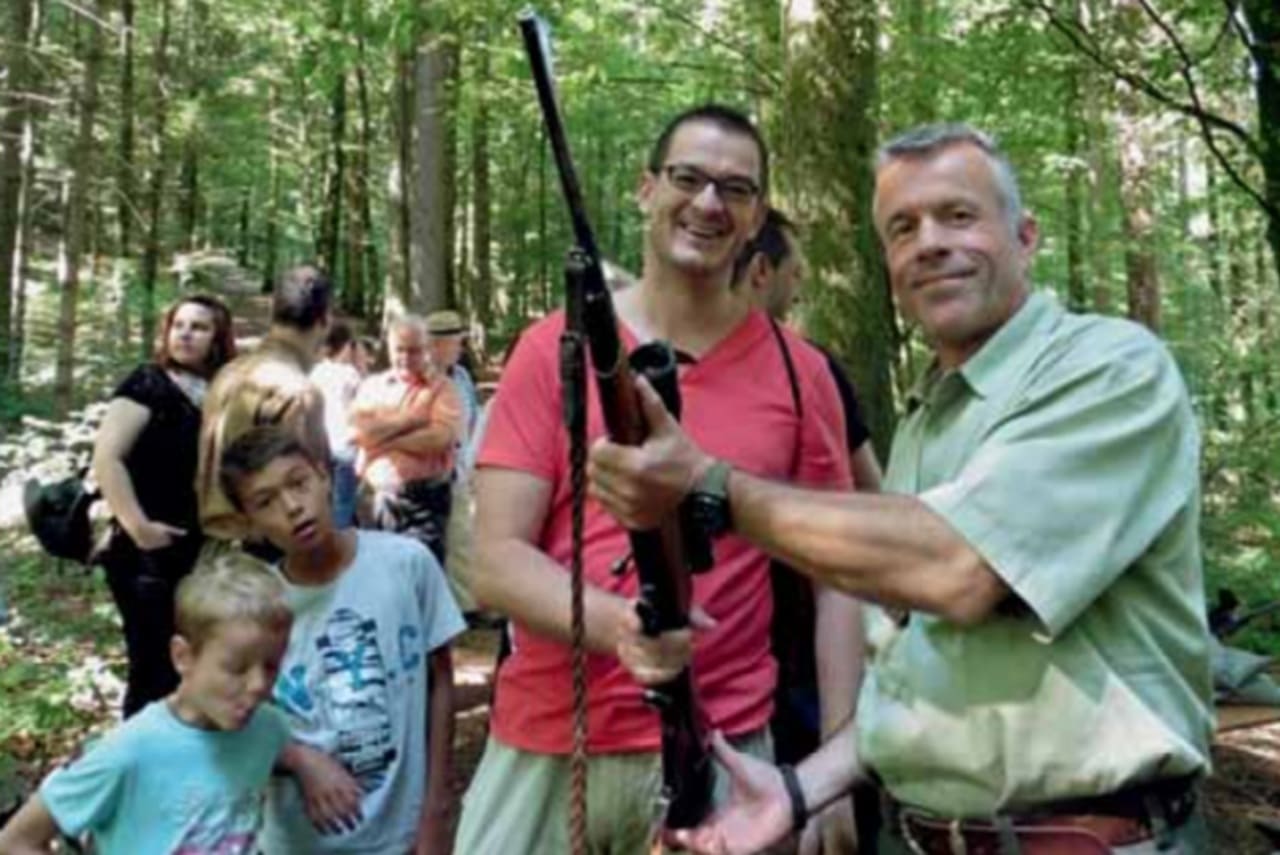
The trigger: Cantonal hunting inspector Nicole Imesch is pushing forward a revision of the Bern hunting ordinance that provides for a switch to block hunting seasons for most animal species.
What is considered a sensible structuring of hunting operations from a wildlife biology perspective (less constant pressure on wildlife, more targeted population regulation) meets massive resistance from organized recreational hunters. Instead of fighting this regulation on its merits, the base directs its anger against their own president, writes the Berner Zeitung.
Recreational hunters want more say in shooting decisions
On the surface, the accusation is: Hess failed to involve the grassroots early enough, he lost touch with the associations. Behind closed doors, however, it's about something else entirely. The planned changes mean specifically: fewer free hunting days, more focus on female animals and juveniles instead of trophy pieces, and stricter temporal structuring of hunting practice. This contradicts what many hobby hunters understand by 'their' hunting: the freest possible access to hunting grounds during the longest possible season.
The president of the Seeland Hunters' Association and former customs director Christian Bock speaks in his letter to government councilor Ammann of a 'lack of inclusion' of recreational hunters and 'non-transparent information'. 17 identical letters were submitted by 29 associations, a coordinated campaign that looks like a grassroots revolt at first glance. Hess' predecessor Peter Zenklusen also got involved in early February and wrote to Ammann on behalf of 'veteran Bernese hunting officials', that same Zenklusen who, according to Hess himself, had demanded stronger hunting regulation even in the recent past.
Wildlife biologist between reason and association lobby
Nicole Imesch took office as hunting inspector on February 1, 2024. The wildlife manager and forest-wildlife specialist has years of experience at the Federal Office for the Environment. Her professional qualifications are uncontested. And yet: as soon as she begins to align hunting practice with scientifically sound wildlife management, her reforms are labeled as a 'hastily rushed ordinance revision'. An AI caricature circulating in the Bernese hunting scene showing Hess on a leash held by Imesch illustrates how far the personal attacks reach.
The pattern is familiar: as soon as an administration seriously attempts to strengthen wildlife protection or make hunting operations more ecologically sound, the organized recreational hunters mobilize against the implementers, using democratic-sounding arguments like 'participation' and 'transparency', which in reality mean obstruction.
One man, many roles, and a fox
Hess is not a blank slate. In 2018, he made headlines nationwide when a video surfaced showing him beating a wounded fox with a wooden stick. Hess' own justification: his gun barrel was clogged with dirt. Animal welfare organizations reacted with horror. Weltwoche wrote at the time of a 'militant member of parliament on a psychopathic fox hunt'. Anyone who today hears that Hess is the victim of 'fact-free agitation' should know this context.
At the national level, Hess has consistently worked through parliamentary initiatives to facilitate the shooting of predators: wolf, lynx, fox, the list is long. Simultaneously, according to Lobbywatch, he holds a dozen mandates. And he has explicitly opposed a blood alcohol limit for armed hobby hunters, even though pilots, train drivers, and police officers are naturally subject to sobriety requirements. The question of whom Hess actually represents as association president—the grassroots, recreational hunters, the hunting industry, or his own political profile—is thus not merely rhetorical.
What Hess claims about Geneva, and what is true
In the TeleBärn debate on the interpellation 'Non-violent alternatives to hunting in Bern', Hess claimed that Geneva has an 'army of state hunters'. Reality looks different: since the hunting ban in 1974 share around a dozen game wardens in the Canton of Geneva just 3 full-time positions, and accomplish exemplarily what around 420 recreational hunting licenses used to «accomplish». There are years when not a single deer, fox, or hare is shot in the Canton of Geneva. Biodiversity has measurably increased.
In the Canton of Bern, however, around 2,500 foxes and 1,600 deer are shot annually by recreational hunters. That Hess defends this model as having no alternative while spreading demonstrably false claims about the Geneva model shows how far the Bernese Hunting Association has moved away from objective wildlife management.
Structural failure, not an isolated case
What is currently becoming visible in the Bernese Hunting Association is not a regrettable operational accident. It is the logical result of a system in which hunting presidents are not elected based on ecological competence, but on political networking. Hess exemplifies the Switzerland-wide pattern: a trained PR consultant and National Councillor with a dozen mandates who is simultaneously association president.
Psychologically, the internal uproar in the BEJV is also explained by tradition as a social defense mechanism: Those who grew up in the Canton of Bern and have hunted since childhood experience criticism of recreational hunting as an attack on their own identity. As long as this is the case, wildlife biologically sensible reforms like block hunting will be reflexively fought, and the discontent is not directed against recreational hunting itself, but against those who deliver the message: the hunting inspector, the association president, science. The fact that the vast majority of critics in the grassroots remain anonymous is telling.
What is at stake
Hess is elected to office until 2027 and has announced he will not run for a fifth term. The crucial question is not whether he resigns early. The crucial question is: Who will ultimately prevail, a professionally grounded hunting administration that takes wildlife protection and population regulation seriously, or an association landscape that understands every sensible reform as an attack on their tradition?
According to a UN biodiversity report, Switzerland is the country with the highest proportion of threatened species. And it is hunting lobbyists like Lorenz Hess who biodiversity initiatives and fact-based wildlife management at the forefront. For wildlife in the Canton of Bern, the answer would be more important than any internal association war.
More on this topic at wildbeimwild.com: Is the hunting association misleading the Bernese population? · Interval hunting in the Canton of Bern · Scandal: Hobby hunter again conceals mandate · Will a new scandal with the lynx follow the wolf massacre? · Psychology of recreational hunting in the Canton of Bern · What qualifications does a hunting president need in Switzerland?
Support our work
With your donation you help protect animals and give voice to their concerns.
Donate now →