
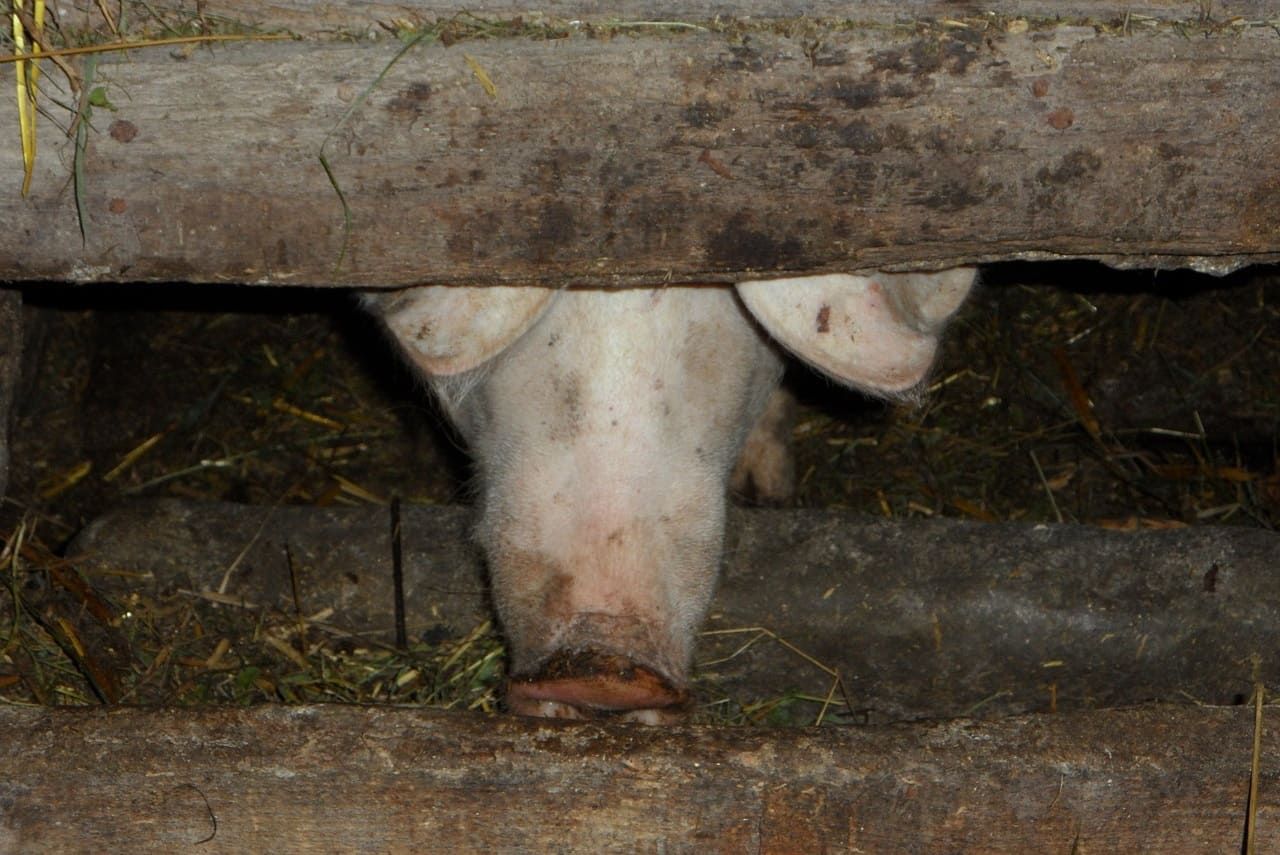
African swine fever (ASF) is one of the most devastating animal diseases in Europe. It kills wild boar and domestic pigs, is harmless to humans, and has wreaked havoc on the continent since 2007. This dossier compiles the key facts, critically examines the role of recreational hunting, and demonstrates why the political exploitation of the disease poses a problem for wildlife, animal welfare, and public safety.
What awaits you here
Facts instead of panic: What ASF actually is, how it is transmitted and why the common narratives of the hobby hunting lobby do not stand up to critical scrutiny.
European overview: How the epidemic has spread since 2007, which countries are currently affected, and which strategies have failed or succeeded.
Switzerland, Germany, Austria: What applies in each country, which measures are being discussed and what role recreational hunting plays in this.
Argumentation: Clearly formulated counterarguments to the claim that more recreational hunting is the solution against ASF.
Quick links: All relevant articles, studies and sources at a glance.
What is African swine fever?
African swine fever (ASF) is a viral disease that affects only domestic and wild pigs. It is harmless to humans and other animal species. The virus is extremely resilient: it can remain infectious for months to years in carcasses, raw sausage, ham, and processed meat, especially in cold weather.
The disease is almost always fatal in European domestic and wild pigs. There is no approved vaccine. Control relies on prevention, early detection, and preventing further spread.
How is ASP transmitted?
Direct transmission
Contact between infected and healthy pigs occurs primarily through blood, but also saliva, secretions, and semen. Typical signs include contact with carcasses, scavenging, and fights for dominance within the group.
Indirect transfer
Ingestion of contaminated meat products and food scraps (raw sausage, ham, undercooked meat). Contact with contaminated objects such as vehicles, hunting equipment, shoes, clothing, tools, or animal feed to which virus particles adhere.
The key role of humans
Humans cannot be infected, but they play a crucial role in "jump transmission" over long distances. Travel provisions, sandwiches at rest stops, recreational hunting tourism, transport of trophies and game: these are the documented routes by which the virus has bridged hundreds of kilometers.
Within wild boar populations, expansion is generally slow and occurs within the normal range of movement. Sudden new herds almost always arise from human activities, not from migrating wild boars.
Key message: The primary responsibility for the spread of virus material between wild boar territories lies not with hikers, but with hunting activities. Those who regularly work with blood, carcasses, and game meat pose a high risk of transmission, and many of these individuals are also in close contact with livestock farming.
African swine fever in Europe: Chronology of its spread
2007: Arrival in Georgia
The virus arrived in Georgia from Africa via a transport ship and quickly spread to the Caucasus and Russia.
2014: Leap into the EU
The first confirmed cases in the EU were in the Baltic states (Lithuania, Latvia, Estonia) and Poland. From there, ASF spread continuously westward in the following years.
2018–2020: Belgium and Germany
In September 2018, African swine fever (ASF) was detected in wild boar in Belgium, far from the eastern outbreak areas, clear evidence of human transmission. The first case in Germany followed in September 2020 (Brandenburg, Spree-Neiße district).
2022: Northern Italy
African swine fever (ASF) was first detected in wild boar on the Italian mainland in January 2022, in the Liguria/Piedmont region. Its spread continues to this day.
2025: The leap to Spain
On November 27, 2025, African swine fever (ASF) was confirmed in wild boar in the province of Barcelona, the first outbreak in Spain in over 30 years. The virus belongs to a previously undescribed strain (group 29), with 27 point mutations and one large genetic deletion. How the virus reached Catalonia remains unclear. Contaminated food scraps are considered the most likely cause.
As of February 2026
In Spain, the number of African swine fever (ASF)-positive wild boar has risen to over 100, all within the 6-km protection zone around Barcelona. Domestic pigs have not yet been affected. The economic impact is massive: around 70 percent of the third-country market for Spanish pork exports is closed, and the industry anticipates losses in the billions. In Germany, restricted zones remain in place in Brandenburg, Hesse, North Rhine-Westphalia, and Saxony. In Poland, over 3,000 ASF-positive wild boar were reported in 2025, and in Latvia, over 1,100.
Germany: Disease used as leverage for intensive wild boar hunting
African swine fever (ASF) has been detected in several regions of Germany. The control strategy follows a phased model: first, a ban on recreational hunting in the core area, intensive searches for carcasses and the installation of fences, followed by targeted culling of wild boar and increased hunting in the restricted zones.
The agriculture ministries and recreational hunting associations emphasize that recreational hunters should work together to reduce wild boar populations: driven hunts, drone use, night hunting techniques, and financial incentives per wild boar killed. The German Hunting Association presents African swine fever (ASF) as the central justification for intensified wild boar hunting.
The scientific evidence for this approach is weak. Studies show that intensive hunting disturbs wild boar populations, increases their range, and thus potentially spreads the virus more quickly instead of containing it. In addition, there is the so-called compensatory reproduction effect.
Austria: Prevention through hunting rhetoric
Austria has so far been spared from ASF outbreaks in wild boar populations, but is strongly committed to prevention and economic protection. Officials warn that an outbreak would be "fatal" for pig farmers.
For recreational hunters, this means: recreational hunting trips to affected countries should be undertaken without taking any game meat, biosecurity regulations must be observed, and wild boar hunting is presented as a service to domestic agriculture. This shifts recreational hunting towards a supposedly "systemically important" activity, while recreational hunting tourism simultaneously remains a significant risk of transmission.
Switzerland: ASF-free, but on epidemic preparedness
Switzerland is officially free of African swine fever (ASF), but has been operating a national early detection program for wild boar since 2018. All wild boar found dead, culled due to illness, or killed in road accidents must be reported and tested for ASF. The Federal Food Safety and Veterinary Office (FSVO) coordinates the evaluation.
Cantons such as Zurich, Lucerne and Thurgau have prepared detailed scenarios: In the event of an epidemic, intensive searches for carcasses, bans on hobby hunting in defined zones, restrictions on forest use and the killing of domestic pigs on affected farms would be planned.
The Federal Food Safety and Veterinary Office (FSVO) sees the greatest risk in the improper handling of contaminated meat products, such as ham or salami, brought back by travelers from affected regions. The southern corridor in the canton of Ticino is particularly at risk, where various precautionary measures have been discussed, including information campaigns, inspections, and scenarios for an introduction of the virus from northern Italy.
ASF fences: death traps for wild animals
One of the most controversial tools for combating African swine fever (ASF) is the use of large-scale wild boar fences. In Brandenburg, a fence over 250 kilometers long has been erected along the Polish border. In Denmark, a 70-kilometer fence stands along the German border.
The consequences for other wildlife are systematically downplayed: deer become entangled in the fences and die, migration routes are disrupted, and the genetic diversity of populations is impaired in the long term. Animal welfare organizations and national park administrations have repeatedly pointed out the negative impacts.
The fences highlight a fundamental problem: instead of consistently preventing human transmission routes, the "solution" is shifted to restricting the freedom of movement of wild animals. But the disease doesn't travel hundreds of kilometers on four legs; it travels in cooler bags, on hobby hunting boots, and in sandwiches.
Wolves as natural ASF fighters
Research shows that wolves can help reduce the spread of African swine fever (ASF) in wild boar populations. Because wolves hunt wild boar and eat their carcasses, they reduce the amount of virus in the wild without spreading the virus itself.
Carcasses of infected wild boar are the most dangerous source of virus in the forest. Wolves eliminate these carcasses naturally, faster and more comprehensively than any official carcass removal efforts. At the same time, wolves keep wild boar populations moving and prevent large concentrations, thus reducing the likelihood of transmission.
The irony is that while on the one hand wild boar hunting is being intensified in the name of combating ASF, at the same time the natural regulators of wild boar populations, the wolves, are being politically opposed and shot.
Argumentation: Why "more recreational hunting" is not the solution
"Only by increasing the number of animals shot can African swine fever (ASF) be contained."
False. EFSA emphasizes that adherence to biosecurity measures and refraining from hunting activities that could lead to the spread of ASF are key to reducing the risk. Intensive hunting disturbs wild boar, expands their home ranges, and can spread the disease more rapidly.
"Hobby hunters are essential for combating epidemics"
Carcass searches and sampling in the event of an outbreak require trained personnel and coordinated operations. Hobby hunters who regularly handle blood and game meat and travel between different hunting areas themselves pose a significant risk of spreading the disease. Professional game wardens and veterinary authorities are better suited for this task.
"Wild boars are carrying the disease into the barns"
In practice, wild boars are almost never directly in the barns with domestic pigs. The decisive transmission route in livestock farming is indirect, via contaminated shoes, vehicles, tools, or meat products – that is, via humans.
"Without recreational hunting, the wild boar population will explode."
Under heavy recreational hunting pressure, wild boar populations respond with compensatory reproduction: more piglets per sow, earlier sexual maturity. Population numbers have been rising for decades despite increasing hunting quotas. The Geneva model demonstrates that state wildlife management can function without recreational hunting.
"ASF fences provide effective protection"
Fences do not prevent the main transmission routes (humans, meat products, vehicles), but they become death traps for other wildlife and fragment habitats. They treat a symptom, not the cause.
"The virus spreads via wild boar migrations"
The sudden new outbreaks across hundreds of kilometers are almost exclusively due to human transmission, often through recreational hunting tourism or contaminated meat products.
What really helps: Prevention without a hobbyist frenzy
Stricter controls on the import of meat products, especially from affected regions. Consistent education of travelers at border crossings, rest areas, and airports. Safe disposal of food waste in public spaces and along transport routes. Targeted biosecurity measures in pig farming, including hygiene locks, access controls, and training. Early warning systems and passive monitoring (reporting of dead animals). Professional carcass management by veterinary authorities instead of by hobby hunters. Promotion of natural regulators such as the wolf, which removes carcasses and influences wild boar populations. Research into vaccines and immunological contraception (GnRH technology).
Quick links
Posts on Wild beim Wild:
- African swine fever: What the disease means for wild boars and hunting
- Effective alternatives to hunting against African swine fever
- Animal massacre due to African swine fever
- ASF fence becomes a death trap for wild animals
- Mass extermination of wild boars would be insane and dangerous
- Italy plans to kill one million wild boars
- Video: What is the canton of Ticino doing to combat African swine fever?
- German hunting scandal raises questions for Switzerland
Related dossiers:
- Hunting and biodiversity: Does hunting really protect nature?
- Alternatives to hunting: What really helps without killing animals
- Hunting myths: 12 claims you should critically examine
- Hobby hunters spread diseases
- Small game hunting and wildlife diseases
- Hobby hunting promotes diseases
External sources:
- Friedrich Loeffler Institute: ASP maps and situation report
- BLV Switzerland: African Swine Fever
- Eurogroup for Animals: ASP alternatives
- EFSA: African Swine Fever
Our claim
African swine fever (ASF) is a serious animal disease. However, the way it is being used politically to expand recreational hunting, legitimize more intensive hunting, and portray wild animals primarily as risk factors deserves critical scrutiny. This dossier will be updated regularly as new developments necessitate it.
More on the topic of hobby hunting: In our dossier on hunting, we compile fact checks, analyses and background reports.