Banned trap shreds fox's hind leg: a recreational hunter had to shoot the animal
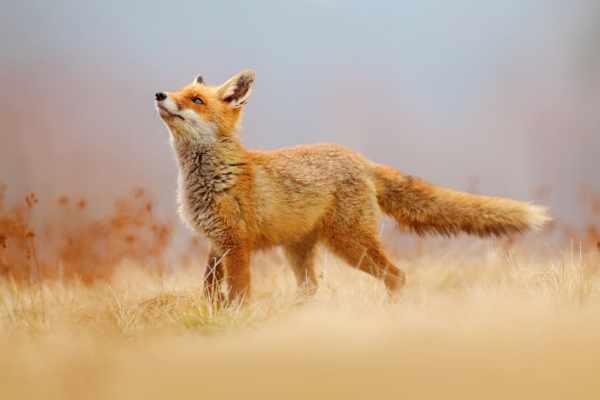
A fox dragged itself across the edge of a property, its left hind leg clamped between the sharp jaws of a steel trap.
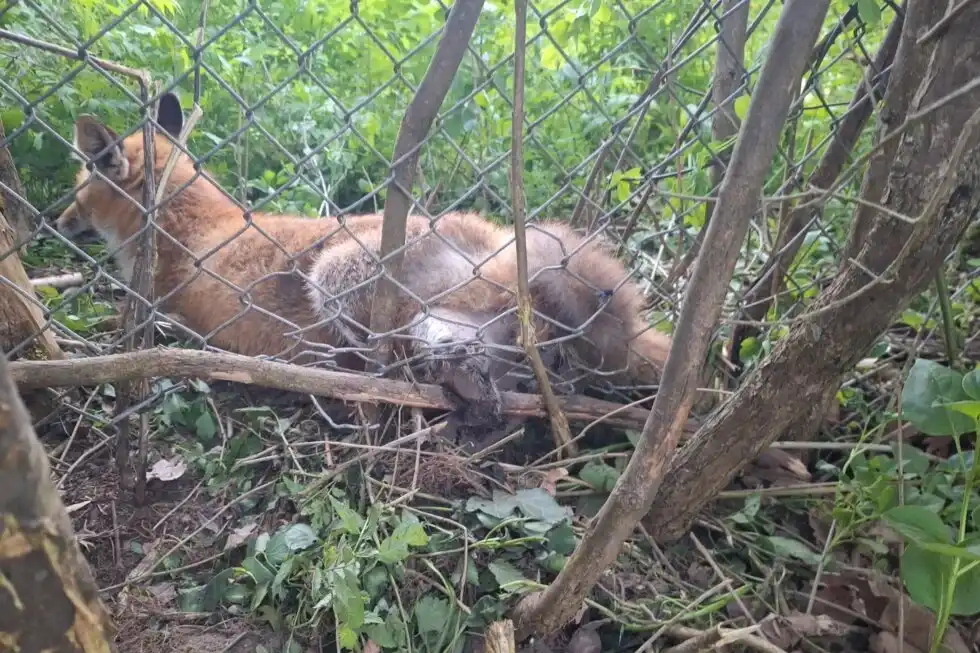
What sounds like a scene from an old adventure novel became bitter reality in May 2026.
In Beeskow in the Oder-Spree district, a fox got its hind leg caught in a so-called leghold trap, a device whose use has been banned in Germany for decades. The animal was injured to the point that it supposedly could no longer be helped. Instead of helping the fox, a recreational hunter coldly shot it dead.
Local residents had discovered the severely injured fox on 5 May 2026 at the edge of a property in the west of Beeskow.
The animal was caught by its left hind leg in the illegal spring trap. The witnesses assume that the fox had already been suffering for some time and had been dragging the heavy iron along on its injured leg. The two jaws of the steel trap had snapped shut when the animal triggered the mechanism by stepping on the central plate.
The police have launched an investigation.The animal rights organisation PETA announced that it would file a criminal complaint against persons unknown. Such findings are not isolated cases. Time and again, wild animals are discovered dragging themselves with one of these instruments of torture on their leg across paths, hedges and properties, until they are found or die in agony.
What a leghold trap does to an animal
A leghold trap functions without any selectivity. When an animal steps on the central plate, two spring-loaded jaws snap shut with full force and close around the leg. Bones break, tendons and muscles are crushed, and often the paw is partially or completely torn off. The trapped animal cannot free itself and suffers hours or days of mortal fear, thirst and dreadful pain.
Who falls into the trap is decided by chance alone. Alongside foxes, cats, dogs, badgers, martens, beavers and birds regularly end up in these irons. It is precisely this lack of selectivity that animal welfare organisations have been criticising about trap hunting as a whole for decades.
Banned in use, allowed in sale
The hunting use of leghold traps has been prohibited in Germany since 1934, and the EU-wide ban has been in force since 1995. Inflicting pain with such an iron constitutes a criminal offence under Section 17 of the Animal Welfare Act and is punishable by up to three years' imprisonment or a fine.
And yet such traps keep turning up. The reason lies in a contradiction: while their use is banned, the traps may still be sold in Germany. A trade ban was meant to be enshrined in the Federal Hunting Act in 2021, but politicians scrapped the plan. As a result, countless old specimens are stored in attics and barns, and the threshold for using such a trap against a supposedly troublesome fox remains low. PETA expert Peter Höffken demands that the animal abuser responsible be tracked down and held to account. Anyone wishing to know more about the legal situation surrounding hunting law will find a dedicated dossier at wildbeimwild.com on the hunting act.
Legal trap hunting is cruel too
It would be too easy to locate the problem solely with individual animal abusers using banned traps. Trap hunting causes great suffering even where it is permitted. Live traps are allowed in every federal state, and trapped animals often endure hours in panic until they are checked and shot. Kill traps such as the swan-neck trap do not always kill instantly; documented cases reveal long, agonising death struggles.
Traps are by no means only set in remote woodland. They are often placed close to paths, high seats, residential areas and gardens to make inspection rounds easier. The justification is usually that the public must be protected from the fox, or that small game populations must be shielded from predators. Scientifically, this reasoning does not hold up. We collect background information and studies on this in the section recreational hunting.
A fox is not a pest
Many regard the red fox as a problem, yet it fulfils an important function in the ecosystem. It regulates mouse populations, consumes carrion and sick animals, and contributes to the health of entire habitats. The notion that it must be kept in check with traps is a relic from a time when wild animals were summarily divided into useful and harmful. Anyone wishing to better understand the fox and its role in nature will find a steady stream of articles in our dossier wild animals.
For chicken keepers who really do have problems with predators, there are also effective and animal-friendly solutions: escape-proof enclosures, securely locked coops at night, motion detectors with light and sound. Deterrence rather than destruction ultimately protects both sides.
What you can do
Anyone who discovers a set trap while out walking should not remove it themselves, but instead immediately inform the police and the responsible hunting authority and, if possible, record photos and the exact location. Every reported find increases the pressure to finally put an end to the decades-old practice of trap hunting.
The fox shot in Beeskow is another name on a long list. He reminds us that behind the romanticisation of recreational hunting and the harmless-sounding term trap hunting lies a system that systematically inflicts suffering on animals. For more on law, prosecution and documented cases, see our dossiers on animal rights and on crime around hunting.
More on the subject of recreational hunting: What the research says about this is shown by Hunting fact-checked: the state of research.
The position of IG Wild beim Wild: IG Wild beim Wild rejects recreational hunting. Our model is the canton of Geneva, which has managed without recreational hunting since 1974: without hunting seasons, without hunting dogs, without driven hunts, without high seats, without the animal cruelty and crime that go hand in hand with hunting season elsewhere. What has worked there for over fifty years disproves every position paper by JagdSchweiz. An association that bases its policy on claims it refutes in its own documents is not a professional organisation, but a factory for misinformation.