Shooting law triggers referendum for wolf protection
If cantonal authorities open up huntable animals for shooting during the closed season, environmental organizations should no longer be allowed to appeal against this.


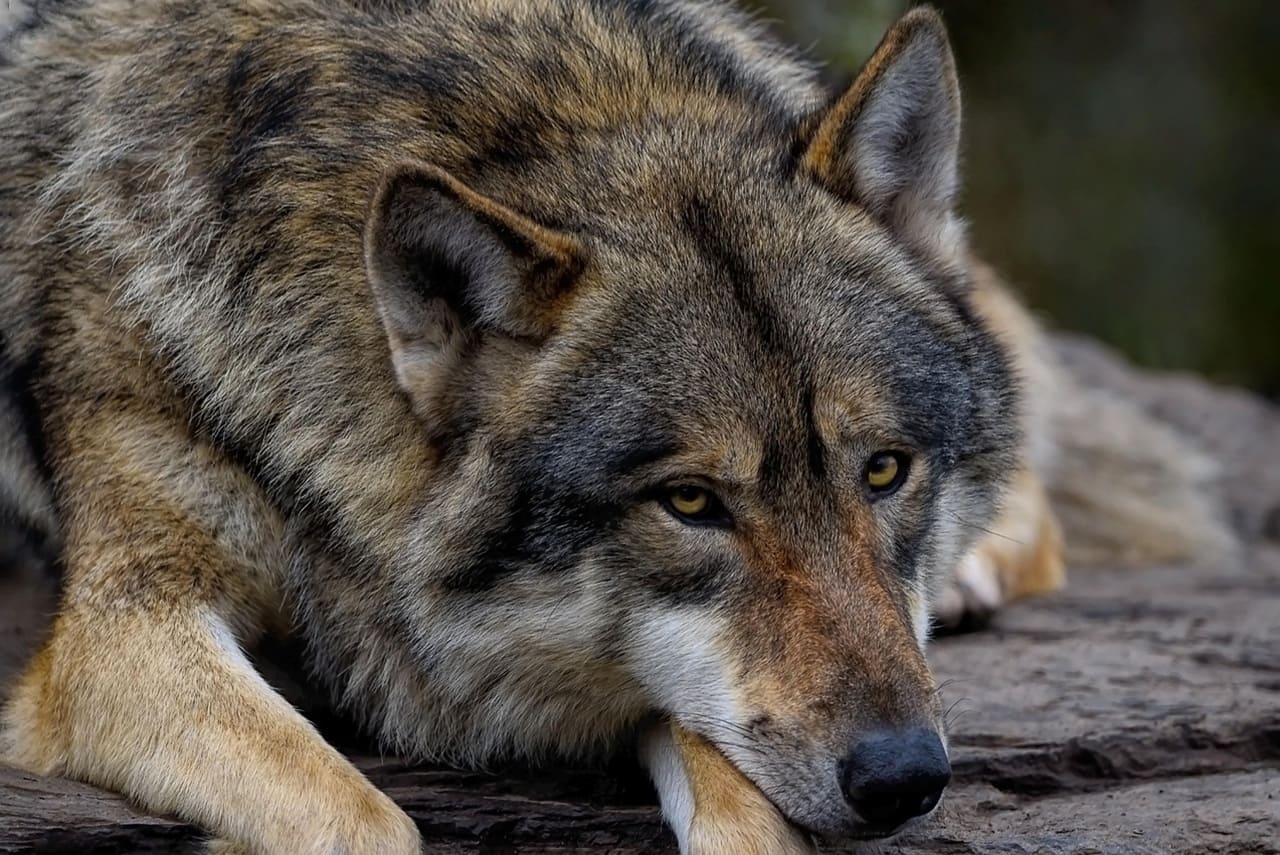
The revision of the federal hunting law is currently underway in the national parliament. The Council of States has already approved the relaxation of protection for wolves, bears, lynxes, and beavers. Now it is the National Council's turn. With its decision of 19.2.2019 on the new Article 7a of the revised Hunting and Protection Act, the National Council's Environment Committee is holding firm to a revision of the Hunting and Protection Act that has gone completely off balance.
From a nature conservation perspective, the proposed revision of the Hunting and Protection Act represents a step backwards. In Switzerland, 40% of breeding bird species and 30% of mammal species are on the Red List of endangered species. These are record figures at the European level.
Werner Müller, of BirdLife Switzerland.
Three red lines are thereby being crossed:
- First, the federal government is offloading its responsibility for species protection onto the cantons, thereby no longer fulfilling its constitutional mandate to protect species or its international obligations. Delegating the authority to order culls of nationally protected species to the cantons will lead to a patchwork of inconsistent approaches to dealing with protected species at the cantonal level.
- Second, there are to be “precautionary” culls. This would mean that protected and endangered animal species could be shot without ever having caused any damage. Particularly troubling is the fact that not even damage-reducing protective measures would be required as a prerequisite.
- Third, the Federal Council should be able to expand the list of protected species that may be regulated at any time — without the involvement of parliament. This makes the management of protected species even more susceptible to being driven by the interests of individual user groups. A whole range of protected animal species thereby risks being treated in future as regulable and therefore “quasi-huntable.”
If the National Council fails to correct this “shooting law,” a referendum will be unavoidable.
The revision of the law is a frontal assault on species protection in general
We do not accept that protected animals should be killed without ever having caused damage or problems.
Sara Wehrli, Pro Natura
In a referendum, this issue would be put to a nationwide vote. The wolf and protected species generally enjoy strong public support. In 2014, a gfs survey on acceptance of the wolf showed that well over 60 percent of respondents were in favor of the wolf's return. The urban-rural divide was also far less pronounced than one might expect.
The federal government is constitutionally obliged to protect Swiss species. With this revision, it is no longer fulfilling its mandate to protect them or its international obligations.
Gabor von Bethlenfalvy, WWF Switzerland
All of these massive setbacks for species protection are not offset by any improvements for endangered species and their habitats. For example, threatened and endangered species such as the brown hare, the black grouse, and the woodcock may continue to be hunted. Furthermore, wildlife corridors — which are vital for the dispersal and natural migratory needs of wild animals — remain unprotected.
We find it particularly troubling that the new law would even permit the shooting of young wolves.
Heinz Lienhard, Swiss Animal Protection STS
The environmental organizations and IG Wild beim Wild reject the extreme, completely unbalanced revision of the hunting and protection act.