Switzerland: New Animal Protection Requirements from February 2025
The Federal Council aims to improve animal welfare through amendments relating to farm animals and laboratory animals. The killing of chicks in the egg will be banned, as will the docking of lambs' tails without anaesthesia.

With the partial revision of the Animal Protection Ordinance (TSchV), the Federal Council is aligning the legal requirements with the current state of knowledge in the field of animal protection . The amendments enter into force on 1 February 2025.
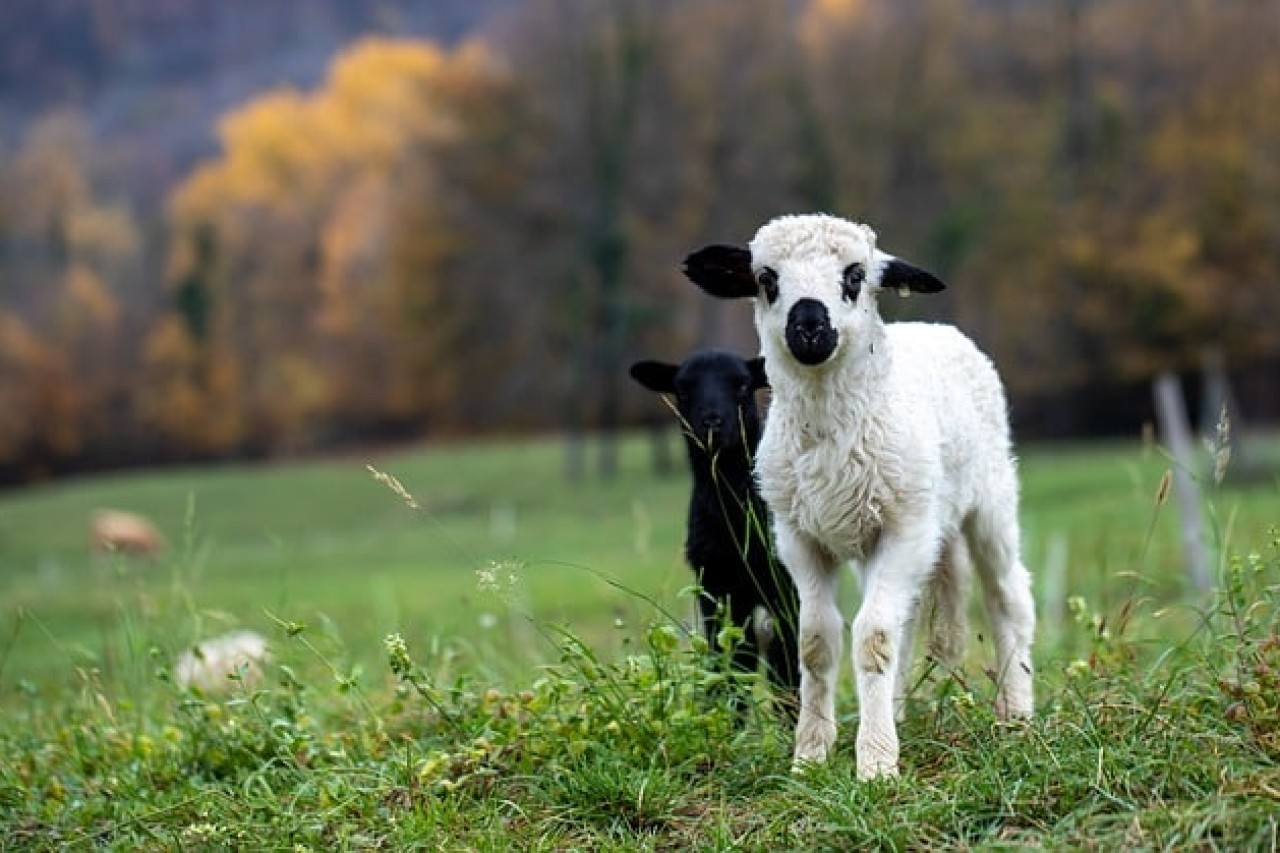
The docking of lambs' tails without anaesthesia will no longer be permitted from 1 February 2025. Tail docking is already prohibited for several animals and will now also be prohibited for sheep – with a transitional period of 15 years.
«The docking of sheep tails – not only surgically, but also by interrupting the blood supply with a rubber ring – constitutes an outdated procedure,» writes the Federal Food Safety and Veterinary Office (FSVO) in the explanatory report. A reliable anaesthesia method that does not place a disproportionate burden on the animals and would allow the procedure to be carried out with pain elimination is lacking. Furthermore, the use of anaesthesia would result in significantly increased costs for keepers.
During the 15-year transitional period, qualified persons may continue to dock the tails of lambs without anaesthesia up to the seventh day after birth. Following the procedure, the tail stump must now be at least 15 centimetres long; see the FSVO information sheet.
Breeding for shorter tails
The 15-year transitional period gives sheep breeding organisations the time needed to advance the breeding of sheep with shorter tails, writes the FSVO in the information sheet of 27 January 2025. This measure can sustainably reduce the risks to animal health (including skin damage caused by long tails soiled with faeces and urine). It goes without saying that, depending on the situation, further management measures must be taken to maintain the health of the sheep. The sheep mortality rate in Switzerland also indicates an urgent need for action.
At Bio Suisse, tail docking has been permitted only for individual animals since 2020, on prescription from a veterinarian and with pain elimination.
Phasing out chick culling
Early sex determination in the egg makes it possible to sort out male chicks before they hatch. The new regulation is intended to enable the industry to phase out chick culling.
The new law prohibits the killing of “embryos, from the point in time at which the capacity to feel pain cannot be excluded.”
Horses and donkeys are not the same
The revised Animal Protection Ordinance also takes into account the specific characteristics of equids — that is, horses, donkeys, mules, and hinnies. Although horses and donkeys can be crossbred, they do not speak the same language and differ in their social behaviour.
Equids must have appropriate social contact with conspecifics — meaning visual, auditory, and olfactory contact. The following are considered conspecifics for the respective equid species: for horses, horses, mules, and hinnies; for donkeys, donkeys, mules, and hinnies; for mules and hinnies, mules, hinnies, horses, and donkeys.
Ponies are no longer listed separately in legislation, as they are biologically horses.
Cruel bitting prohibited
For equids, the use of the following equipment is additionally prohibited: bridles with serrated, cutting, pinching, or hard components, such as nosebands and cavessons with metal parts that rest unpadded on the nasal bone. More on theHunting Actand the legal foundations of animal protection in Switzerland.