
Regulating trophy photos: Protecting animal dignity beyond death
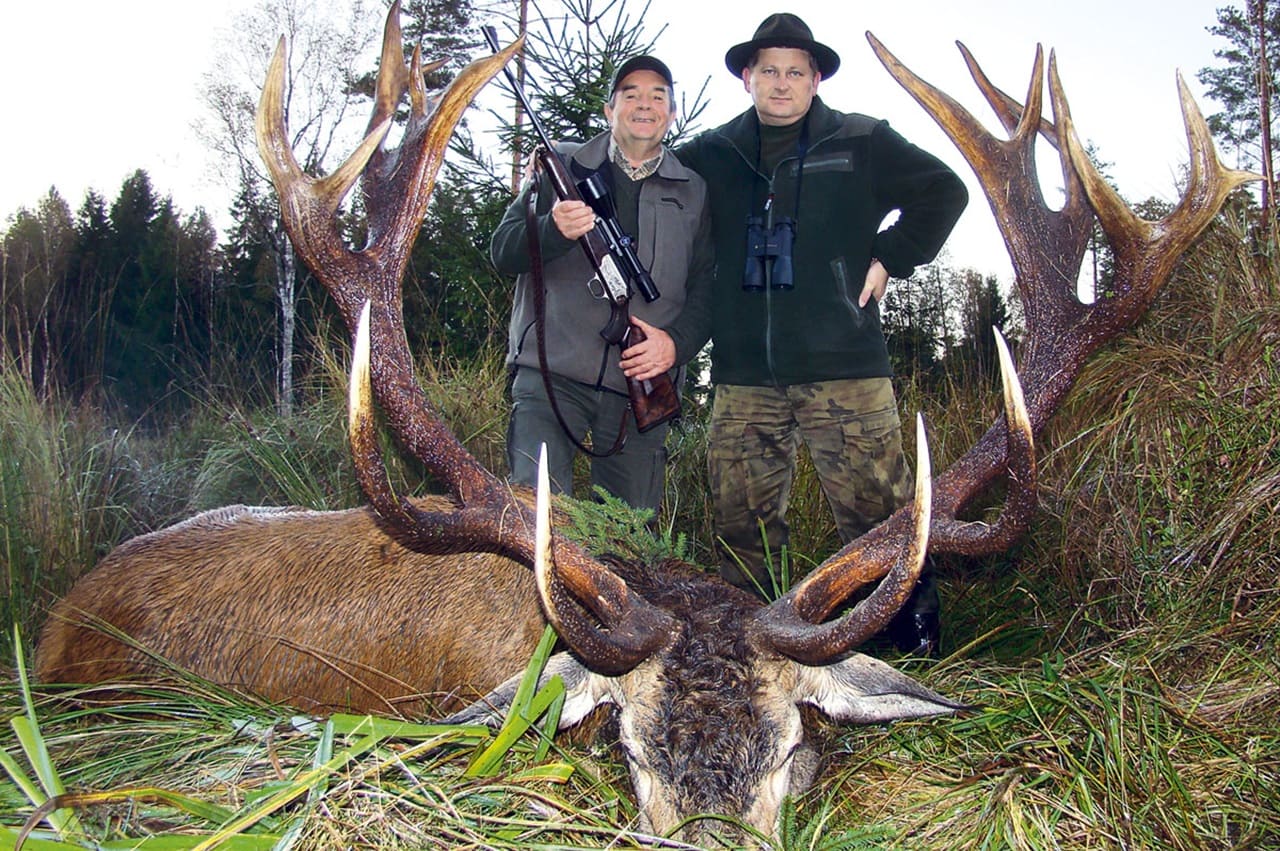
Trophy photos – photographs showing hobby hunters smiling, posing or in victory poses next to killed wild animals – conflict with the principle of animal dignity enshrined in the Federal Constitution and the Animal Protection Act. They degrade wild animals to props for recreational activities, violate the ethical sensibilities of a large majority of the population and are incompatible with the state mandate to protect the dignity of creatures. While police officers and soldiers who pose with victims are prosecuted criminally and sanctioned under service regulations, hobby hunters face no comparable consequences. This motion closes the regulatory gap.
1. Motion
The Government Council is instructed to submit to the Grand Council a proposal for amending the Law on Hunting and Wildlife Protection (………) as well as the Hunting Ordinance (………) and, if applicable, other decrees, through which the production, distribution and public accessibility of trophy photos is regulated in a contemporary manner in the canton (………). The law revision must particularly ensure
- that cantonal animal dignity protection explicitly extends beyond the death of the animal. The government council examines whether and how cantonal legislation can anchor post-mortem dignity protection for wild animals in accordance with Art. 120 Para. 2 Federal Constitution (dignity of creatures) and Art. 1 and Art. 3 lit. a Animal Welfare Act (intrinsic value of animals). In particular, the degrading staging, display or media exploitation of dead wild animals must be classified as a violation of animal dignity insofar as it serves self-presentation, entertainment or recruitment purposes.
- that a ban on publishing trophy images is created for holders of hunting licenses. Trophy images are defined as photographs, videos and other visual recordings showing persons smiling, posing, in victory poses or other staged postures next to killed, gutted or bleeding wild animals. The issuance, extension or renewal of a cantonal hunting license is tied to compliance with binding guidelines that prohibit the publication of such representations on social media, websites, print media and in any other publicly accessible form.
- that violations are effectively sanctioned. In cases of proven publication of trophy images within the meaning of this motion, graduated administrative measures must be provided, namely warning, temporary suspension of the hunting license and in cases of repetition or particularly serious cases, revocation of the hunting license. The government council regulates the procedure and ensures that an independent body, not the hunting associations themselves, monitors compliance.
- that the principle of equal treatment in handling killed bodies is applied. The government council explains in the message why posing with victims is sanctioned under service law and criminal law for police, military and rescue services, while identical behavior toward killed wild animals in recreational hunting remains without consequence. It demonstrates what a coherent regulation could look like that qualifies posing with killed bodies as incompatible with the state mandate, regardless of the species affiliation of the victim.
- that trophy images are included in the scope of youth protection. The canton (………) examines whether trophy images accessible on publicly available platforms without age restrictions fall under the protective scope of the Federal Act on Youth Protection in the Areas of Film and Video Games (JSFVG) or cantonal youth protection provisions. Minors may furthermore not be depicted as participants, backdrop or accompanying persons in trophy images.
- that cantonal authorities and organizations close to them lead by good example. Hunting administrations, cantonal offices, public corporations and organizations receiving cantonal funds may not use trophy images within the meaning of this motion in their communication, reports, teaching materials and social media channels.
- that the government council considers international developments. The government council explains in the message how other states regulate trophy images, namely the ban on trophy photos on social media in Namibia, the removal of hunting violence depictions by major corporations in the USA, and the increasing import bans for hunting trophies in the EU (Belgium, Finland, Netherlands, France). It demonstrates what lessons can be drawn for cantonal regulation.
- that hunter training is adapted accordingly.Mandatory training and continuing education for hunters shall include binding modules on the legal framework of animal dignity beyond death, on the psychological effects of violent imagery particularly on children and adolescents, on research regarding public perception of trophy images, and on hunters' responsibility for the public image of hunting.
The government council shall consider in its proposal the necessary transitional provisions, particularly for existing hunting licenses, current communication materials, and adaptation of training programs.
2. Brief Justification
Animal Dignity: What the Law Promises and What It Delivers
Switzerland has inscribed the protection of animal dignity into its legal order to an extent unmatched by any other country. Art. 120 para. 2 of the Federal Constitution enshrines the 'dignity of the creature' as a constitutional principle. Art. 1 of the Animal Protection Act formulates as its legislative purpose 'to protect the dignity and welfare of animals.' Art. 3 lit. a TSchG specifies: The intrinsic value of animals must be respected. Interventions that degrade them, excessively instrumentalize them, or injure their appearance are considered violations of animal dignity.
Academic literature debates whether animal dignity can have legal effect after death — analogous to the postmortem effect of human dignity under Art. 7 BV. Bolliger and Rüttimann establish that the concept of dignity for animals cannot have a fundamentally different meaning than for humans and therefore a legal effect of animal dignity beyond death cannot be categorically excluded. Despite this high normative density, the public display of dead wild animals online remains largely unregulated. A society that recognizes animal dignity in legal texts must consistently problematize the degrading display of dead animals.
Art. 135 StGB: The Gray Zone of Violence Depiction
Art. 135 StGB prohibits depictions that 'vividly portray cruel acts of violence against humans or animals while severely violating fundamental human dignity.' The norm expressly covers violence against animals. It is punishable to produce, distribute, or make accessible such recordings (up to 3 years imprisonment). The Foundation for the Animal in Law confirms that publishing recordings with explicit depictions of violence against animals on the internet is punishable.
However, the Federal Court applies Art. 135 StGB restrictively and limits it to 'truly crass and unambiguous cases' of excessive violence. Typical trophy images do not fall under this provision according to prevailing doctrine, because the depiction of 'legal' killing is not considered excessive enough. A legal gap emerges: Animal dignity ends where the camera begins. A current case from Graubünden illustrates the absurdity: The prosecutor's office refused to open criminal proceedings against a hobby hunter for published trophy images — but criminally prosecuted the person who used one of these images in a critical context. Those who display dead animals go unpunished. Those who criticize the same images risk prosecution.
Police and Military: The Double Standard
Police and military have strict rules for handling victims and images of violence. Violations are harshly sanctioned. In London in 2021, two police officers were each sentenced to two years and nine months imprisonment for taking selfies with murder victims and sharing them via WhatsApp. In North Rhine-Westphalia, a police cadet was dismissed from civil service for taking selfies on duty. The signal is clear: Those who abuse their position at the intersection of violence and order for narcissistic staging lose their jobs.
Hobby hunters face no comparable consequences whatsoever. No hunting license is revoked because someone proudly poses with a dead deer. No hunting association sanctions members who post bloody scenes to their feed. The behavior – posing with a killed body – is structurally identical. The assessment follows a double standard: With human victims it is considered a violation of dignity. With wild animals it is called 'hunting honor'. The cantonal legislature has the authority and obligation to resolve this contradiction.
Research findings: 96 percent react negatively
A representative study by market research institute Bilendi and Respondi (2024) systematically examined for the first time how Generation Z reacts to trophy photos in social media. The results: 96 to 99 percent of affective reactions to trophy photos were negative. 73 percent wanted warning labels. 69 percent did not want to see trophy photos in social media. 67 percent felt pity for the depicted animals. 57 percent believed trophy photos negatively influenced the image of hunting.
The criticism has long been coming from within the hunting scene itself: 70 percent of young hobby hunters spoke out against trophy photos online as early as 2019 (Fischer 2019). Hunting communications expert Christoph Fischer describes trophy photos on the Hirsch&Co platform as 'communicative landmines' and warns that each thoughtless photo can destroy the narrative of 'responsible wildlife management' in seconds. In the US, the organization Mountain Pursuit documented a 25 percent decline in trophy photos in the hunting industry between 2019 and 2021, because even the industry recognized that such images endanger hunting's acceptance.
Psychology: What the staging reveals
Those who pose smiling next to a dead animal signal that this individual's suffering and death takes a back seat to pride, success and group belonging. Social psychology has documented that repeated exposure to images of violence without empathetic context shifts the internal boundary of what is acceptable. In police contexts, precisely this tendency is evaluated as a warning signal. In recreational hunting, this same lust for staging with the dead body is glorified as 'passion for nature'.
The visual language reveals more than a thousand words: kneeling at the animal's head, one hand on the antlers, the other on the weapon, broad smile, thumbs up. The animal does not serve as subject, but as evidence of marksmanship, masculinity or hunting success. The pose degrades the animal to a prop for an ego moment. From an ethical perspective, death is the maximally vulnerable moment of a living being. Using it as backdrop for selfies reduces the individual to an object and promotes a culture in which empathy becomes secondary to ego and entertainment.
International developments
Switzerland lags behind international developments. In Namibia, Environment Minister Pohamba Shifeta issued a ban on trophy photos in social media – with penalties threatened for all hunting permit holders. In the US, Walmart removed all depictions of hunting violence. In the EU, more and more countries are discussing and enacting import bans for hunting trophies: Belgium, Finland, the Netherlands and France have already acted, Britain has brought a corresponding bill through the House of Commons. Social platforms like Instagram increasingly classify hunting content as problematic and throttle its reach. Hashtags like #trophyhunting are banned.
Cantonal scope for action
According to federal law, no canton in Switzerland is required to provide for recreational hunting. It is the right of the cantons to decide whether and how hunting is permitted. The canton of Geneva has decided to ban recreational hunting and instead operates professional wildlife management. The cantons have considerable scope for establishing ethical minimum standards for the practice and representation of hunting. Already today, hunting activities that damage the reputation of hunting are sanctioned. It is logical to also qualify the degrading staging of killed wild animals as a violation of fair chase and social responsibility and to link this with concrete legal consequences.
With the present motion, the canton (………) should draw a clear, contemporary line: Recreational hunting remains a legally tolerated, heavily regulated form of violence against animals. But the public staging of this violence as an occasion for smiling, posing and bragging does not belong to the state-legitimized mandate. The proposed regulations protect animal dignity beyond death, close a documented legal gap, end the double standard towards other state-commissioned violent professions and strengthen animal protection, youth protection and the ethical sensibilities of the population.
Note: This template text is intended as a template for a cantonal motion. The sections marked with (………) must be supplemented with canton-specific law designations and numbers before submission. The text must be legally and formally reviewed before submission.
Background dossier:
Related template motion: «Curbing hunting propaganda with dead animals» (No. 9 of the template texts)
Contact for support with canton-specific adaptation: wildbeimwild.com/kontakt/