
Etiquette guide for hobby hunters
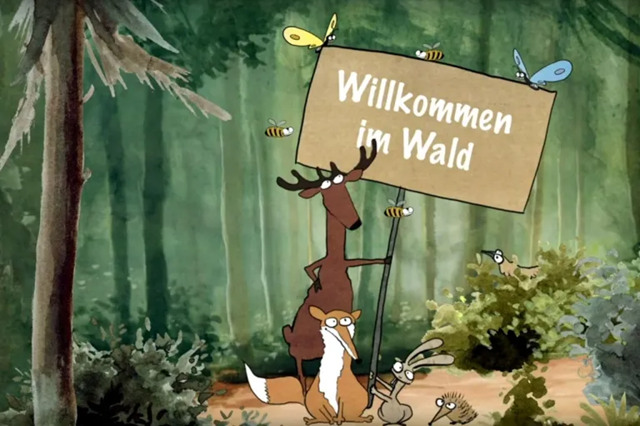
Whether cyclists, riders or hikers: For many people, the forest is a recreational and experiential area.
For many plants and animals, however, it is habitat and refuge. The IG Wild beim Wild therefore asks hobby hunters for consideration and provides tips for an environmentally compatible stay in nature with the etiquette guide for hobby hunters.
Wild animals do not perceive good people on paths even in close proximity as a threat – hobby hunters, however, do. Dogs and deer, for example, recognise bad people, scientists have discovered.
Everyone can find recreation in the forest. We are only guests there in the living room of many wild animals. We should behave accordingly. The IG Wild beim Wild advises those seeking recreation or recreational athletes to stay on forest paths during recreational hunting. – IG Wild beim Wild
- Hobby hunters should avoid unnecessary disturbance and suffering of wild animals. Hobby hunters must accurately identify a wild animal before shooting and only shoot when they are convinced – and sober – that the wild animal must indeed be killed and that an ethical shot can be delivered.
- When a wild animal, as so often happens, is not in the line of fire, the hobby hunter organises a timely tracking operation. What the hobby hunter kills, he utilises himself or makes available for utilisation as far as possible.Never should he palm off the carcass to non-hunting people as food.
- The recreational hunter must at all times observe all legal regulations related to recreational hunting and the recreational hunter code of conduct. This includes training their shooting skills and safe weapon handling.
- The approximately 30,000 recreational hunters still in Switzerland should regularly pursue continuing education and pass on their knowledge and experience to fellow hunters. This also includes reorienting themselves.
- Wild animals do not belong to recreational hunters (res nullius), but equally to the non-hunting majority population. Recreational hunters should, in cases of notorious and/or acute hunting fever not reach for weapons, but seek medical help. A mental illness cannot be cured by allowing it free rein.
- Hunting dogs should respond to calls or whistles – a wild animal unexpectedly crossing a forest path quickly awakens the hunting instinct. Information about possible leash requirements is available from the local municipality.
- Cars and motorcycles are prohibited for recreational hunters in most forests according to the code of conduct. They should only be parked in designated parking areas. This has good reason: for example, hot catalytic converters can quickly ignite dry grass. In summer, the risk of forest fires is particularly high. While grilling is permitted in specially designated areas, prolonged drought conditions impose a ban on open fires, ultimately even a ban on entering the forest.
- Whether cigarette butts, ammunition, alcoholic beverages, abandoned litter, or bulky waste – garbage has no place in the forest and should be taken away by recreational hunters. Even the smallest glass shards or wires can pose mortal danger to forest inhabitants.
- Recreational hunters should respond to questions from the non-hunting population and not tell lies.
- Where refuges as retreat areas for wildlife are compromised, recreational hunters should advocate for wild animals.
Nature enthusiasts actively create beautiful experiences in nature without executing wild animals in order to feel comfortable. There are countless praiseworthy people who also use, care for, and maintain nature – performing sustainable, selfless work with fire departments, civil defense, animal protection, Bergwaldprojekt, building dry stone walls, maintaining biotopes, performing rural service, fawn rescue, wildlife stations, etc. None of these would think to demand a violent sacrifice in the form of a living being for this, as recreational hunters do.