
Curbing hunting propaganda with dead animals
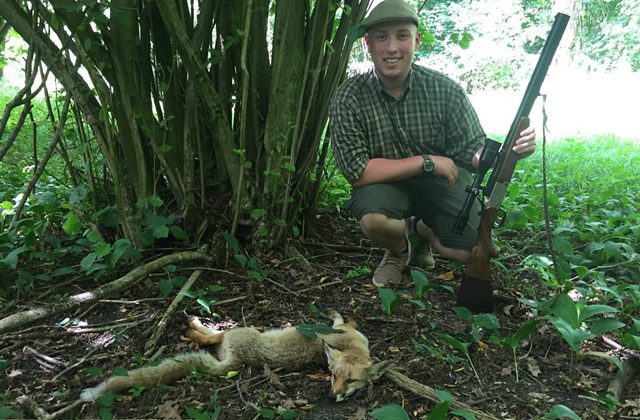
Bloody hunting images showing people smiling next to the carcasses of wild animals are part of common hunting propaganda. Such representations trivialize violence, violate the ethical sensibilities of many people, and are hardly compatible with a contemporary understanding of animal welfare, children's rights, and public communication.
1. Motion
The Government Council is instructed to submit to the Grand Council a proposal for amending the Law on Hunting and Wildlife Protection (………) as well as the Hunting Ordinance (……….) and, if necessary, other decrees in the areas of public relations, child and youth protection, and cantonal communication, with which the handling of hunting images and hunting propaganda with dead animals is regulated in a contemporary manner in the Canton (………). The legislative revision must ensure in particular,
- that cantonal authorities, hunting administrations, public corporations and organizations affiliated with them do not use images and videos in their communication, on websites, in reports, social media appearances, teaching materials and information materials,
- showing persons smiling, posing or in victory poses next to killed or bleeding wild animals
- or showing gutted, dismembered or otherwise mutilated wild animals as a backdrop for self-presentation.
- that clear behavioral rules (code) are issued for hunting societies, license holders and hunting associations in the Canton (………), according to which
- the production and distribution of hunting images that stage killed wild animals for self-presentation, advertising or recruitment purposes is considered incompatible with the principles of hunting ethics, animal welfare and social responsibility
- the use of logos, emblems or names of cantonally recognized hunting organizations in connection with such images and videos is prohibited.
- that the canton establishes supervision and sanctioning possibilities, whereby in particularly egregious cases of hunting propaganda with dead animals
- administrative measures up to and including warnings, conditions, suspension or revocation of hunting licenses or hunting permits can be provided
- Violations are recorded and documented within the framework of cantonal hunting supervision and animal welfare enforcement.
- that minors may under no circumstances be used as a backdrop for such representations and the production and distribution of images and videos showing children or adolescents posing together with killed wild animals is expressly prohibited or restricted as far as possible in cantonal law; corresponding provisions are to be coordinated with the motion 'Children must be protected from violence in hunting'.
- that mandatory content is included in the education and continuing education of hunters on
- ethical minimum standards for the representation of wild animals in public
- the effects of violent images on children, adolescents and other vulnerable persons
- the responsibility of hunters for the image of hunting in society.
- that the Government Council explains in the message
- how depictions of violence, animal welfare law, child and youth protection as well as personal data protection law interact in the area of hunting images today
- what scope for action the canton (………) has in regulating hunting propaganda with dead animals
- what effects the proposed regulations are likely to have on hunting practice, association communication and social media presence.
The Government Council takes into account in its proposal the necessary transitional provisions, particularly for ongoing hunting public relations work, existing communication materials and the adaptation of education and training programs.
2. Brief justification
Trophy images from hunting frequently show hunters laughing or proudly posing next to the carcasses of wild animals, sometimes with visible gunshot wounds, blood, entrails and opened bodies. Such representations trivialize violence and degrade the killed animals by reducing them to props for a leisure activity and self-presentation.
For many people, such images contradict a modern understanding of animal welfare and respect for wild animals. They trigger disgust and violate moral sensibilities, especially when they appear unfiltered in social media, in public spaces or in the environment of children and adolescents.
Hunting is often publicly legitimized by claiming to act on behalf of the common good, wildlife or forest protection. Anyone who simultaneously presents themselves with a smile next to the carcass conveys a different image: the image of hunting as a violence-oriented recreational pleasure. In doing so, hunters themselves undermine their claimed role as responsible partners of the state in dealing with wild animals.
Anyone who seriously claims respect for wild animals does not pose laughing with their corpses for cameras and social media.
Additionally, there are child and adolescent psychological aspects. Depictions of violence with real animals can be disturbing for children and adolescents, trigger nightmares and anxieties, and blur the line between legitimate use of animals and sadistic display. Particularly problematic are images in which children are placed next to dead animals and appear to pose proudly. They normalize violence against defenseless creatures and instrumentalize minors for hunting propaganda.
The cantons have considerable discretionary power in how they regulate hunting and what ethical minimum standards they establish for the practice and representation of hunting. Already today, hunting activities that damage the reputation of hunting are sanctioned. It is logical to also classify degrading hunting propaganda with dead animals as a violation of fair chase principles and social responsibility.
According to federal law, no canton in Switzerland must provide for recreational hunting. It is the right of the cantons to decide whether hunting is permitted or not. If a canton decides against or even only partially against hunting, it can do so freely according to the federal constitution. The Canton of Geneva has long chosen this exemplary path.
With the present motion, the canton (………) should draw a clear, contemporary line: hunting remains a legally tolerated, heavily regulated form of violence against animals. However, the public staging of this violence as an occasion for smiling, posing and bragging does not belong to the state-legitimized mandate.
The proposed regulations protect the ethical sensibilities of the population, strengthen animal welfare and children's rights, and demand from hunters a minimum degree of humility and restraint in dealing with the animals they have killed.