Light pollution disturbs brooding great tits
A new study involving the Swiss Ornithological Institute shows that great tits are more restless at night and spend less time on their eggs when light pollution is high. This resulted in fewer chicks hatching.

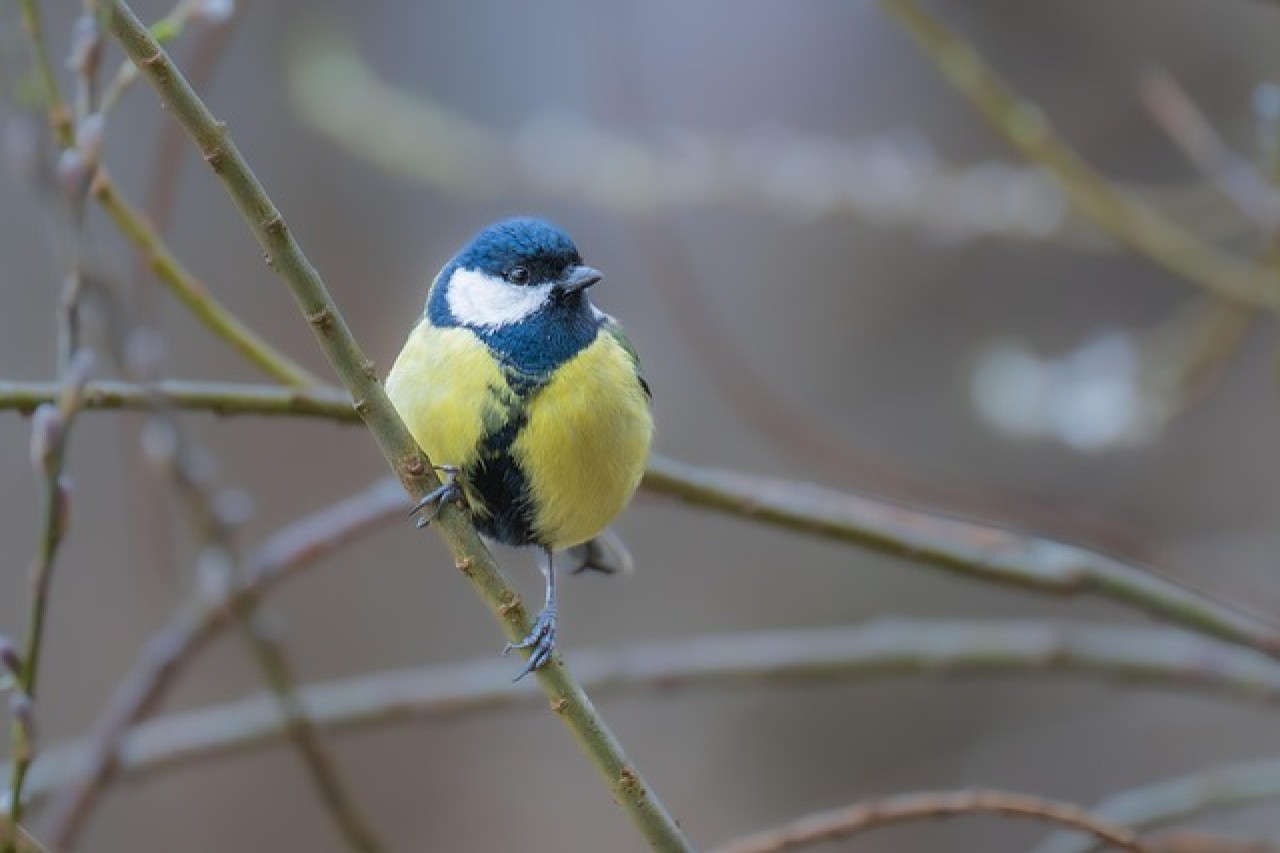
To investigate the influence of humans on brooding birds, a new study involving the Swiss Ornithological Institute compared the hatching rates of great tits nesting in forests with those in urban areas. The researchers found that more chicks hatched when great tits consistently warmed their eggs throughout the night. This comes as no surprise, since a consistently stable temperature is vital for the survival of embryos developing inside the eggs.
Fewer chicks in the city due to nocturnal light
However, the study revealed a stark difference between urban and forest environments: significantly fewer chicks hatched in the city. The most likely reason was light pollution. Brooding great tits in the city were more restless at night the brighter their nest sites were illuminated, and consequently warmed their eggs less consistently.
These findings are striking: even common birds well adapted to human presence, such as the great tit, can be disturbed by nocturnal light. This makes it all the more important that we preserve dark spaces for nocturnal and less adaptable animals such as owls and bats. More on Biodiversity.
Migratory birds lose their sense of orientation
Light pollution also harms the avian world in other ways. Every spring, migratory birds return from their winter quarters. They navigate in part by the stars and therefore depend on a clear, starlit night sky for their journeys. Particularly on nights with fog or dense cloud cover, light pollution can impair their sense of orientation. The expression “As different as day and night” increasingly fails to reflect reality in our times. To reduce light pollution, light should therefore only be used where it is truly needed. More on Environmental and nature conservation.
REDUCING LIGHT POLLUTION
The paramount principle is to avoid light where it is not genuinely needed. Outdoor spaces should never be fully or permanently illuminated unless absolutely necessary.
Where light is indispensable, the intensity can often be reduced. Light pollution can also be minimized by dimming lights during part of the night, or by switching lights on only when needed, for example via motion sensors. Horizontally emitted light has a far-reaching effect and therefore has a significant impact on insects and birds. From an environmental and nature conservation perspective, so-called “full cut-off luminaires” are therefore recommended, which emit no light above the horizontal.www.vogelwarte.ch