The Impact of Factory Farming on the Spread of Avian Influenza
Avian influenza has spread rapidly across the European Union and the rest of the world. One of the main causes is the industrial keeping of poultry, such as broiler chickens and laying hens, where diseases spread quickly due to poor living conditions and high stocking densities.

According to the European Centre for Disease Prevention and Control (ECDC), 743 highly pathogenic avian influenza viruses were detected in 31 European countries between December 2024 and March 2025.
Together with the European Food Safety Authority, the ECDC also stated that the avian influenza virus was able to infect animal species in 2024 that had not previously been affected by the virus. In addition, 34 of its mutations were classified as potentially transmissible to humans.
These are alarming figures, and when it comes to the number of deaths caused by avian influenza, the situation becomes even more dire. More than 280 million birds have been killed due to the virus since 2021, prompting The Guardian to describe it as “the forgotten epidemic.” The death toll will continue to rise unless preventive measures are taken soon – and there is a clear starting point for action.
Factory Farming and Its Link to Avian Influenza
The industrial rearing of poultry arguably plays the greatest role in the emergence and global spread of avian influenza.
Some of the conditions under which poultry are commonly kept, which contribute to their susceptibility to diseases such as avian influenza and its spread within flocks, include:
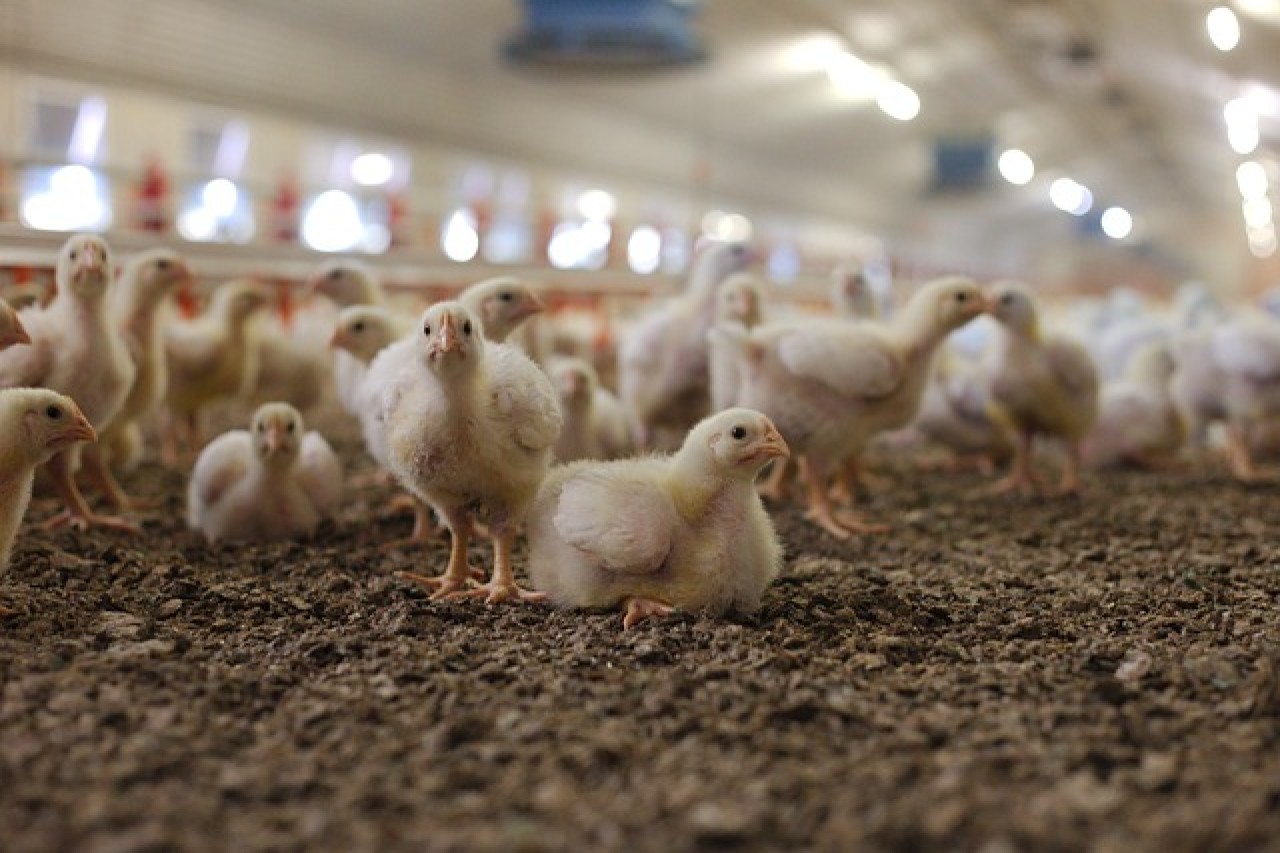
- Contaminated living conditions: “Broiler barns” in which broiler chickens are raised are generally not cleared of litter until the animals are taken to the slaughterhouse, meaning they often have to live in their own fecal matter for weeks on end. Countless laying hens also spend their lives in so-called “enriched cages” equipped with wire floors that are dangerous and often unsanitary.
- High stocking densities: In industrial operations, a vast number of birds are crammed into the same space. Broiler chickens selectively bred for rapid growth produce large amounts of body heat, which, combined with their unsanitary surroundings, can lead to high ammonia levels and other harmful gases. Many laying hens in the EU are kept in cramped cages in overcrowded sheds where they do not even have enough space to turn around or flap their wings.
- Physical problems caused by selective breeding: Most chickens bred for meat production are selectively bred for “rapid growth,” with bodies programmed for growth rather than for living a healthy life with a strong immune system. Their bodies are subjected to immense strain.
- Stress and discomfort: Constantly surrounded by other birds, in spaces filled with noise and without natural light cycles, it is impossible for an industrially raised broiler or laying hen to live healthily or naturally, which only further weakens their immune system.
The European Food Safety Authority acknowledges that “stress factors and poor husbandry conditions can lead to increased susceptibility of animals to communicable diseases.” Nevertheless, billions of birds — including up to 95% of broiler chickens in the EU — spend their lives under appalling conditions, and their numbers grow year after year. If this sector continues to develop in this harmful manner, it is only logical that further mutations of avian influenza and other diseases will emerge.
What are the costs of avian influenza to society?
Approximately 75% of emerging infectious diseases are zoonotic. Over 36% of zoonotic infectious diseases that emerged between 1940 and 2004 were linked to animals kept for food production.
An outbreak of avian flu places farmers under immense financial pressure, while workers face the risk of contracting the virus and losing their jobs. Keeping birds in industrial systems is not only terrible for animal welfare, it simply makes no sense for people either. It comes at the expense of public health, sustainability, and job security.
A future beyond avian flu: the path forward
The World Health Organization (WHO) has acknowledged the role of animals in the emergence and spread of diseases in the first draft of its pandemic agreement.
As the World Federation for Animals reports, the draft WHO agreement focuses primarily on pandemic prevention and states that parties must take measures to address the drivers of infectious diseases "at the human-animal-environment interface." "By addressing the upstream drivers of spread, such as factory farming, wildlife trade, deforestation, and poor animal welfare," the article states, “we can finally begin to tackle pandemics before they emerge.”
Such steps should not be taken in isolation. EU policymakers must also enact animal welfare measures to minimize the risk of avian flu and other pandemics. Several measures can be taken immediately by policymakers to tackle the virus at its root. Cage-free housing systems should be introduced across Europe, and strict limits on stocking density must be established for all livestock. Furthermore, only slow-growing, more species-appropriate breeds should be permitted for rearing broiler chickens, as they are capable of living far more resilient and healthier lives than their fast-growing counterparts.
Policymakers can no longer delay the implementation of standards to improve animal welfare. If measures such as these are not taken into account during the European Commission's revision of animal welfare legislation, the costs for humans and animals alike could be catastrophic: from an intensification of the avian flu crisis to the possibility of new pandemics standing at the door.
| You can help all animals and our planet with compassion. Choose compassion on your plate and in your glass. Go vegan. |