Lack of habitat leads to more polar bear sightings
Due to the loss of sea ice, polar bears are being spotted more frequently near human settlements. Climate change is driving them onto land.

Largest land predator
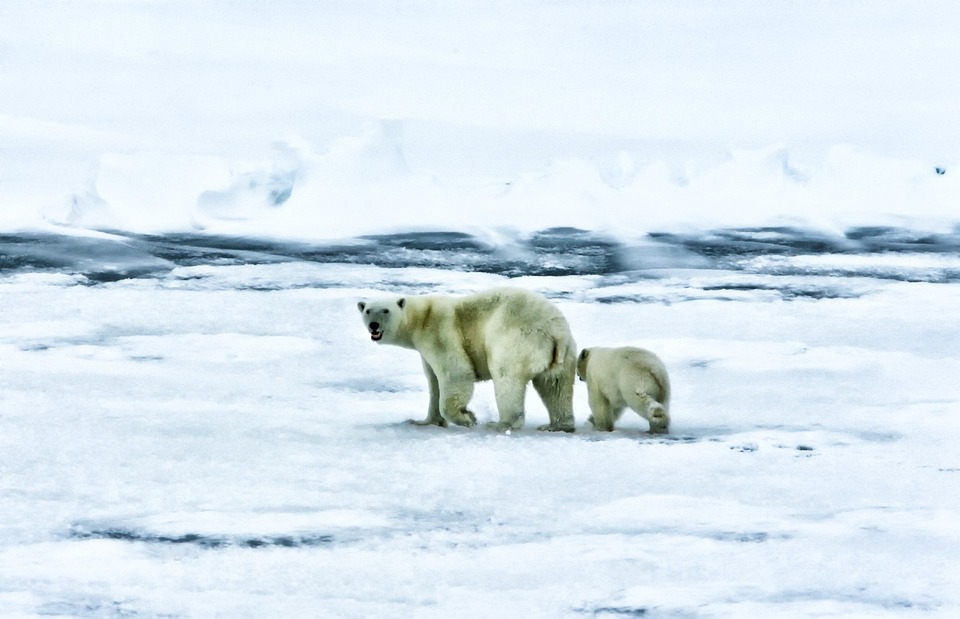
The polar bear is the largest terrestrial predator on Earth.
Its white colouring provides excellent camouflage for hunting on ice and snow. Although the fur is white shortly after moulting, it can appear yellow or off-white during the summer months. Polar bears have a smaller shoulder hump, shorter, more curved claws, and a longer neck than grizzly bears.
The climate change can reduce the amount of available habitat (perennial sea ice). Increasing human exploration and development can disturb bears in their dens, affect travel and migration routes, alter habitat, and lead to an increase in encounters between humans and polar bears.
More sightings due to lack of ice
Polar bears, like many wild animals are susceptible to the accumulation of high concentrations of various environmental pollutants, as they are apex predators.
A 2021 publication by the Canadian government entitled «Species at Risk in Nunavut» states that in this region «A higher number of polar bears is now being observed» and that management objectives «focus more on maintaining or reducing numbers in communities and in sensitive areas».
Local Inuit are concerned about the increasing number of encounters with polar bears and the property damage they cause.
Less ice, more conflicts
Polar bear specialists insist that the increased encounters with bears in recent years are attributable to a decline in sea ice duration and extent compared to the 1980s, as well as to more attractants such as landfills near Arctic communities.
In the 1980s, seeing more polar bears meant there were actually more bears. Today, scientists insist that seeing more bears means there are fewer bears, because there is less sea ice, and that these bears are attracted to human settlements because they are desperately searching for food. The more people are out in the field and the more bears there are, the higher the risk of an encounter.
| You can help all animals and our planet with compassion. Choose compassion on your plate and in your glass. Go vegan. |