Invasive snake wipes out reptiles on Gran Canaria
The California kingsnake has wiped out 90% of native reptiles on Gran Canaria. Researchers are calling for stricter controls on invasive species.

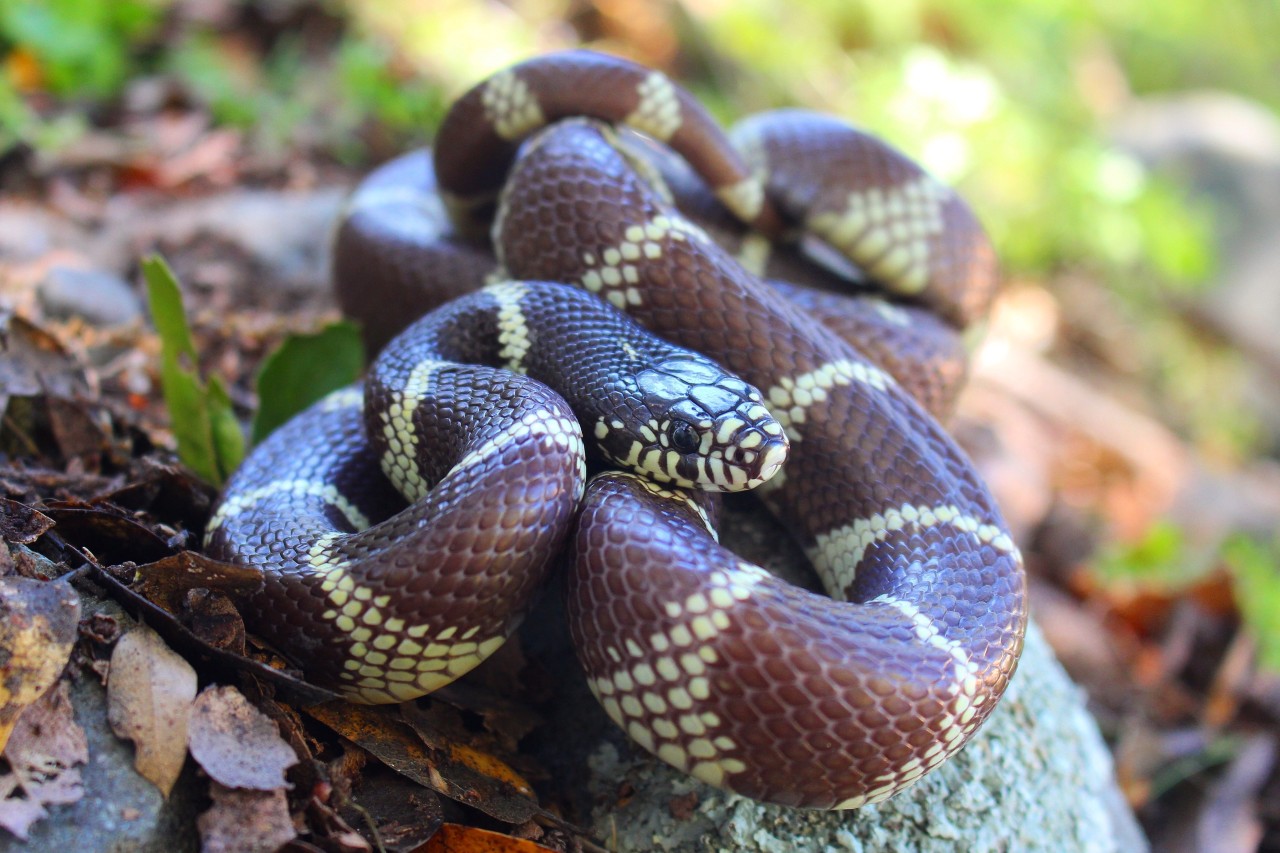
Researchers have found that an invasive snake species has virtually wiped out all native reptiles on Gran Canaria.
The findings of Julien Piquet and Marta López-Darias, published in the journal Proceedings of the Royal Society B, include a comparison of ecosystems affected by the introduction of invasive snake species with those that were not.
Introduction of the California kingsnake to the island
California kingsnakes were introduced to Gran Canaria in 1998; some later escaped, while others were deliberately released by pet owners. Since then, the snakes have mated, bred, and spread across the island, reports Phys.org.
To better understand the impact of the snakes on the island's reptile fauna, researchers launched a new study.
Despite its name, the California kingsnake is not native to either the United States or Mexico. Although non-venomous, it can grow up to 150 cm in length. They are not normally nocturnal, but have been observed at night when temperatures are particularly high.
Animals they prey upon include birds, rodents, and amphibians. Despite their tendency to bite humans, the snake is generally considered a safe pet. And because they are so popular, they have spread around the globe.
Decline in reptile populations
Researchers on Gran Canaria, the third largest of the Canary Islands, noted that reptile populations had been declining.
The researchers conducted a reptile count on Gran Canaria and other neighbouring islands that had not yet been overrun by California kingsnakes, in order to determine whether this was linked to the invasion. In doing so, they encountered significant discrepancies.
They found that the number of large lizards, skinks, and geckos on Gran Canaria was 90% lower than on the neighboring islands.
The influence of an invasive species can be enormous, as these studies show. Therefore, invasive species should be more strictly controlled, especially in regions with sensitive ecosystems such as islands, according to the researchers.
Efforts to eradicate the snakes
The snakes were found in houses, terraces, and gardens. People who keep birds in their homes have discovered snakes in their cages, opening them and consuming the birds.
The meeting of island specialists this week is part of a four-year strategy to halve the snake population. The restoration work began in 2011 and is expected to cost around €1 million.
One of the biggest obstacles is counting the snakes on the island, according to Robert Reed, a USGS researcher visiting Gran Canaria this week. Since snakes spend most of their time underground, this means that even if hundreds of them are caught, there are typically far more out there than one would like.
Californian Brian Hinds considers it unlikely that the animal can be eradicated on Gran Canaria. One must intervene quickly, otherwise the snakes will take over 70% of the island, warns the man who has been collecting and photographing kingsnakes in their natural habitat for 35 years.