Raccoons: Bias in Invasive Species Discourse
Unfortunately, there is a new press release from the Senckenberg Institute: “Underestimated danger: damage caused by invasive species is being underestimated”. A large-scale survey reveals the views of various interest groups on non-native animals and plants. The focus is predominantly on raccoons.

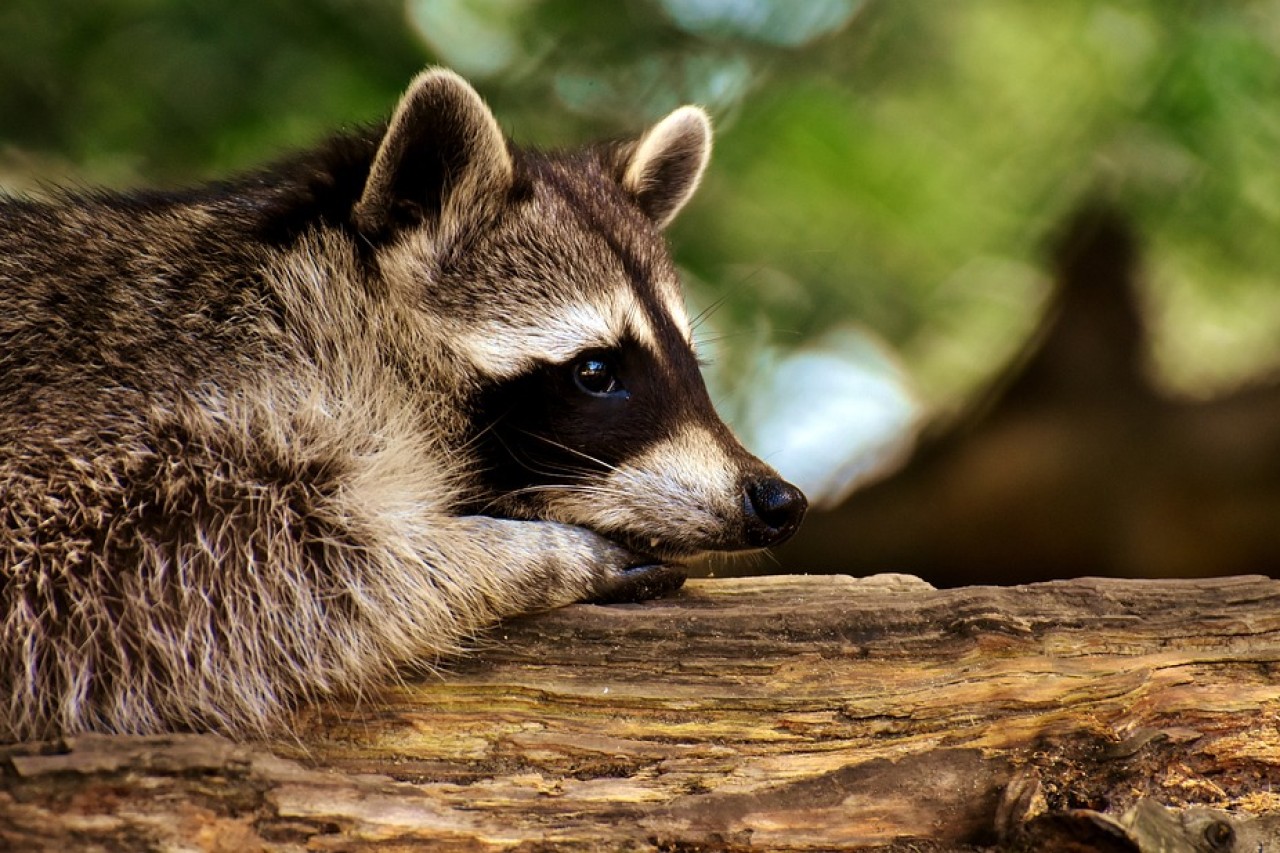
And once again, ZOWIAC around Prof. Sven Klimpel publishes a “Study” on invasive species — one that was planned and evaluated with a predetermined bias, with the scapegoat clearly established from the outset: the raccoon!
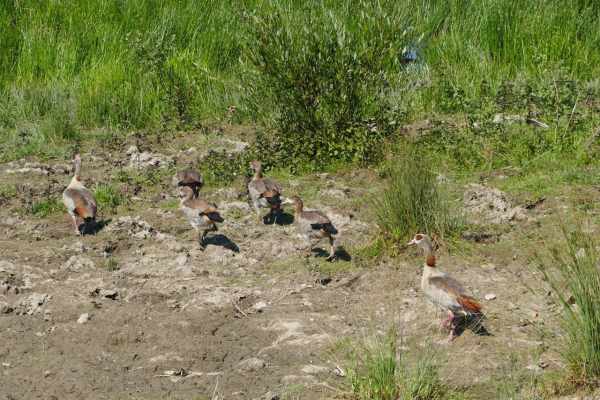
By now, 88 invasive alien species appear on the EU’s 2022 list of invasive species, including 33 vertebrates — yet due to the enormous smear campaign against raccoons in the media, the raccoon was named first by all surveyed groups in this survey, followed by the nutria, while the Egyptian goose was mentioned only once, in third place.
The title of the Senckenberg Institute’s press release — “Underestimated danger: damage caused by invasive species is being underestimated” — is absurd.
Underestimated? If the actual damage caused by invasive species and the associated costs are not even known, how can there be any “underestimation”?
Not even the Federal Minister for the Environment is aware of the damage and costs of invasive species, as communicated in official parliamentary inquiries by political parties.
- https://dserver.bundestag.de/btd/20/092/2009237.pdf
- https://dserver.bundestag.de/btd/20/072/2007259.pdf
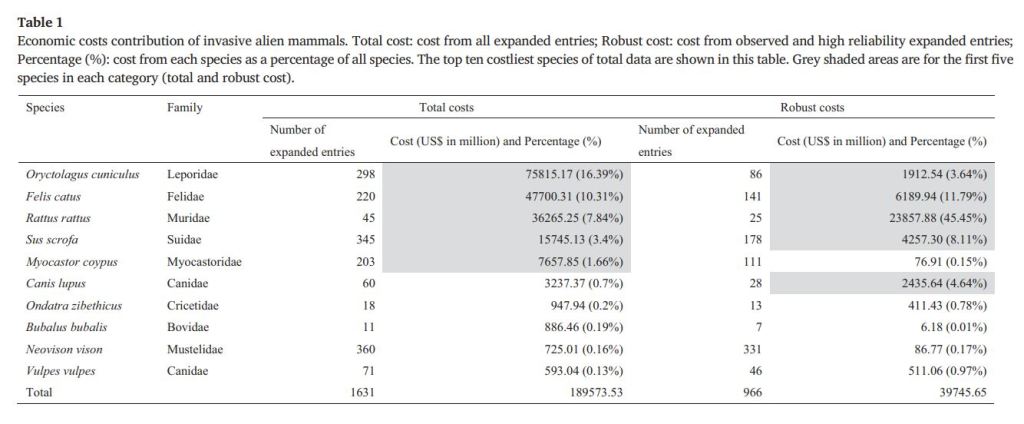
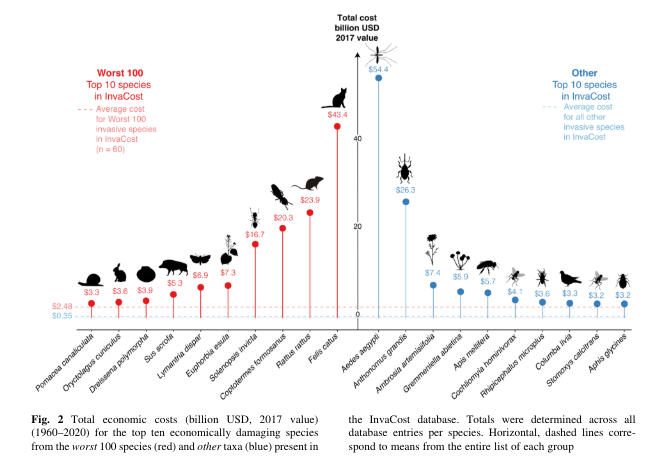
Worldwide and across Europe, entirely different animals are listed as invasive — namely animals not on the EU list — including even domestic animals such as the cat, as well as the rabbit, the rat, the pig, the wolf, the fox, and under IAS the nutria, the muskrat and the mink, but NO RACCOON!
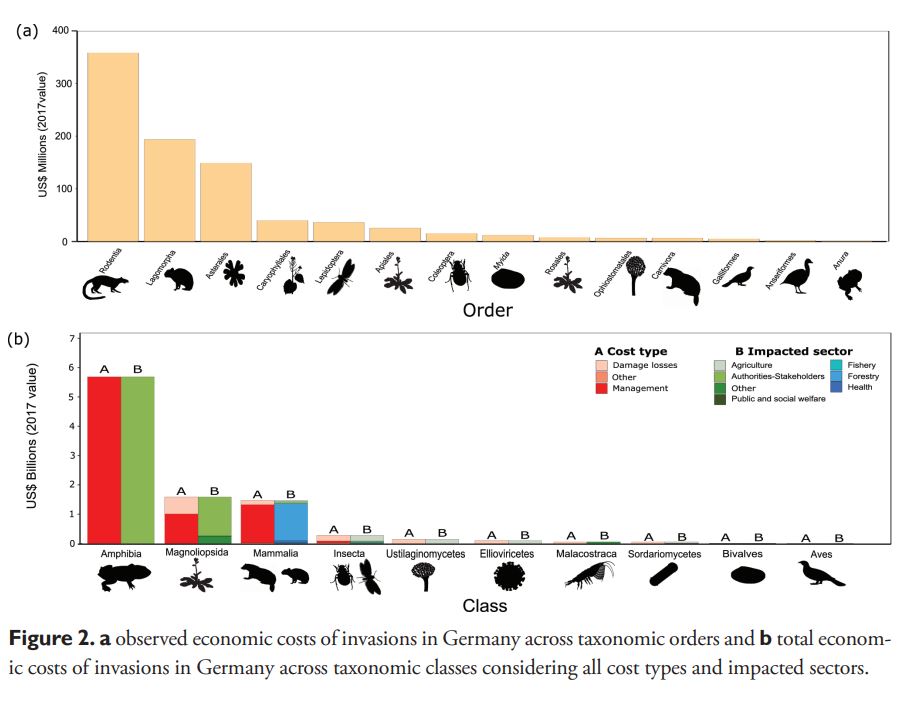
In publications on the costs of damage caused by invasive animals in Germany, the raccoon is not mentioned in any of the literature on IAS costs. And in general, only very low costs are reported for mammals, and these arise solely from the management of all invasive mammals combined.
Is it Mr. Klimpel's goal to have the raccoon declared the greatest pest among wildlife in Germany and perhaps across Europe, with Mr. Klimpel alone being in a position to determine and dictate to policymakers how this unfortunate animal must be hunted and drastically controlled, to the point of near-extermination? This truly appears to be the case, given that Mr. Klimpel continually proclaims the need for a management plan for the raccoon — despite the fact that management measures have already been developed and adopted by all federal states since 2018.
It is indeed worthwhile to supply certain parties with flimsy pretexts in order to then use new regulations to hunt wildlife even more intensively and with new means.
How does Mr. Klimpel intend, on the basis of his survey (“Identifying opportunities for invasive species management”) to identify opportunities for the management of invasive species (= of one animal = the raccoon) at all?
Particularly given that he is a parasitologist and infectious disease specialist, without direct expertise in wildlife biology? When something is published against the raccoon, it is invariably rewarded.
And so it is! On the proposal of the Hessian State Hunting Association, Mr. Klimpel received the Hessian honorary prize for wildlife protection — this for the examination of a mere 108 stomachs from raccoon carcasses that were killed by hobby hunters and then selected for ZOWIAC. And when only three reptiles were found among them, the conclusion drawn was that raccoons use reptiles as a “food source.” (See the brief report in the Deutsche Jagdzeitung): a JOKE!
The great problem — indeed the travesty — for animal welfare is that with certain scientists it is impossible to discuss their findings and publications, since they are unwilling to engage in professional dialogue and therefore never respond.
- Keeping raccoons away in an animal-friendly manner
- Raccoons too have a right to life
- Dealing with “invasive” species — a critical analysis from a biological and legal perspective
- Neozoa
- Basel wants to kill raccoons
- Raccoons are not a threat
- Open letter to Katrin Schneeberger of BAFU
- Removal of the raccoon from the lists of so-called invasive species
- Facts instead of hunters' tales about raccoons
- Office for Hunting and Nonsense in the Canton of Aargau wants to shoot raccoons